NASA needs a fallback for low Earth orbit, not a bet on private schedules
NASA's stated goal is to avoid a gap in crew-capable platforms in orbit. But the plan to replace the ISS has changed course too often to be the only plan.
Photo: NASA / Wikimedia Commons (Public domain)
What happens if the International Space Station retires and nothing is ready to take its place? It is the question that hangs over NASA's whole low Earth orbit strategy, and we think it deserves more attention than the usual end-of-program anxiety.
The basic facts are straightforward. According to NASA, the station nears the end of its operational life in 2030, and the agency plans to move to commercial stations in low Earth orbit. Its stated goal is to reduce "the potential for a gap of a crew capable platform." The agency's own language admits the risk exists. The only question is how well the plan protects against it.
A plan that keeps changing is not a plan you can bet on
The most telling evidence is the instability of the strategy itself. In a July 2026 discussion, the Planetary Society's Space Policy Edition describes how, since 2019, NASA has gone from free-flying, vendor-operated stations to a government-owned module attached to the ISS, and back again. In that discussion, host Casey Dreier says the head of the Space Station program, Dana Weigel, told an event this year that there is no real viable budget level that would let NASA support multiple independent commercial stations. Her proposal of a commercial module for stations to attach to, Dreier says, died within about a month.
That is not how a mature program behaves when the deadline is a few years away. Meanwhile, the schedules we can see are tight. Orbital Radar lists Vast's Haven-1 as targeting a Falcon 9 launch in early 2027, with Starlab and Orbital Reef aiming at the late 2020s. Phase 2 awards were expected in 2026, and the same page says a March 2026 framework may have developers supply modules to a government-anchored hub instead. These are targets, not deliveries. The history of space hardware suggests that targets slip, and we would plan on that basis.
The safety question nobody owns yet
The same page says the ISS is scheduled to deorbit around 2030-2031 using a dedicated SpaceX-built deorbit vehicle. That is a hard date attached to a very soft replacement plan. A destination with a fixed end date and successors with floating start dates is exactly the kind of mismatch safety reviewers exist to question.
Note that NASA's Aerospace Safety Advisory Panel, in its 2025 annual report, already cautions NASA and SpaceX as the ISS approaches end of life. And an October piece on New Space Economy, headlined "Who Owns NASA's Safety Risk in Its Commercial Transition?", covers the panel's August 31, 2026, public meeting. In our view, that question is the real issue. When government buys a service, responsibility blurs, and blurred responsibility is where schedules and safety margins get traded away quietly.
The "continuous heartbeat" is debatable, but the fallback is not
There is a fair counterargument. Dreier says he is skeptical of the continuous-presence policy and of the commercial market for human-tended stations. If the US does not need uninterrupted occupation of orbit, a gap is an inconvenience, not a crisis. That is a legitimate position, and it deserves a public decision rather than a drift.
But that is the point. Either the country decides that a pause in crewed low Earth orbit presence is acceptable, and says so, or it keeps the capability and pays for insurance. What it should not do is slide into a gap by default because every private timeline looked fine on a slide deck.
Our verdict
NASA should not pull the platform until a successor has shown it can carry crews. Practically, that means tying the ISS deorbit to demonstrated milestones, such as the initial crewed in-space demonstration that NASA's Phase 2 agreements already include as a minimum, rather than to a calendar year. It also means being honest about cost: a fallback, such as a longer ISS life, is not free. But a gap in American human spaceflight would probably cost more, and it would be very hard to reverse.
Commercial stations may well succeed. We hope they do. Hope is not a contingency plan, though.
No topics yet: start the first one.
More stories
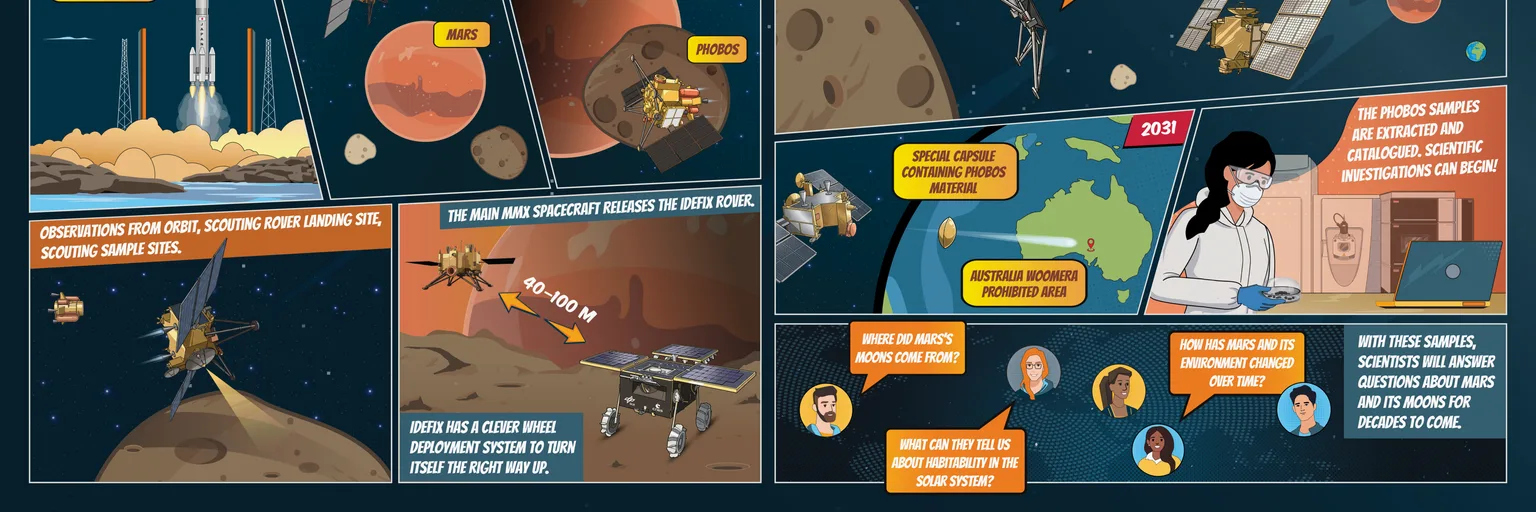
MMX is the smarter Mars sample bet, and gravity explains why
Japan chose Phobos because Mars itself is hard to land on and leave. That makes MMX a pragmatic bet, though it answers a different question from bringing home Mars rock.
2025 SC79 Is a Warning About What We Cannot See
The asteroid 2025 SC79 is not an imminent threat. Its real lesson is more useful: planetary defense still has a blind spot where the Sun makes dangerous objects hardest to find.
3I/ATLAS Is More Than a Spectacle: It Is a Stress Test for Comets
Its changing activity and alien isotope ratios matter because they let scientists test which comet behaviors are universal—and which belong only to our Solar System.
The Milky Way’s Hidden Black Holes Need More Than Human Eyes
Citizen scientists could turn archival telescope data into a discovery engine, but the real breakthrough will come from validating signals—not merely spotting unusual curves.