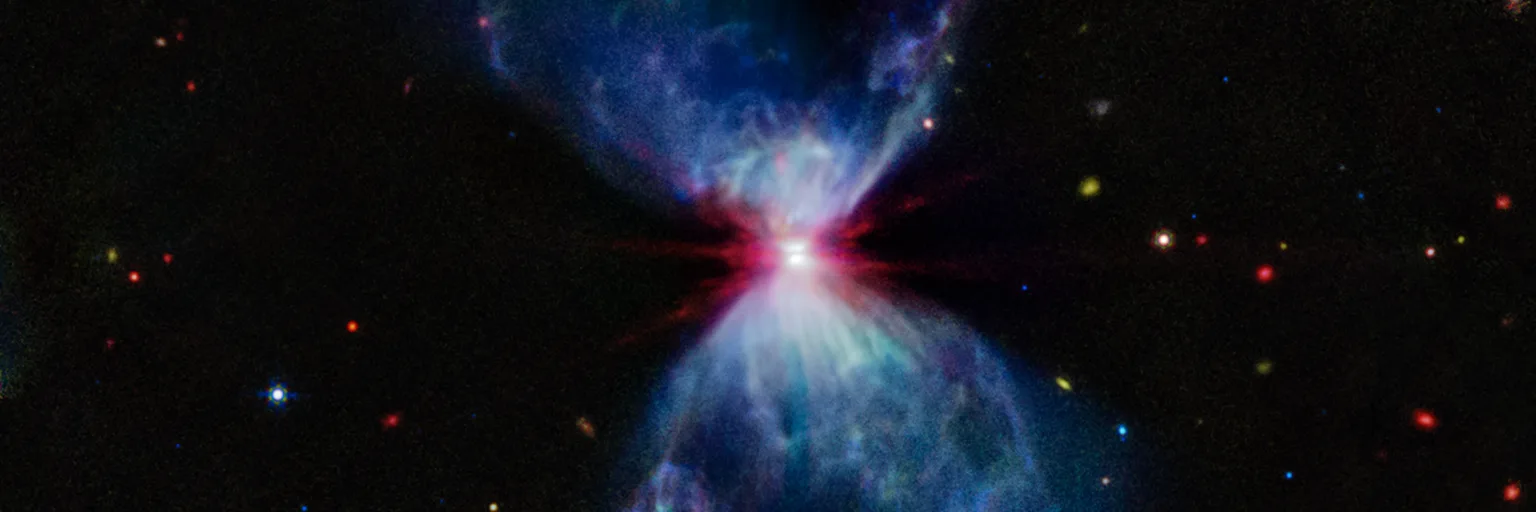
The Milky Way’s Hidden Black Holes Need More Than Human Eyes
Citizen scientists could turn archival telescope data into a discovery engine, but the real breakthrough will come from validating signals—not merely spotting unusual curves.
Photo: Astroclubkosova / Wikimedia Commons (CC0)
What if the fastest way to find invisible black holes is not a larger telescope, but a much larger team of human observers? That is the wager behind Black Hole Hunters, a citizen-science project asking volunteers to inspect archival observations for the gravitational fingerprints of objects that emit no light.
The scale of the problem is almost comically mismatched with the current inventory. Astronomers have identified roughly 50 black holes in the Milky Way, while researchers think the galaxy could contain tens of millions. Those figures do not describe a contradiction so much as a detection bottleneck: stellar-mass black holes are difficult to see unless they disturb something visible around them.
The project uses data from NASA’s Transiting Exoplanet Survey Satellite, or TESS, whose primary mission was the search for exoplanets, alongside observations from the SuperWASP survey, which monitored stars between 2004 and 2016. Volunteers classify changes in stellar brightness that might reveal a black hole in a binary system. The project is hosted on Zooniverse, and as Galileo reports, nearly 23,000 volunteers had made more than 12 million classifications since its launch in October 2021.
The clever idea is to search for gravity, not darkness
A black hole does not need to shine to announce its presence. Its gravity can bend light from a background source, temporarily making a star appear brighter under the right alignment. The project also focuses on binary systems in which a visible star orbits the remnant of a former companion.
That is an important conceptual shift. The target is not a dramatic cosmic photograph, but a subtle pattern in a light curve: a record of brightness over time. TESS has produced enormous quantities of such records, and data collected for one scientific purpose can become valuable for another. In our view, this is one of the strongest arguments for preserving and reopening astronomical archives. The next discovery may already be sitting in yesterday’s data, waiting for a better question.
The public’s role is therefore not decorative. Algorithms perform an initial screening of millions of stars, while volunteers review selected graphs and flag patterns that look promising. Several people inspect the same graph, and their classifications are combined. That division of labor makes sense: machines are good at scale, humans can still be useful when visual patterns are messy or poorly represented by an automated rule.
A volunteer flag is a lead, not a discovery
Here is where the popular story needs restraint. A strange brightening is not a black hole. Stellar eruptions, pulsations and other natural phenomena can imitate the signal. Even a candidate that survives the first human review must undergo additional observations to determine whether its behavior is genuinely compatible with the gravitational influence of an invisible object.
This distinction is more than scientific fine print. Citizen science projects are often judged by the excitement of the possible discovery, but their real contribution is usually triage: reducing a huge search space to a manageable set of targets. The Black Hole Hunters volunteers are not replacing astronomers or proving objects exist from a laptop. They are helping decide where scarce telescope time should go next.
That makes the project’s system of repeated classifications especially important. Multiple volunteers can reduce the effect of one person’s mistake, but agreement is not the same as truth. If an unusual artifact is visually persuasive, many participants may reproduce the same error. The project will need careful benchmarks, transparent candidate selection and follow-up observations before the public can claim a new black hole has been found.
The bottleneck is moving from recognition to confirmation
The most revealing part of the project may come after the volunteers finish. Researchers plan to use complementary observations to test whether the brightness variations fit the expected gravitational signature. They also hope to extend the search through data from the European Space Agency’s Euclid mission and NASA’s Nancy Grace Roman Space Telescope.
That next stage is where the grand estimate of millions will meet astronomical reality. A candidate must have a favorable geometry, a sufficiently clear signal and a plausible explanation that survives comparison with other data. Each step can eliminate false positives—and that is good science, even if it produces fewer headline-making discoveries.
The project’s success should therefore be measured not only by the number of black holes confirmed, but by how efficiently it transforms raw archival data into reliable observing targets. If volunteer classifications consistently help researchers prioritize the best candidates, the model will have demonstrated something valuable even before it delivers a spectacular result.
Citizen science works best when it is honest about uncertainty
NASA’s broader citizen-science program shows why this model has staying power. Its project directory listed 49 initiatives open to everyone on October 5, 2026, and reported that more than 650 NASA citizen scientists had co-authored publications. The activities range from classifying galaxies and searching for exoplanets to examining space-telescope images for white dwarfs.
Black Hole Hunters fits that ecosystem, but it also exposes its central responsibility. Public participation should not be sold as a shortcut around expertise. It is a way to distribute attention, generate candidate lists and make research more inclusive—provided the project explains what volunteers can establish and what they cannot.
That is the right reason to join. You may not personally “discover a black hole” in the strict scientific sense, but you could help identify the target that receives the observation capable of proving one exists. The distinction sounds modest. In practice, it is the difference between astronomy as a viral promise and astronomy as a reproducible process.
Our verdict: Black Hole Hunters is not an outreach stunt; it is a sensible response to an enormous data backlog. But its credibility will be won in the follow-up, where unusual curves become—or fail to become—evidence of invisible stellar remnants. Volunteers can widen the search dramatically. Only rigorous confirmation can tell us what they have actually found.
No topics yet: start the first one.
More stories
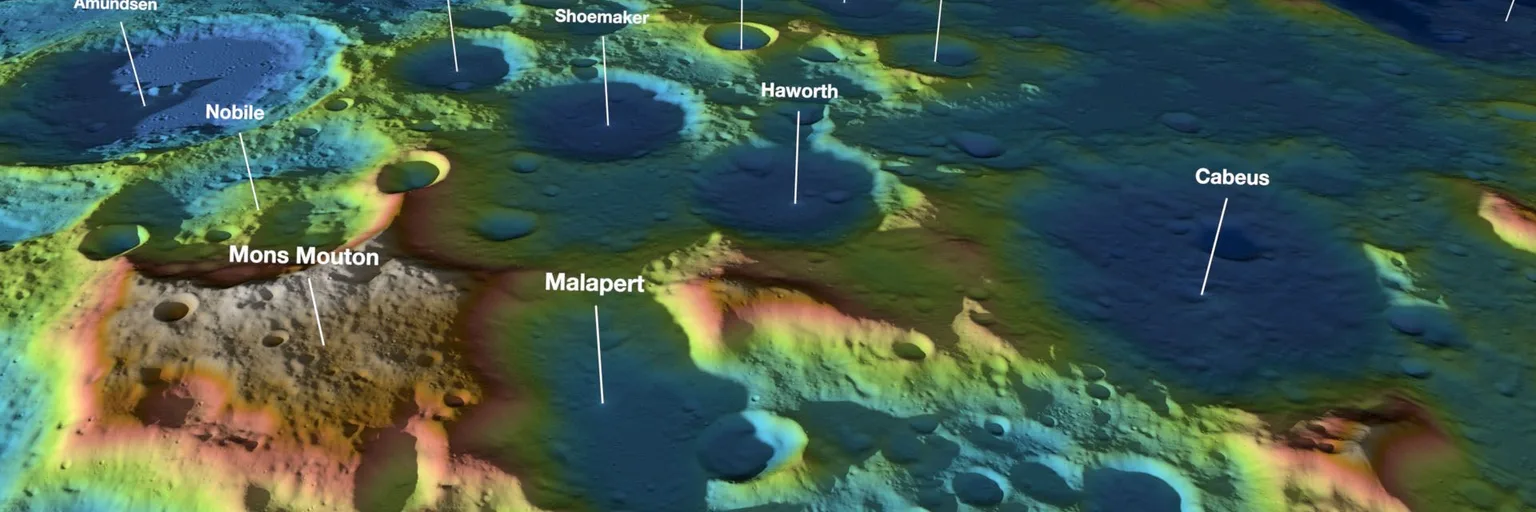
The Moon Is Shrinking. Artemis Must Stop Treating It as Static
The Moon’s cooling interior is still reshaping its crust, turning faults, moonquakes and landslides into an operational risk Artemis should design around—not discover too late.
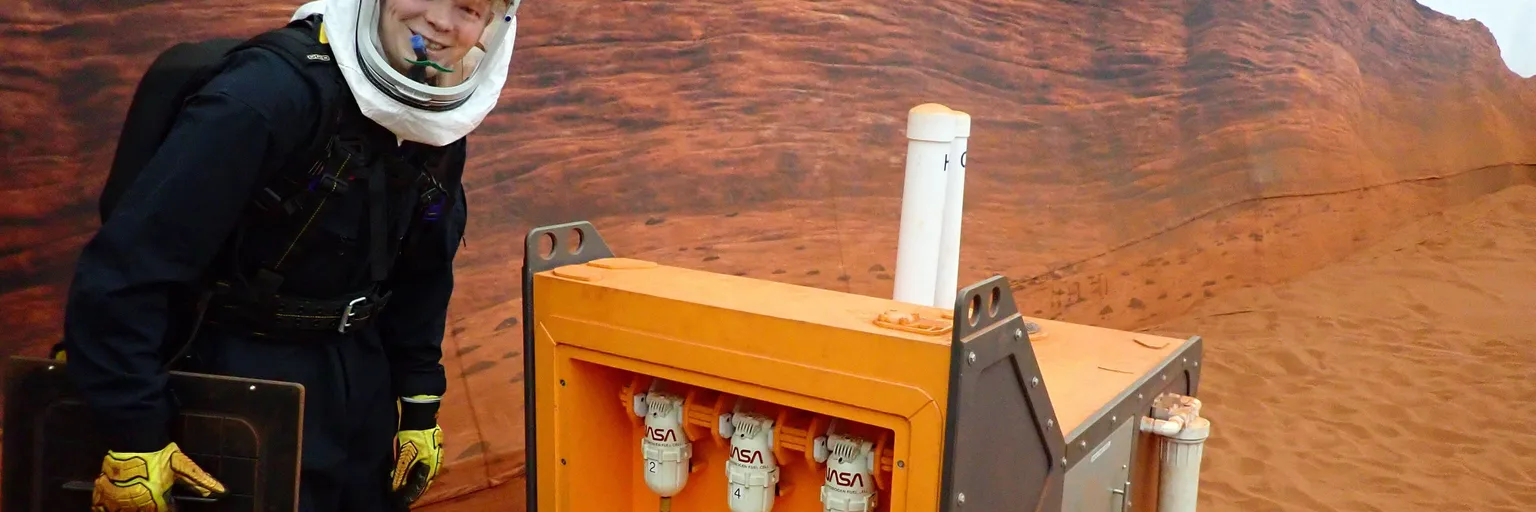
CHAPEA proves Mars will test our routines before our rockets
NASA’s year-long Mars simulation shows that survival will depend not only on hardware, but on food, communication, autonomy and the psychology of isolation.
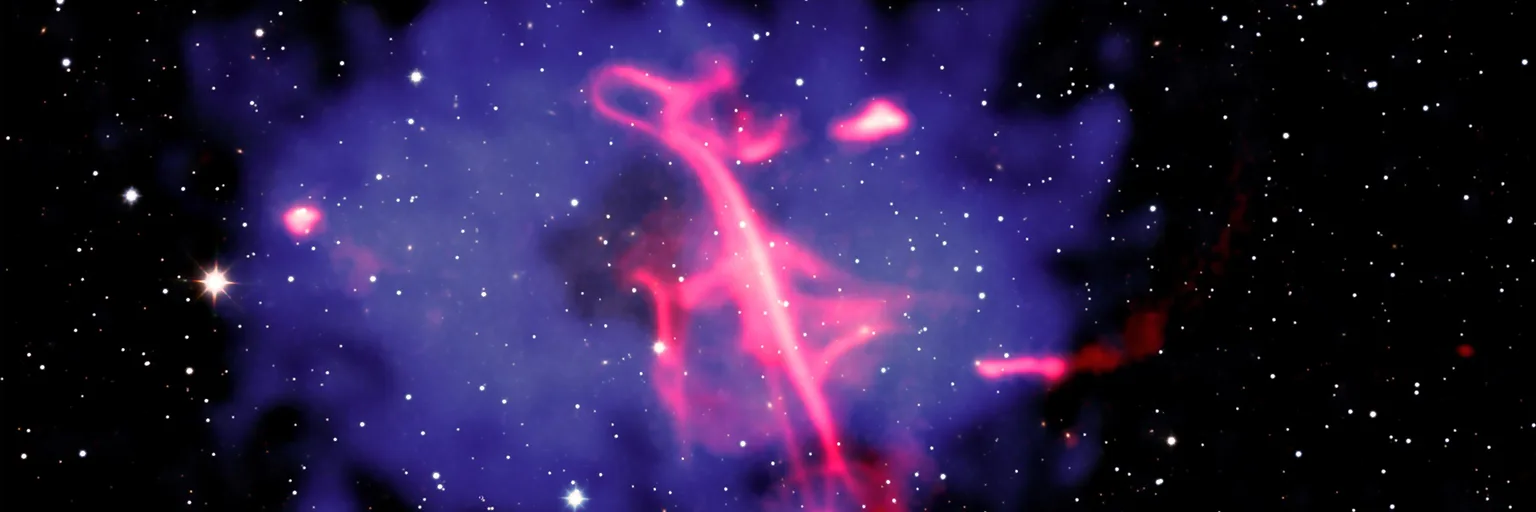
NASA’s cosmic treble clef is a triumph of pareidolia, not music
A vast radio structure resembles a musical symbol, but its real value is showing how familiar patterns can open a door to violent, complex astrophysics.
Heavy Methanol's Cosmic Riddle: Why Star Chemistry Needs a Rethink
A research team has detected fully deuterated methanol in space, an 'alcohol' whose surprising abundance around a protostar defies current chemical models and offers new clues to stellar evolution.