3I/ATLAS Is More Than a Spectacle: It Is a Stress Test for Comets
Its changing activity and alien isotope ratios matter because they let scientists test which comet behaviors are universal—and which belong only to our Solar System.
Photo: europeanspaceagency / Wikimedia Commons (CC BY 4.0)
What if the most important thing about 3I/ATLAS is not that it came from another star, but that the Sun is changing it in front of us? The third confirmed interstellar object is certainly a spectacle. But spectacle is the least interesting scientific category. The real opportunity is more demanding: watch an unfamiliar comet heat up, shed material, pulse, and reveal its chemistry—then separate genuinely interstellar behavior from assumptions inherited from Solar System comets.
3I/ATLAS was reported by the NASA-funded ATLAS survey in Chile on July 1, 2025. Its hyperbolic trajectory shows that it is not gravitationally bound to the Sun, and NASA classifies it as a comet because observations reveal an icy nucleus and a coma of gas and dust. It will pass through once and leave for interstellar space, never to return. NASA describes the object and its trajectory—and also makes clear that it posed no danger to Earth.
The new attention comes from its behavior. A recent National Geographic España update reports an apparent activity cycle of 16.16 hours, while an earlier analysis attributed a roughly 7.1-hour post-perihelion signal to rotating jets. Those numbers are not necessarily a contradiction: a comet’s nucleus, jets, coma, and integrated brightness do not all provide the same clock. That complication is precisely why 3I/ATLAS is useful.
The “heartbeat” is a measurement problem, not an alien signal
Calling a comet’s changing brightness a heartbeat is memorable, but it can also mislead. The light does not necessarily rise and fall because the solid nucleus is visibly pulsing. Much of what telescopes measure comes from the coma and jets—dust and gas released as solar heating drives the comet’s ices to sublimate.
That distinction matters. A 16-hour brightness cycle could describe the changing illumination of active regions, while a shorter signal in a jet could reflect rotation, precession, or the appearance of multiple emitting zones. An analysis reported in January connected the approximately 7.1-hour post-perihelion pattern to jet motion and found different periods in jet position and total brightness. In other words, the comet may not have one simple “spin period” that explains every observation.
Our view is that this is good news, not an inconvenience. A tidy number would be easy to repeat and easy to misunderstand. A set of related signals forces researchers to model the coma as a changing environment rather than treating it as a painted surface. If solar heating activates or suppresses different regions, the passage becomes a natural experiment in how an interstellar body responds to a star it has never encountered before.
Solar erosion is the filter between origin and appearance
The Sun does not merely illuminate 3I/ATLAS; it processes it. As the comet approaches, warming increases the release of gas and dust, expanding the coma and making previously hidden material observable. Observations around its solar passage showed a more extensive coma and tail than earlier images, while spectroscopy was used to investigate how the object’s chemistry changes during its journey.
That creates a serious interpretive trap. What we observe is not a pristine sample from another planetary system. It is an ancient body after exposure to solar radiation, gravity, and heating. Some features may reflect its birthplace; others may be the result of its brief visit here. The science therefore depends on tracking evolution, not just collecting a single dramatic image.
This is where 3I/ATLAS has an advantage over the first interstellar visitor, ‘Oumuamua, which showed little obvious gas or dust, and over the second, 2I/Borisov, whose observational geometry was different. With 3I/ATLAS, researchers can compare activity before and after solar heating and ask which compounds emerge first, which jets persist, and whether the object’s behavior resembles familiar comets only after the Sun has reshaped it.
The chemistry is more persuasive than the hype
The strongest evidence that 3I/ATLAS can expand planetary science comes from spectroscopy, not from speculation about its appearance. Webb observations reported by ESA found an unusually high deuterium abundance—about 30 times the level seen in Solar System comets—and relatively little carbon-13 compared with carbon-12. A paper describing those findings was published in Nature on June 22, 2026, according to ESA’s account of the Webb results.
Those isotope ratios suggest a formation environment that was very cold and possibly much older than the one that produced our Solar System. The research team estimates that 3I/ATLAS could have formed 10 to 12 billion years ago. That is a striking interpretation, but it should not be inflated into a complete biography. Isotopes can constrain formation conditions; they do not identify a specific star, planet, or biological history.
The important comparison is not “alien versus familiar.” It is more subtle: which chemical pathways recur across planetary systems, and which depend on local conditions? A comet can share broad ingredients with Solar System comets while preserving isotope ratios that expose a very different history. That combination is scientifically richer than a simple label of “exotic.”
The winner is the method, not the mystery
Questions about impact, visibility, or whether 3I/ATLAS is “alien” in a technological sense are understandable, but they point away from the evidence. Its trajectory did not bring it close to Earth, and its observed characteristics are consistent with a comet. The genuinely alien part is geological and chemical: material formed outside our system is being measured as it is transformed by our Sun.
That makes 3I/ATLAS a test of scientific humility. We should resist both extremes—calling every unusual signal a revelation and forcing every observation into a Solar System template. The apparent 16-hour activity cycle, the shorter jet-related signal, the changing coma, and the unusual isotope ratios are valuable precisely because they do not collapse into one easy story.
The verdict is simple: 3I/ATLAS is not most valuable as a once-in-a-generation show. It is valuable as a controlled challenge to our models of comets. The best next step is not to ask whether it looks mysterious, but to compare its chemistry and changing activity with Solar System objects using the same physical questions. That is how a visitor becomes evidence—and how interstellar science grows beyond spectacle.
No topics yet: start the first one.
More stories
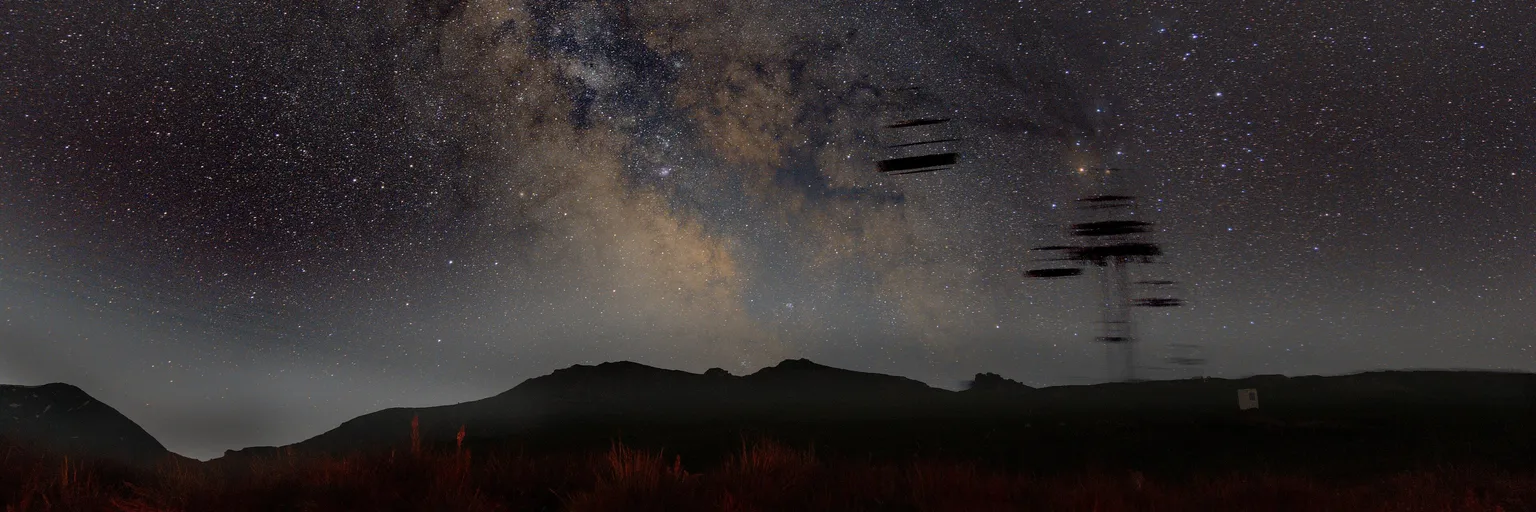
The Milky Way’s Hidden Black Holes Need More Than Human Eyes
Citizen scientists could turn archival telescope data into a discovery engine, but the real breakthrough will come from validating signals—not merely spotting unusual curves.
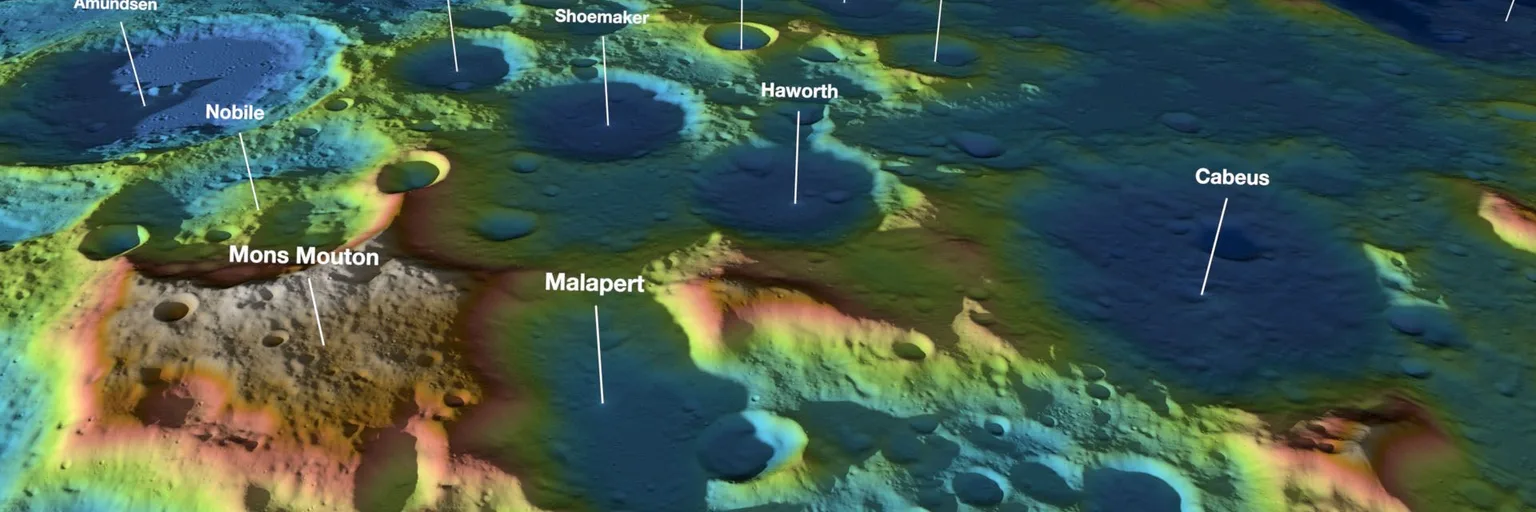
The Moon Is Shrinking. Artemis Must Stop Treating It as Static
The Moon’s cooling interior is still reshaping its crust, turning faults, moonquakes and landslides into an operational risk Artemis should design around—not discover too late.
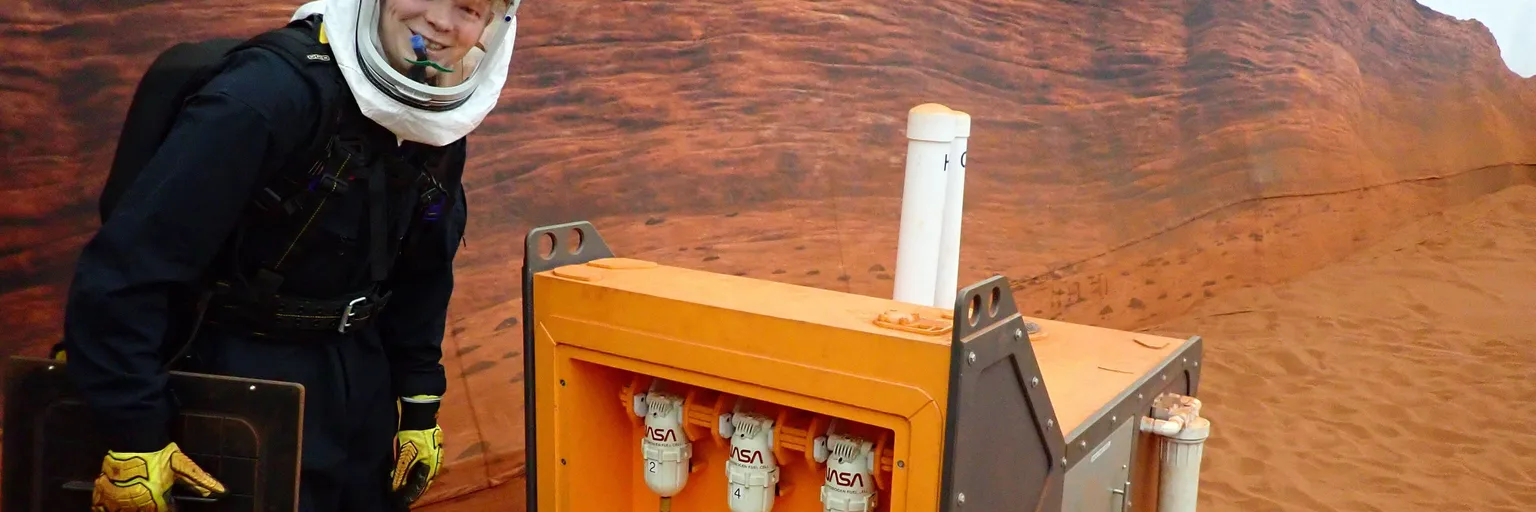
CHAPEA proves Mars will test our routines before our rockets
NASA’s year-long Mars simulation shows that survival will depend not only on hardware, but on food, communication, autonomy and the psychology of isolation.
NASA’s cosmic treble clef is a triumph of pareidolia, not music
A vast radio structure resembles a musical symbol, but its real value is showing how familiar patterns can open a door to violent, complex astrophysics.