Life Without a Sun? Rogue Moons Rewrite the Rules of Habitability
A groundbreaking study suggests that moons orbiting starless rogue planets could harbor liquid water for billions of years, radically expanding our search for extraterrestrial life.
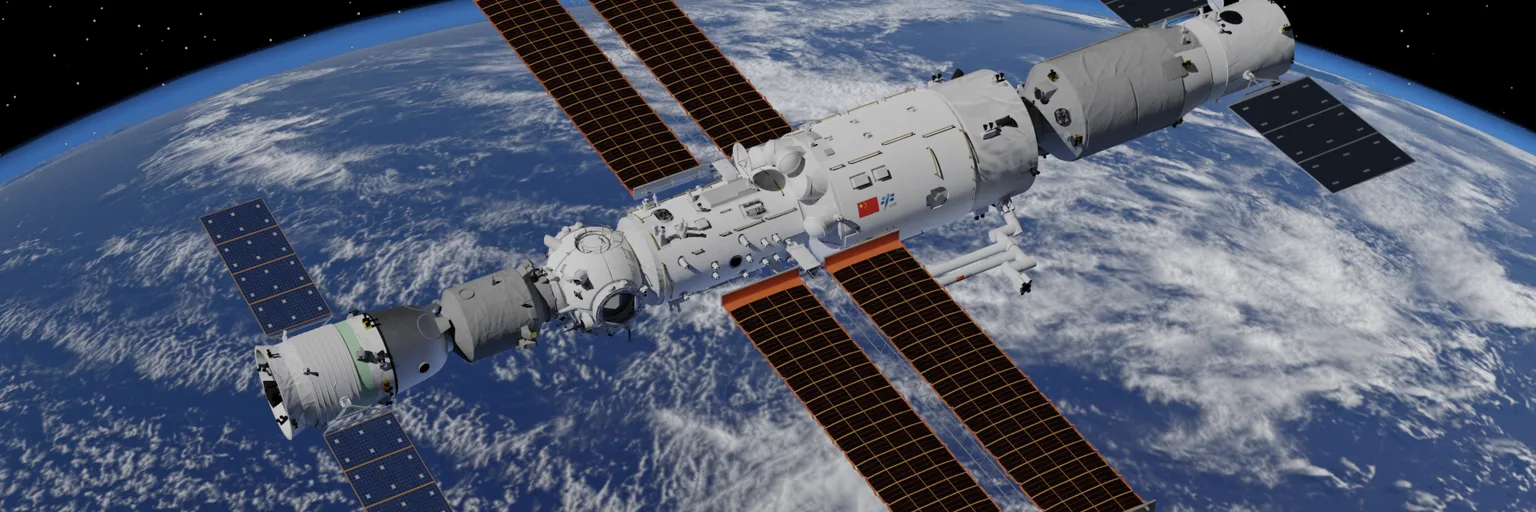
Photo: James Webb Space Telescope / Wikimedia Commons (Public domain)
Could life flourish in the perpetual night of interstellar space, far from the warmth of any star? For decades, our search for extraterrestrial life has been intrinsically linked to the concept of the habitable zone: that narrow band around a star where temperatures allow liquid water to exist on a planet's surface. Yet, a recent study is forcing us to reconsider this foundational idea, suggesting that so-called 'rogue moons'—those wandering aimlessly through the cosmos without a stellar parent—could maintain liquid water for billions of years, providing unexpected havens for life.
The findings, published in February in Monthly Notices of the Royal Astronomical Society and reported by Space.com, indicate that exomoons orbiting starless planets could remain warm enough for liquid water for up to 4.3 billion years. This duration is nearly as long as Earth has existed, a truly astonishing prospect given their seemingly desolate existence. It's a discovery that significantly broadens the spectrum of potential life-supporting environments and has naturally captured the attention of the scientific community, as highlighted by Everyeye Tech.
Tidal Forces: The Unsung Heater of the Cosmos
The most immediate question these findings raise is how these moons could possibly stay warm without a star. The answer lies in a phenomenon we observe within our own solar system: tidal heating. Rogue planets, byproducts of chaotic early planetary systems, can retain their moons even after being flung into interstellar space. The violent ejection process can, however, stretch these moons' orbits into highly elliptical paths around their new nomadic hosts. As a moon swings closer to and farther from its rogue planet, the planet's immense gravity repeatedly squeezes and flexes its interior.
This gravitational dance generates significant internal heat through friction. We see this dynamic in action with Jupiter's moon Io, famed for its intense volcanic activity, and with icy moons like Europa and Saturn's Enceladus, where tidal flexing helps keep their subsurface oceans liquid. The new research models suggest that this same powerful tidal heating could be robust enough to prevent oceans on Earth-sized moons from freezing, even in the extreme cold of deep interstellar space. It's a powerful reminder that energy for life isn't solely confined to the radiant embrace of a star.
Beyond Carbon Dioxide: The Hydrogen Blanket
Maintaining internal heat is one challenge, but retaining that warmth at the surface to support liquid water is another entirely. Earlier studies had proposed that thick carbon dioxide atmospheres could provide enough greenhouse warming. However, the extreme cold of interstellar space poses a problem: carbon dioxide can condense, causing the atmosphere to collapse and dissipating the trapped heat. This is where the new study introduces a critical refinement.
According to the researchers' simulations, hydrogen behaves differently under thick, high-pressure conditions. When hydrogen molecules collide, they can briefly absorb heat that would otherwise escape into space. This property allows a dense hydrogen atmosphere to act as an incredibly effective insulating blanket, trapping warmth far more efficiently than carbon dioxide. This atmospheric mechanism, combined with tidal heating, forms the crucial one-two punch that could keep water liquid on these sunless worlds for billions of years, making the prospect of life far more plausible than previously imagined.
Redefining Habitability: A Broader Cosmos
What this new understanding truly signifies is a profound shift in our concept of habitability.
No topics yet: start the first one.
More stories
Karlsruhe's 'Red Dust City' isn't just a stunt: it's a new model for space engagement
A two-week Mars simulation on a city square in Germany, blending art and science, offers a uniquely accessible and thought-provoking approach to future space exploration.

SpaceX's Bandwagon-5 and Starfall: A New Era for Commercial Space Access
The latest SpaceX rideshare mission, featuring the Starfall reentry capsule, exemplifies the expanding sophistication and practical applications of commercial space programs and reusable technology for a diverse array of scientific and commercial payloads.

The Universe Has No Borders: A Star Discovery's Lesson for Science
Dr. Barkha Yakub Bale's journey from Mumbai to Vilnius, culminating in a pivotal discovery about magnetically active stars, showcases the indispensable international collaboration driving astrophysics forward.
Tiangong's Rice Harvest: A Blueprint for Sustainable Space Farming
The successful cultivation and harvest of a first generation of rice, and the sowing of seeds for a second generation in orbit, is more than a botanical achievement; it's a blueprint for humanity's sustained presence beyond Earth.