Karlsruhe's 'Red Dust City' isn't just a stunt: it's a new model for space engagement
A two-week Mars simulation on a city square in Germany, blending art and science, offers a uniquely accessible and thought-provoking approach to future space exploration.
AI-generated image
What does a future on Mars truly look like, beyond the rockets and scientific instruments? For too long, the popular imagination has been fed a diet of distant, heroic astronauts and abstract technological marvels. Now, an innovative project in Karlsruhe, Germany, is challenging that narrative by bringing a slice of Martian life directly to the public, blending artistic performance with social experimentation in a compelling way.
From October 15 to 27, 2026, the Marktplatz in Karlsruhe is home to “MARS!platz: Red Dust City,” where three individuals from the ZKM | Center for Art and Media are living under simulated Martian conditions within a white dome. This isn't merely a demonstration; it's a “long-term performance” and an “analog simulation” designed to explore the profound human and social questions that arise from living in an isolated, resource-constrained environment. The crew, developed in collaboration with artists, experts, and citizen scientists, is testing concepts for communal living, mental health, and resource management, transforming complex scientific queries into tangible, observable experiences for passersby.
While traditional Mars simulations often take place in remote, isolated locations—such as NASA's year-long CHAPEA experiment at Johnson Space Center or the HI-SEAS missions in Hawaii—the Karlsruhe project stands out by embedding itself directly into the urban fabric. This accessibility, combined with its dual nature as both art and research, offers a fresh perspective on how we might prepare for and understand humanity's future on the Red Planet.
The Power of Proximity: Demystifying Space Life
One of the most striking aspects of “Red Dust City” is its location: a bustling city square. Unlike facilities designed for pure scientific rigor, such as the Mars Simulation Facility (MSF) which focuses on precise environmental conditions like pressure and temperature, Karlsruhe's dome prioritizes public visibility. Visitors can observe the crew, ask questions during daily exterior missions, and even follow a livestream from a ground station in the ZKM’s Panolab. This direct engagement bridges the gap between scientific endeavor and everyday life. By allowing citizens to witness the challenges of communal living, preparing meals, and managing water treatment in real-time, the project demystifies the day-to-day realities of space exploration. It shifts the focus from purely technical feats to the more relatable human element: how do people coexist when resources are scarce and space is confined?
Art as a Catalyst for Scientific Inquiry
The ZKM explicitly frames “MARS!platz” as an art project with a scientific background, a “social thought experiment.” This dual approach is critical. While long-term simulations like Mars 500 have explored the psychological toll of extended isolation for hundreds of days, “Red Dust City” uses artistic performance to prompt broader societal reflection. The crew, composed of artists and researchers, is not just collecting data on health and well-being; they are performing a future, making the abstract concept of Martian settlement palpable. This blend encourages a more holistic examination of what a Martian society might look like, exploring questions of governance and social structures alongside the practicalities of survival. The project's goal is not merely to gather data but to inspire thought on Earth's preservation and responsible resource management by drawing parallels to the extreme conditions of Mars.
Citizen Science as a Foundation for Future Living
The groundwork for “Red Dust City” was laid over six months, with the ZKM | Hertzlab engaging artists, experts, and citizen scientists in an open group called the “Red Dust Society.” This collaborative genesis, where ideas for habitats, mental health solutions, and resource management were co-developed, is a testament to the growing importance of citizen science in addressing complex challenges. By involving the public in the conceptualization phase, the project ensures that the simulated life reflects a diverse range of perspectives and concerns, not just those of professional scientists or engineers. This inclusive approach strengthens the relevance of the experiment and fosters a sense of shared ownership over the future of space exploration. It demonstrates that the 'what if' questions of Mars settlement are not just for specialists but for all of humanity to ponder and contribute to.
Karlsruhe’s “MARS!platz: Red Dust City” represents a compelling evolution in how we engage with space research. It’s a powerful reminder that while the engineering challenges of reaching Mars are immense, the human and societal questions are just as crucial. By placing a simulated Martian habitat in the heart of a city, blending art with science, and involving the public from conception to observation, this project makes the future of space exploration feel intimately immediate and universally relevant. It's a model that other institutions should observe closely, as it offers a blueprint for making the vastness of space tangible, relatable, and inspiring for everyone.
No topics yet: start the first one.
More stories
SpaceX's Bandwagon-5 and Starfall: A New Era for Commercial Space Access
The latest SpaceX rideshare mission, featuring the Starfall reentry capsule, exemplifies the expanding sophistication and practical applications of commercial space programs and reusable technology for a diverse array of scientific and commercial payloads.
The Universe Has No Borders: A Star Discovery's Lesson for Science
Dr. Barkha Yakub Bale's journey from Mumbai to Vilnius, culminating in a pivotal discovery about magnetically active stars, showcases the indispensable international collaboration driving astrophysics forward.
Tiangong's Rice Harvest: A Blueprint for Sustainable Space Farming
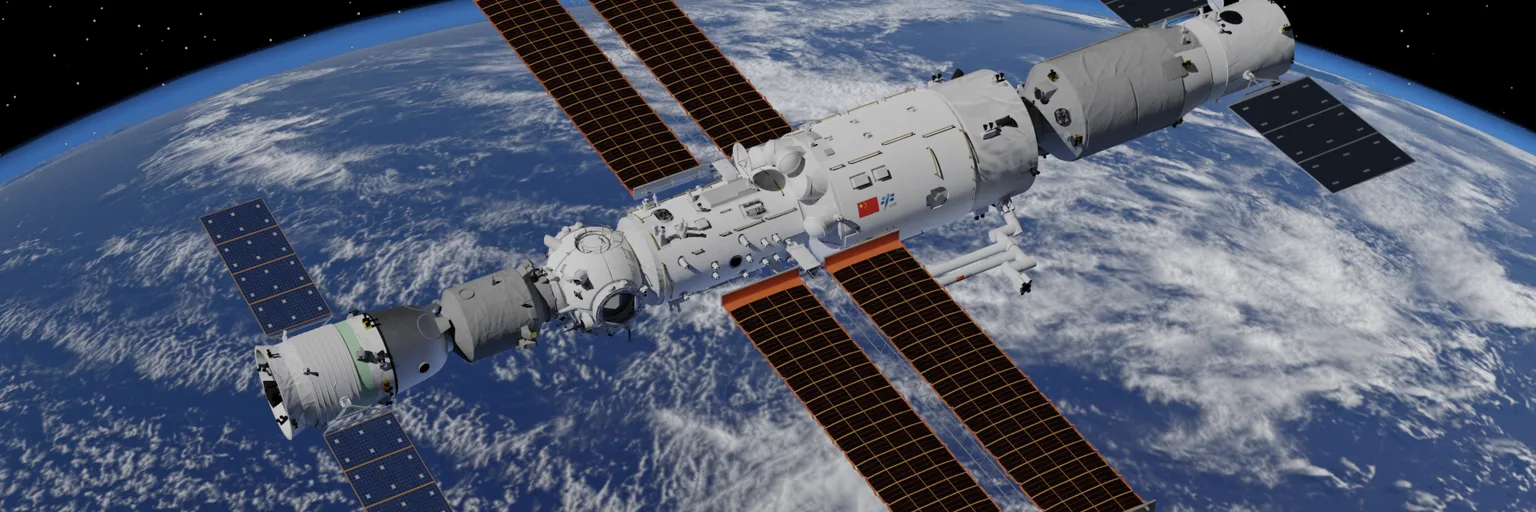
The successful cultivation and harvest of a first generation of rice, and the sowing of seeds for a second generation in orbit, is more than a botanical achievement; it's a blueprint for humanity's sustained presence beyond Earth.
Euclid's Dark Universe Map: Unveiling the Cosmos's Greatest Mysteries
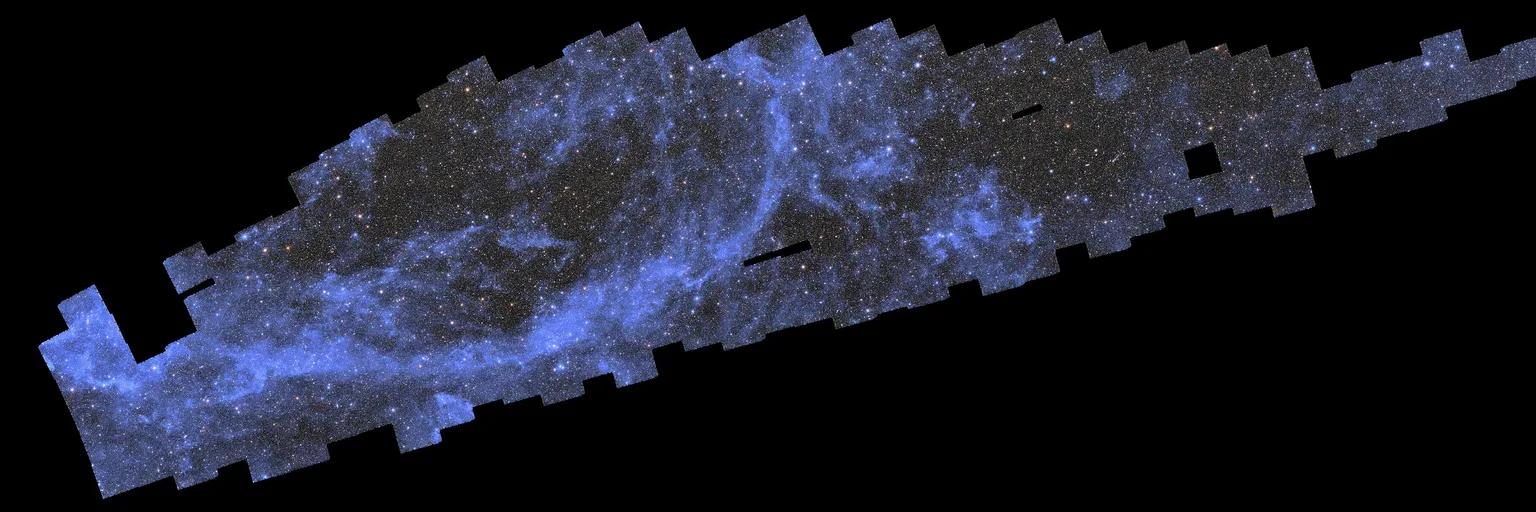
The ESA's Euclid mission is charting billions of galaxies, providing an unprecedented view of dark matter and dark energy that promises to fundamentally reshape our understanding of the universe.