Tiangong's Rice Harvest: A Blueprint for Sustainable Space Farming
The successful cultivation and harvest of a first generation of rice, and the sowing of seeds for a second generation in orbit, is more than a botanical achievement; it's a blueprint for humanity's sustained presence beyond Earth.
Photo: Shujianyang / Wikimedia Commons (CC BY-SA 4.0)
Can humanity truly thrive beyond Earth without a reliable food source independent of our home planet? The recent progress aboard China's Tiangong space station suggests we are closer than ever to answering that fundamental question with a resounding yes. The cultivation and harvesting of a first generation of rice, and the sowing of seeds for a second generation, entirely in orbit mark a pivotal moment, shifting the conversation from mere space gardening to the genuine prospect of sustainable space agriculture.
Astronauts aboard the Shenzhou-23 mission have successfully harvested the first generation of rice grown in their compact orbital module, immediately proceeding to sow new seeds to initiate a second generation. This achievement represents the world’s first continuous, two-consecutive-generation cultivation of rice in space, a critical step towards understanding how microgravity impacts plant life across multiple life cycles. The experiment, which launched in May 2026, aims to delve into the genetic stability and regenerative capacity of rice in the unique microgravity environment, setting the stage for future extraterrestrial food production. The implications for long-duration human missions, lunar bases, and even Martian settlements are profound.
Beyond Earth, a Stable Pantry
The dream of long-term human presence in space hinges on self-sufficiency. Current space missions, even to the International Space Station, rely heavily on costly and logistically complex resupply missions from Earth. While efficient for short stints, this model is unsustainable for missions lasting years or for establishing permanent outposts on other celestial bodies. The ability to grow food in situ fundamentally changes this equation, transforming astronauts from mere visitors into self-sustaining inhabitants.
We view the Tiangong rice experiment as a foundational piece of this future. By demonstrating multi-generational cultivation, China is not just proving that plants can grow, but that they can reproduce and continue their life cycle, creating a renewable food source. This moves us beyond the limited scope of growing fresh produce for morale—though that remains vital, as evidenced by Colonel Zhu Yangzhu's personal petunia project as reported by SpaceBotany.uk—and into the realm of staple crop production. Imagine a lunar base where rice is a regular part of the menu, grown just down the corridor, reducing the burden on Earth and expanding the horizons of human exploration.
Taming the Microgravity Wild: Ingenuity in Cultivation
Cultivating crops in space is far from straightforward. The absence of gravity poses numerous challenges that Earth-bound farmers never encounter. Seedlings grow erratically without a clear 'up,' water droplets float instead of draining, and sowing seeds typically scattered onto soil becomes impossible when both seeds and soil particles simply drift away. It's a testament to scientific ingenuity that these obstacles are being systematically overcome.
The Chinese Academy of Sciences team behind the experiment has developed solutions like directional lighting to guide plant growth and a clever plug-in fixed-planting device that ensures seeds make proper contact with the substrate. Moreover, selecting early-maturing, compact, and dwarf rice varieties, adaptable to the experimental module's limited 20-centimeter height, was crucial. This meticulous engineering and biological adaptation, as detailed by english.cas.cn, highlight the depth of research required to bend terrestrial biology to the will of the cosmos. The success demonstrates that with tailored approaches, we can indeed create viable agricultural systems in extreme environments.
The Genetic Riddle: Adapting Life to the Cosmos
Perhaps the most intriguing aspect of this experiment is its focus on genetic stability across generations and the comparative study of two seed types: those that have never left Earth and the offspring of space-harvested seeds from 2022. This design allows scientists to explore the fascinating hypothesis that plants might possess a 'memory' of microgravity, potentially leading to offspring with greater environmental adaptability.
The challenges of genetic integrity in microgravity are substantial. Previous studies by the Chinese Academy of Sciences showed that microgravity delays the expression and transport of flowering genes, causing plants to bloom later in space.
No topics yet: start the first one.
More stories
Euclid's Dark Universe Map: Unveiling the Cosmos's Greatest Mysteries
The ESA's Euclid mission is charting billions of galaxies, providing an unprecedented view of dark matter and dark energy that promises to fundamentally reshape our understanding of the universe.
The UK's Robot Claw Mission: More Than Just Cleaning Up Space Junk
The UK's ambitious mission to deploy a refuelable robot claw for active debris removal is not merely about clearing orbital trash, but strategically building a sustainable space economy.
The Mars Sample Return Race: A New Era of Space Competition
The high-stakes competition between NASA and China to bring Martian samples to Earth is reshaping space exploration, accelerating our quest to understand the Red Planet's secrets.

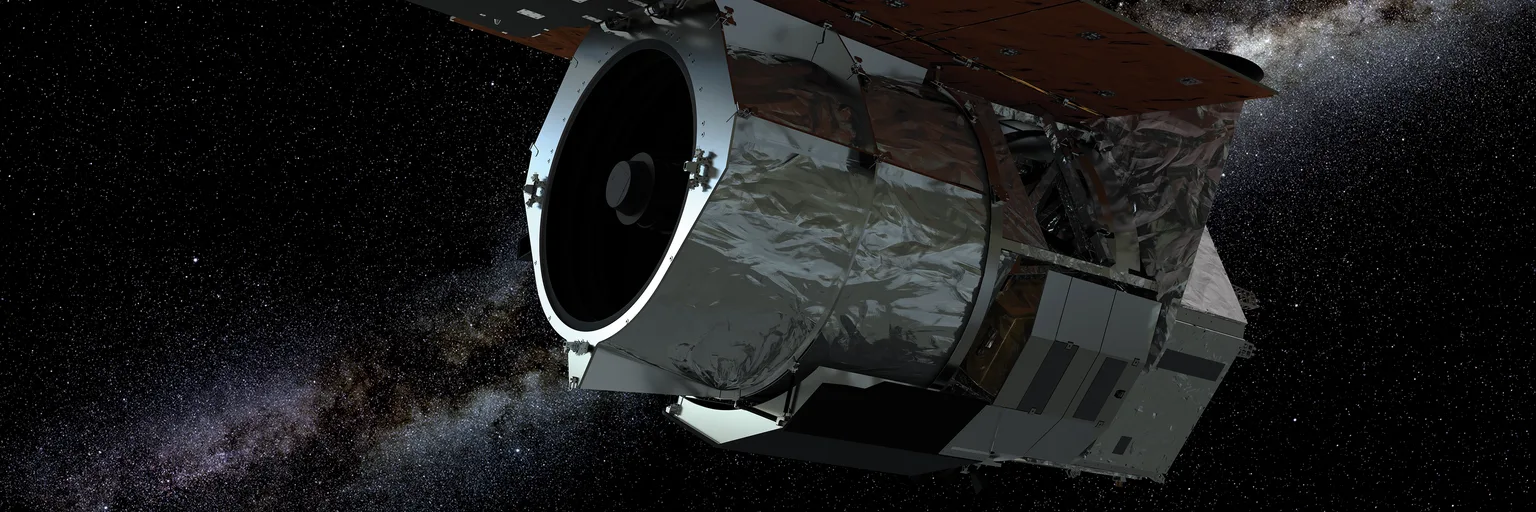
Roman telescope is set to rewrite our cosmic understanding
NASA's Nancy Grace Roman Space Telescope, with its wide-field infrared vision and powerful instruments, promises profound insights into dark energy, exoplanets, and the universe's structure.