The Universe Has No Borders: A Star Discovery's Lesson for Science
Dr. Barkha Yakub Bale's journey from Mumbai to Vilnius, culminating in a pivotal discovery about magnetically active stars, showcases the indispensable international collaboration driving astrophysics forward.
AI-generated image
Can scientific discovery truly be confined by national borders in an era where information flows freely and talent seeks opportunity globally? We think not, and the recent astronomical discovery by Dr. Barkha Yakub Bale in Vilnius, Lithuania, offers a compelling illustration of this borderless pursuit of knowledge.
Dr. Bale, originally from Mumbai, India, defended her doctoral dissertation, “Abundances of Chemical Elements in Magnetically Active Stars,” at Vilnius University in May of this year. Her research, which utilized data from the VU Molėtai Astronomical Observatory, led to significant findings regarding the evolutionary processes of stars, particularly how magnetically active stars differ from their ordinary counterparts. Her path to this discovery is as illuminating as the stars she studies, reflecting a journey driven by intellectual curiosity that transcended geographical limitations, as VU.lt reports.
Scientific Talent Finds Its Own Way
Dr. Bale's trajectory from an aspiring amateur astronomer in Mumbai to a doctoral researcher in Lithuania is a powerful testament to how scientific talent navigates the global landscape. Faced with the absence of astrophysics as a discipline in her local college, she initially focused on general physics while actively engaging in amateur astronomy groups. The turning point arrived during the COVID-19 pandemic, when an online summer school connected her with Professor Gražina Tautvaišienė, a researcher at Vilnius University's Faculty of Physics. This encounter blossomed into a mentorship and ultimately, Professor Tautvaišienė became her doctoral supervisor, paving the way for Dr. Bale's relocation to Lithuania just a month later, as madeinvilnius.lt notes. This story underscores a critical truth: groundbreaking science often emerges from the fertile ground where international collaboration and individual ambition meet, proving that the best minds will find their way to the best opportunities, regardless of origin.
Magnetic Activity: A New Lens on Stellar Evolution
Dr. Bale's most important discovery centers on the elemental abundances in magnetically active stars. Her research meticulously determined fundamental parameters such as temperature, metallicity, and age, before delving into the concentrations of elements like carbon, nitrogen, and oxygen. The striking insight, as she explains, is the observation of "deviations in elemental abundances in magnetically active stars that cannot be fully explained by standard models of stellar evolution". This suggests that magnetic activity plays a far more significant role than previously understood in shaping the timing and efficiency of internal element mixing within stars. Such findings do more than just refine existing models; they offer profound new insights into the evolution of our entire galaxy. We are reminded that the universe is far from the simplified, predictable picture often presented, holding layers of complexity waiting to be unraveled by dedicated research.
Bridging Continents, Advancing Astrophysics
The collaboration between Dr. Bale and Professor Tautvaišienė is more than just an academic pairing; it's a microcosm of how modern science ought to function. Their five-year partnership, built on a shared approach to scientific inquiry, exemplifies the benefits of diverse perspectives converging on complex problems. This kind of cross-cultural and cross-border intellectual exchange is indispensable for fundamental science, especially in fields as vast and intricate as astrophysics. Dr. Bale's work, by shedding light on the enigmatic behavior of magnetically active stars, contributes to a collective human effort to comprehend the cosmos. We believe this international cooperation is not merely a convenience but a necessity for pushing the boundaries of what is known, ensuring that the next generation of cosmic insights will continue to be a shared human endeavor.
Ultimately, Dr. Bale's journey and her discovery serve as a powerful reminder of how small our Earthly conflicts appear when juxtaposed with the immense scale of the universe. As she reflects, “We are merely a tiny part of something far greater. The Earth truly is just a pale blue dot in the vastness of space”. This humbling perspective, born from scientific inquiry, reinforces the notion that resources spent on understanding the universe are arguably among the most valuable investments humanity can make, and that such grand endeavors are best pursued together.
No topics yet: start the first one.
More stories
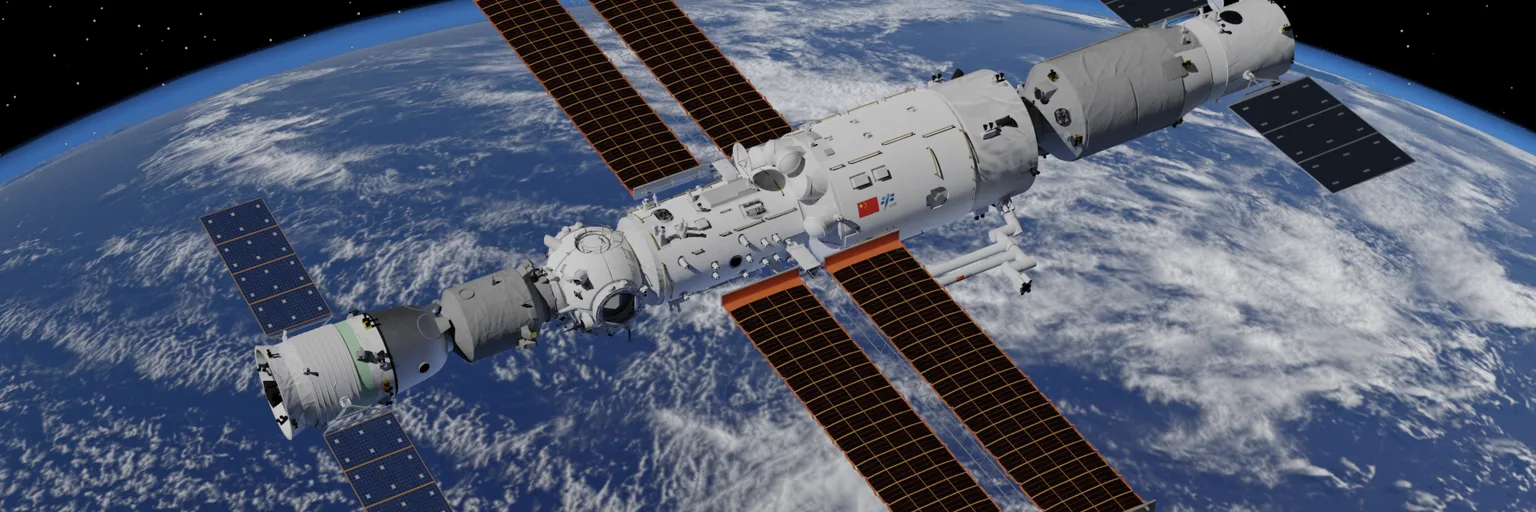
Tiangong's Rice Harvest: A Blueprint for Sustainable Space Farming
The successful cultivation and harvest of a first generation of rice, and the sowing of seeds for a second generation in orbit, is more than a botanical achievement; it's a blueprint for humanity's sustained presence beyond Earth.
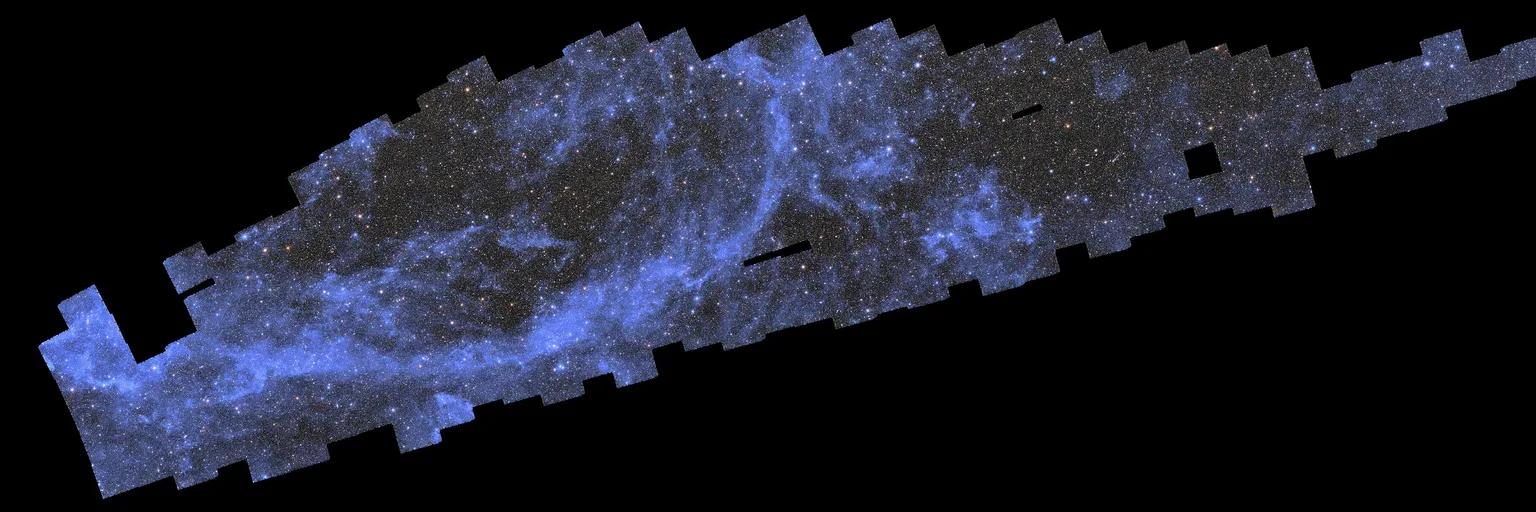
Euclid's Dark Universe Map: Unveiling the Cosmos's Greatest Mysteries
The ESA's Euclid mission is charting billions of galaxies, providing an unprecedented view of dark matter and dark energy that promises to fundamentally reshape our understanding of the universe.
The UK's Robot Claw Mission: More Than Just Cleaning Up Space Junk
The UK's ambitious mission to deploy a refuelable robot claw for active debris removal is not merely about clearing orbital trash, but strategically building a sustainable space economy.
The Mars Sample Return Race: A New Era of Space Competition
The high-stakes competition between NASA and China to bring Martian samples to Earth is reshaping space exploration, accelerating our quest to understand the Red Planet's secrets.