Jonathan the Tortoise Isn't Just Old: His Genes Redefine Aging
A new *Science Advances* study on Jonathan, the 194-year-old Aldabra giant tortoise, reveals localized genetic stability that challenges our understanding of biological aging and offers crucial clues for human longevity.
AI-generated image
How does an animal live for nearly two centuries, far exceeding the typical lifespan of its species? This is the fundamental question Jonathan, the 194-year-old Aldabra giant tortoise, forces us to confront, and his recent genetic analysis offers some truly compelling answers. Far from being a mere biological curiosity, Jonathan embodies a living lesson in extreme longevity, presenting a blueprint for cellular resilience that could reshape our understanding of aging itself.
Jonathan, believed to have been born around 1832, has long been a resident of Saint Helena, quietly living a life that spans generations, from the era of Queen Victoria to today. His extraordinary age has naturally made him an object of scientific fascination, culminating in a new study published in Science Advances. This research delved into Jonathan's genome and, critically, his epigenome – the chemical modifications that switch genes on and off – to uncover the biological mechanisms underpinning his remarkable lifespan. The findings, comparing his DNA with other Aldabra giant tortoises, are not just interesting; they are, in our view, potentially transformative.
The Epigenetic Anomaly: When Order Persists Amidst Chaos
One of the most intriguing aspects of aging, from a biological standpoint, is the concept of increasing entropy or disorder. As we age, the chemical tags known as methyl groups that attach to our DNA, regulating gene expression, tend to become chaotic, drifting or attaching unpredictably. This cellular disarray is often seen as a hallmark of the aging process, leading to genes turning on or off at the wrong times and contributing to the body's decline. Expectedly, researchers found that Jonathan's overall methylation entropy was higher than in younger tortoises, reflecting his advanced age, as reported by Scientific American. As study co-author Stephen Clark explains, “If I had to define what aging is, it’s increasing entropy.”
However, the real revelation lies in the exceptions to this rule. The study discovered that in 272 specific genes, many associated with the cell's powerhouses – the mitochondria – Jonathan's chemical tags remained as orderly and consistent as those found in much younger animals, even a five-year-old tortoise. This localized precision, amidst an otherwise aged genome, is a profound anomaly. It suggests that while the general machinery of aging might progress, specific, critical biological pathways in extreme longevous organisms possess a remarkable capacity to maintain youthful order, defying the broader entropic trend. This isn't just slow aging; it's a targeted resistance to decay in vital areas, a distinction we believe is crucial.
Mitochondria: The Unsung Heroes of Longevity
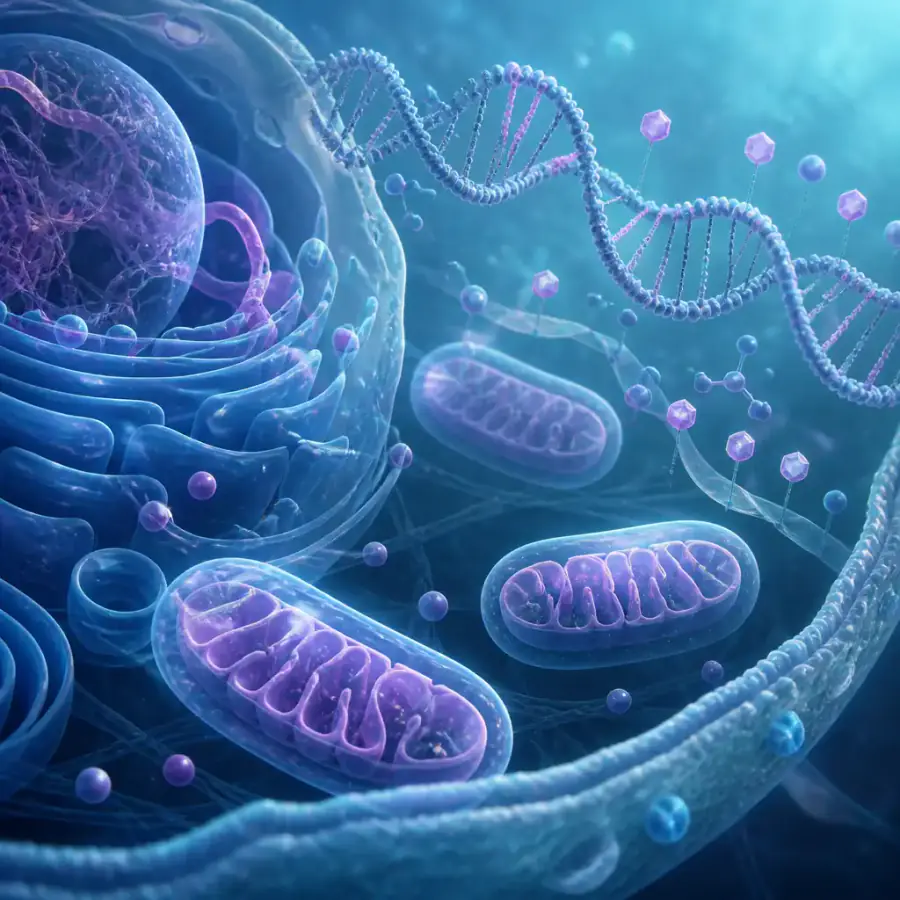
The repeated emphasis on the preserved function of mitochondria in Jonathan's genetic profile is, in our assessment, a significant pointer for future longevity research. These tiny organelles are responsible for generating the energy that powers nearly every cellular process. Ailing mitochondria have been strongly linked to aging and many age-related diseases in humans. Stephen Clark, a researcher on the project, theorizes a feedback loop where, as Scientific American reports, “Mitochondria that make energy are being kept pristine, so they keep making energy that keeps them pristine.” This idea suggests that Jonathan's longevity might stem from an exceptional ability to maintain mitochondrial health, which in turn fuels crucial processes like DNA repair and metabolism regulation, as noted by PopSci.
This
No topics yet: start the first one.
More stories
The Virtual Cell: A Revolution, or a Giant Leap for Big Tech's Data Trove?
The $300 million investment in Biohub's virtual cell project signals a new frontier for AI in biology, but its true impact hinges on predictive accuracy and equitable access to its vast datasets.

Rosalind Franklin's Legacy: Why History Must Acknowledge Her Full Vision
A re-examination of Rosalind Franklin's scientific output, including her detailed notes and reports, confirms her profound understanding of DNA's helical structure, reinforcing the necessity of a fully accurate historical account.
Chirality: How Molecular 'Hands' Reshaped Drug Discovery
The 2026 Nobel Prize in Chemistry celebrates Henri Kagan and Kenso Soai's groundbreaking work, finally taming the elusive mirror-image nature of molecules to revolutionize medicine.

Siberia's Plague Lab Death: A Biosecurity Wake-Up Call
The suspicious death of a researcher in an anti-plague laboratory in Irkutsk, coupled with conflicting official reports, underscores the critical need for absolute transparency and rigorous safety protocols in pathogen research globally.