Chirality: How Molecular 'Hands' Reshaped Drug Discovery
The 2026 Nobel Prize in Chemistry celebrates Henri Kagan and Kenso Soai's groundbreaking work, finally taming the elusive mirror-image nature of molecules to revolutionize medicine.
AI-generated image
What if the very molecules that form the fabric of life, and the medicines designed to heal us, had a fundamental 'handedness' that determined their function? This isn't a plot from science fiction, but a century-old chemical enigma that Henri Kagan and Kenso Soai have finally resolved, earning them the 2026 Nobel Prize in Chemistry. Their work has illuminated the profound significance of molecular chirality and offers a new paradigm for developing more precise and effective pharmaceuticals.
The Royal Swedish Academy of Sciences announced on October 7, 2026, that the French chemist Henri Kagan, 95, from Université Paris-Sud, and the Japanese chemist Kenso Soai, 76, from the University of Science of Tokyo, were the recipients of this year's prestigious award. The duo was recognized for their groundbreaking studies on homoquirality and the discovery of non-linear effects and autocatalysis in asymmetric organic synthesis. This award, worth 12 million Swedish Kronor (approximately R$6 million), underscores the fundamental nature of their contribution, which the Nobel Committee President, Heiner Linke, described as providing a solution to a chemical mystery with more than a century of existence: “How homochirality can arise spontaneously. The chemical reactions they developed are spectacular,” Linke stated, as reported by Estadão.
The Invisible Hands of Chemistry: Understanding Chirality
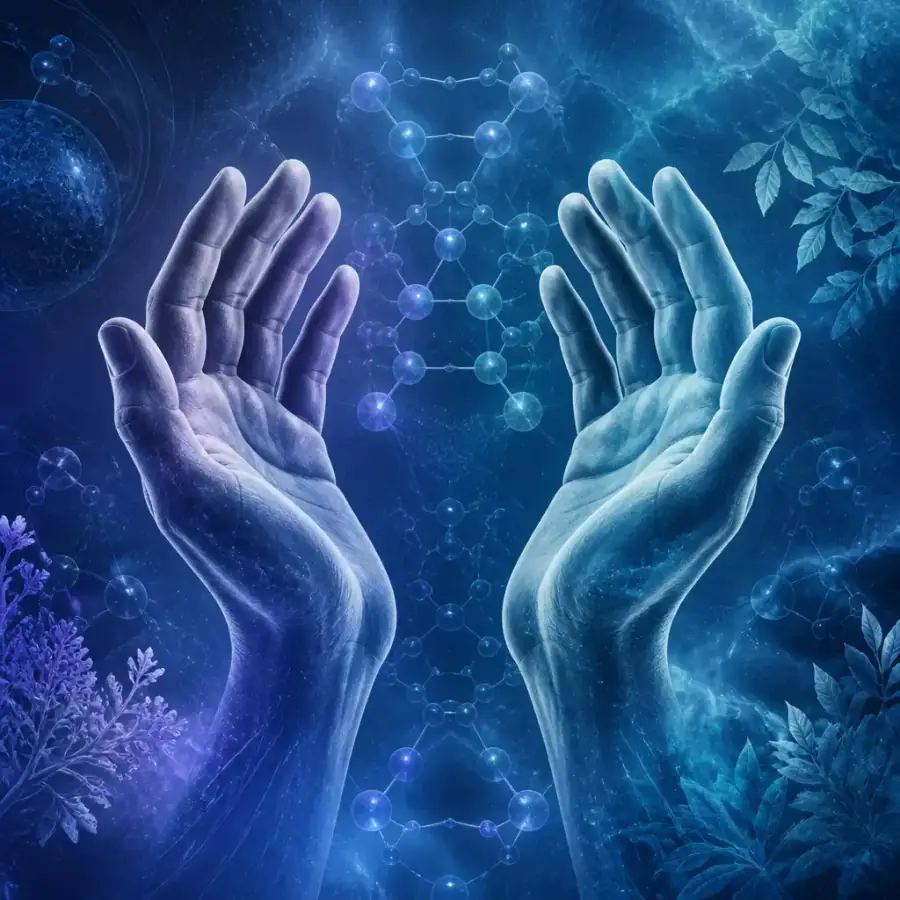
To grasp the magnitude of Kagan and Soai's achievement, we must first understand chirality. Imagine your hands: they are almost identical, yet they are mirror images that cannot be perfectly superimposed. In chemistry, molecules exhibiting this property are called chiral, a term derived from the Greek word "cheir," meaning "hand." These mirror-image molecules are known as enantiomers. While their physical properties can be identical, their biological interactions can be drastically different.
The puzzle intensifies when we consider nature itself. The building blocks of life – amino acids, proteins, and even the sugar molecules in our DNA – predominantly exist in only one of their two mirror-image forms. This phenomenon, where a biological or chemical system preferentially uses one enantiomer, is called homoquirality. For instance, human proteins are built exclusively from "left-handed" amino acids, known as levogyrates, while "right-handed" dextrogyrates are rare in nature, as noted by Folha. As Heiner Linke of the Nobel Committee asserted, "Life, as we know it, is homochiral." The long-standing enigma was how this natural preference arose spontaneously, especially since laboratory reactions typically yielded a 50/50 mixture of both enantiomers.
Kagan's Breakthrough: Breaking the Symmetry
Henri Kagan was instrumental in cracking this century-old mystery. In 1986, he discovered a novel way to manipulate chemical reactions, enabling chemists to produce a significant excess of one mirror-image form, far more than previously thought possible. This work on "non-linear effects" demonstrated that a chemical reaction could break the symmetry and favor one enantiomer over the other. His discoveries had a profound impact on the industrial production of drugs, flavors, and new materials, marking a significant step towards controlled asymmetric synthesis.
Soai's Revolutionary Leap: Perfecting the Handedness
Following Kagan's insights, Kenso Soai pushed the boundaries further. In 1995, he described a chemical reaction that had the potential to be truly homochiral, driven by a process called autocatalysis. In autocatalysis, the product of a reaction acts as its own catalyst, accelerating its own formation. This ingenious mechanism meant that an initially minute difference in the production of one enantiomer could be progressively amplified, leading to a strong favoritism towards that specific form. By 2003, Soai achieved what was considered impossible outside of nature: a chemical reaction that produced only one of the two possible mirror-image molecules. The Nobel Committee highlights this as one of the most spectacular chemical experiments ever performed, known simply as the "Soai reaction."
A New Era for Medicine and Materials
The practical implications of Kagan and Soai's work are immense, particularly for the pharmaceutical industry. Many drugs are chiral, and often only one enantiomer provides the desired therapeutic effect, while the other can be inactive, or worse, harmful. By enabling the precise production of single enantiomers, these discoveries have made it possible to design safer, more effective drugs with fewer side effects. As Felippe Colombari, a researcher at Ilum Escola de Ciência, explains in Estadão, "The future of medicines, vaccines, and gene editing may reside not only in new molecules but in nanoparticles whose 'hands' we have finally learned to draw and greet with the perfect fit." Beyond medicine, their work has applications in the creation of specific aromas, fragrances, and agricultural chemicals.
Kenso Soai himself expressed his elation upon receiving the news, stating, "It's the most incredible day of my life," and adding, "I think our award should lead people to recognize the importance of the chirality of molecules. I'm particularly happy about that," according to Terra. Indeed, their pioneering research has not only solved a fundamental chemical puzzle but has also ushered in a new era of precision in chemical synthesis, allowing humanity to better harness the subtle handedness of molecules for profound benefit. It is a testament to the enduring power of fundamental science to revolutionize our world.
No topics yet: start the first one.
More stories
Jonathan the Tortoise Isn't Just Old: His Genes Redefine Aging
A new *Science Advances* study on Jonathan, the 194-year-old Aldabra giant tortoise, reveals localized genetic stability that challenges our understanding of biological aging and offers crucial clues for human longevity.

The Virtual Cell: A Revolution, or a Giant Leap for Big Tech's Data Trove?
The $300 million investment in Biohub's virtual cell project signals a new frontier for AI in biology, but its true impact hinges on predictive accuracy and equitable access to its vast datasets.
Rosalind Franklin's Legacy: Why History Must Acknowledge Her Full Vision
A re-examination of Rosalind Franklin's scientific output, including her detailed notes and reports, confirms her profound understanding of DNA's helical structure, reinforcing the necessity of a fully accurate historical account.
Siberia's Plague Lab Death: A Biosecurity Wake-Up Call
The suspicious death of a researcher in an anti-plague laboratory in Irkutsk, coupled with conflicting official reports, underscores the critical need for absolute transparency and rigorous safety protocols in pathogen research globally.