Is Losing Cell Identity the Real Cause of Aging?
The latest science points to a cellular 'identity crisis' – the loss of epigenetic information – as a fundamental driver of aging, a reversible process that could redefine how we combat age-related decline.
AI-generated image
For decades, our understanding of aging largely revolved around the concept of accumulating damage — a gradual wear and tear on our cells and tissues that inevitably leads to decline. But what if the story is more profound, more existential? Recent groundbreaking research suggests that human aging might be driven less by mere damage and more by a fundamental "identity crisis" at the cellular level.
This emerging paradigm, rapidly gaining traction in scientific discourse and sparking widespread interest, posits that cells lose their specific identities over time. This isn't just a minor malfunction; it's a deep-seated change that affects how they function and contribute to the body's overall health, as highlighted by Eric Topol. The concept, which has been making waves and accumulating hundreds of comments on platforms like Hacker News, complements the traditional damage-accumulation model, offering a richer, more actionable understanding of the aging process.
The Epigenetic Drift: Cells Forgetting Themselves
At the heart of this identity crisis lies the concept of epigenetic information loss. Our cells, whether they are destined to be skin cells, muscle cells, or neurons, maintain their specific roles through intricate epigenetic programs that tell genes when and how to express themselves. As we age, however, these programs appear to degrade. Cells begin to lose their unique identities, becoming less specialized and less effective at their intended functions. For instance, researchers at Harvard Medical School observed that as cells aged, they lost their identities, with muscle and skin cells no longer performing their distinct roles as they once did. This loss of precise functional identity is now considered by some researchers to be the first measurable sign of aging, potentially even preceding other forms of cellular deterioration, as suggested by some experts interviewed in El País.
Aging as a Reversible Information Loss
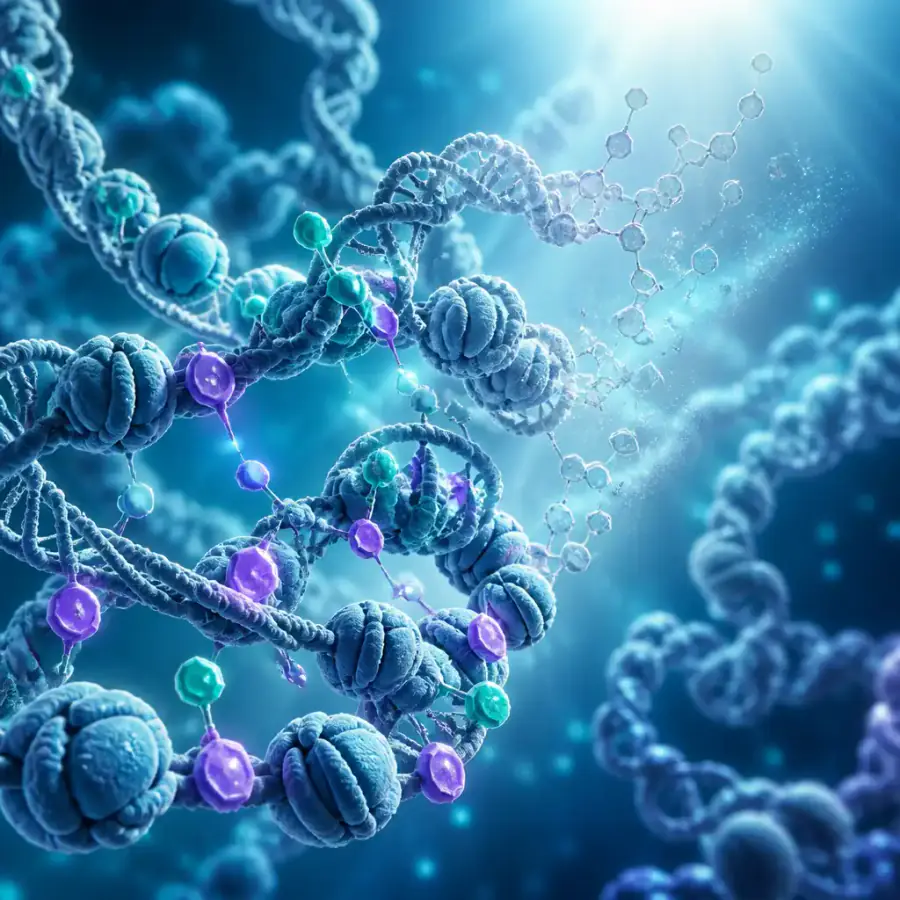
The idea that aging is driven by a loss of epigenetic information presents a significant departure from the view of aging as an irreversible accumulation of damage. Crucially, the "information theory of aging" proposes that this epigenetic information loss is not only a cause of mammalian aging but also potentially reversible. Pioneering work, such as that published in Cell by Yang and colleagues in 202301570-7), has provided compelling data consistent with this theory. This suggests that the decline isn't an unfixable breakdown, but rather a loss of instructional clarity within the cell, like a corrupted hard drive that can theoretically be restored.
The Promise of Cellular Reprogramming
If the loss of cell identity is indeed a reversible cause of aging, the implications for anti-aging interventions are profound. The emerging field of cellular reprogramming, which aims to reset these epigenetic programs, offers a tantalizing path forward. By partially reprogramming cells, scientists seek to restore their youthful identities and functions without completely erasing their specialized roles. This could mean not just slowing down aging, but actively reversing some of its effects. Such strategies could target the altered DNA methylation patterns associated with aging that lead to poor cellular function and disease, offering a potential pathway to better health outcomes and extended healthy lifespans, as some researchers are exploring, according to NAD.com.
In our view, this shift in perspective — from viewing aging as merely an unavoidable decay to understanding it as a potentially reversible loss of cellular information — marks one of the most exciting frontiers in longevity research. It suggests that the future of combating age-related diseases may not lie in simply repairing damage, but in reminding our cells who they truly are.
No topics yet: start the first one.
More stories
A Century-Old Kidney: How Medical Progress Redefines Longevity
The extraordinary story of a kidney functioning for a century challenges our perceptions of organ longevity and underscores the profound impact of decades of advancements in transplantation.