Hera's real test for planetary defense isn't the crater. It's the why
DART moved an asteroid more than scientists expected. Hera's close-up of Dimorphos will show whether that was a repeatable physical rule or a lucky shot.
AI-generated image
Is humanity's only proven asteroid defense a method, or a coincidence? That is the uncomfortable question hiding behind the celebration of DART. We have one data point, and it came out better than expected. In science, "better than expected" is exactly the phrase that should make you nervous.
ESA's Hera spacecraft has now arrived at the Didymos system. As ScienceDaily reports, it is flying "rectangular" paths about 25 to 30 kilometers from the pair, moving at roughly 12 centimeters per second. The first close-up image, taken from 60 km, shows mostly the larger asteroid, Didymos. Dimorphos, the 151-meter moon DART hit on September 26, 2022, sits largely in shadow. The detailed images of both bodies are scheduled for November 25.
One success is a demonstration, not a defense
The headline numbers are good. A 580 kg spacecraft hit Dimorphos at about 6.1 km/s and shortened its orbit around Didymos by about 33 minutes. That was substantially greater than scientists had anticipated. Hera's own mission scientist, Michael Kueppers, said the impact models suggested many different ways the body might react, and that Hera will show which forecast was right "if any!"
We think that admission matters more than the 33 minutes. If your models can't say in advance how much an asteroid will move, you can't plan a deflection with them. Imagine telling a government that a rock will miss Earth if you hit it hard enough, when your own estimate of "hard enough" could be far off. A tool you can only trust after the fact is not yet a defense.
The crater question is really a question about structure
The framing of the mission, crater or reshaping, sounds like a geology curiosity. We read it differently. If DART dug a tidy crater into a cohesive body, the result is easy to model. If the impact deformed the whole asteroid, that would point, in our view, to something loosely held together. It would also suggest that the energy went into the body's structure and into the debris thrown off, not only into a simple shove.
That distinction decides how far the lesson travels. A rubble pile and a solid rock would probably respond differently. Researchers still need better data on Dimorphos' composition, internal structure and mass to explain why the deflection was so much larger than simulations predicted. Without them, we can't say whether DART's result is typical or an outlier. The goal, as ESA's materials put it, is to turn kinetic impact from a one-time demonstration into a "dependable, repeatable" technique.
Hera looks well equipped for the job. It will use several scientific instruments, including imaging and laser altimetry, and it will release two shoebox-sized CubeSats to go closer. That is the right toolkit for measuring shape, depth and mass, the quantities that turn an anecdote into a calibration.
What to watch, and what to be skeptical about
Two cautions. First, the debris. Scientists expect that ejecta crossed the roughly 1 km to Didymos, and Hera's new view of that side shows boulders, craters and what look like grooves or ridges. Sorting out which features come from DART and which are older will take time, so we'd distrust any quick story about the impact's footprint.
Second, a single, well-characterized result will still not be a guarantee. Even a perfect autopsy of Dimorphos describes one 151-meter moon in one binary system. A real threat could be something else entirely. What Hera can give us is a validated model, one that predicts how different asteroid types respond. That would be a real tool, and it is the bar we'd hold the mission to.
Our verdict
Don't read November 25 as a verdict on whether DART "worked." It did. Read it as the first step in finding out whether we understand why. If Hera shows the large deflection follows from measurable properties like mass, structure and ejecta, kinetic impact graduates from a stunt to engineering. If the answer stays murky, the 33 minutes will remain a happy accident. Our bet is on a partial answer: clearer physics, but still wide error bars. That would still beat what we have now, and it is a good reason to fund the follow-up work rather than assume the problem is solved.
No topics yet: start the first one.
More stories
Forty lost satellites show why launch diversity is a safety net
Vulcan's failure cost Amazon 40 Leo satellites. The bigger loss is the spare capacity that a thin market of rockets can no longer provide.
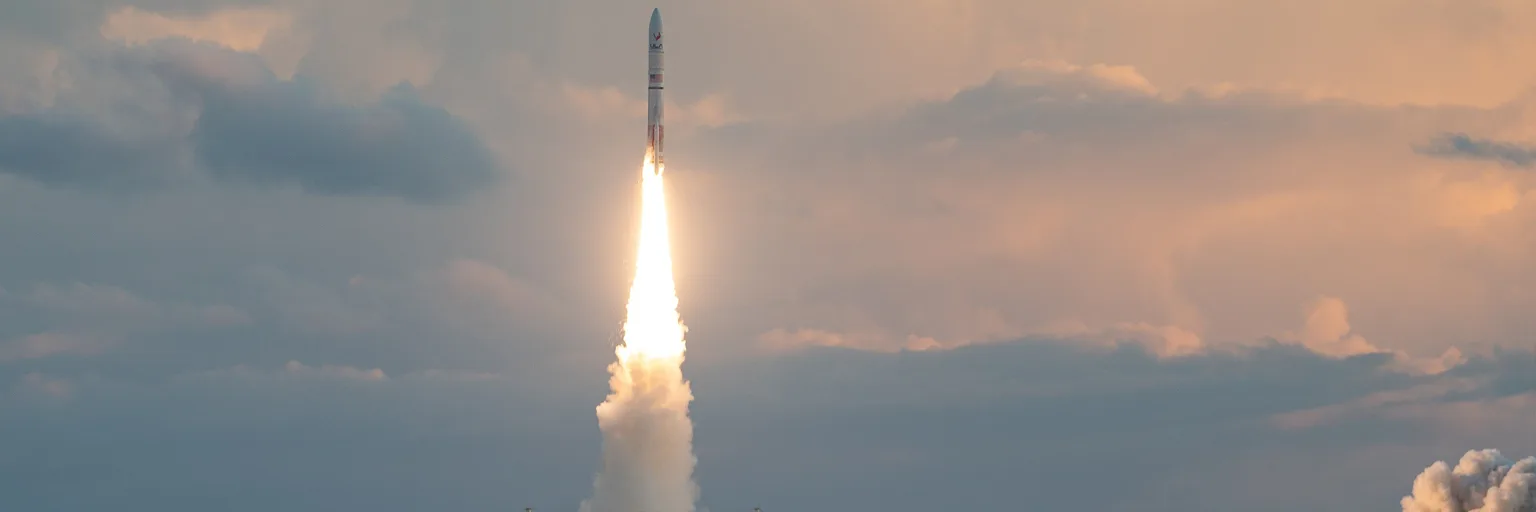
Starship's ship catch is the real reuse milestone, but only reliability will make it count
Catching the upper stage after 14 orbits is the hardest reuse step yet. The lost booster is a reminder that a repeatable routine matters more than a one-off spectacle.
Voyager 1's light-day is a milestone of stamina, not of distance
Reaching one light-day is a nice number, but the real story is a plutonium-powered probe shedding instruments to stay alive, and the question of what comes next.

Artemis II's GPS glitch is a warning, not a curiosity
A rocket punched holes in the ionosphere and may have skewed GPS by meters. With more launches coming, we should measure that effect, not file it under trivia.