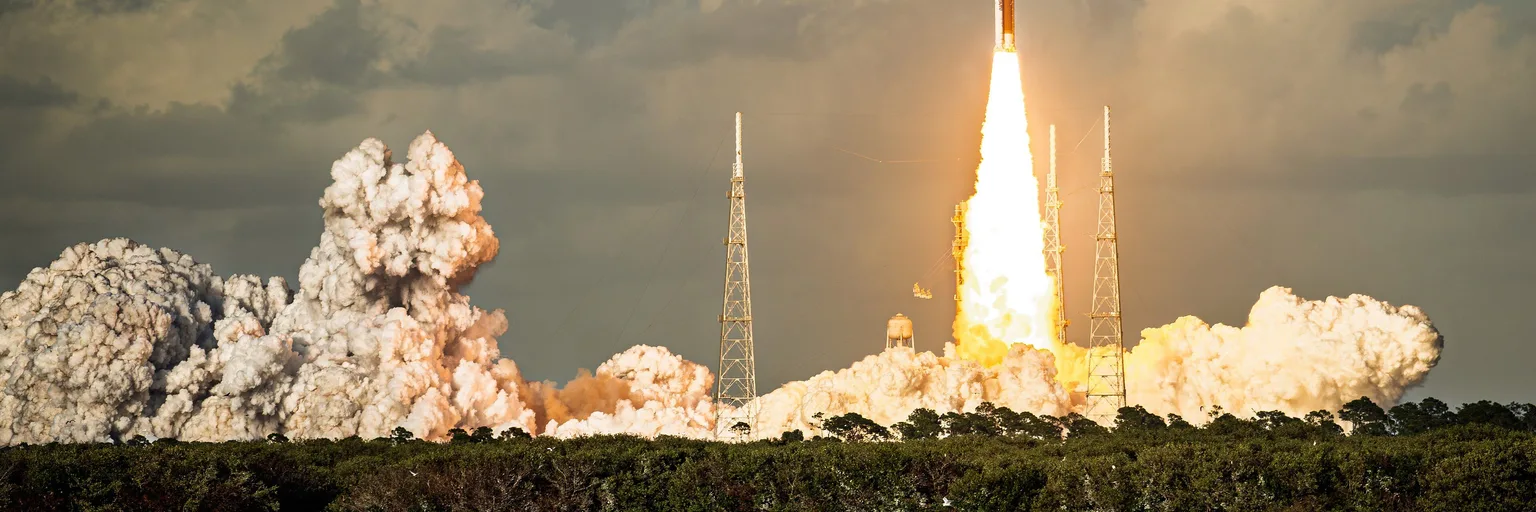
Starship's ship catch is the real reuse milestone, but only reliability will make it count
Catching the upper stage after 14 orbits is the hardest reuse step yet. The lost booster is a reminder that a repeatable routine matters more than a one-off spectacle.
Photo: Steve Jurvetson / Wikimedia Commons (CC BY 2.0)
Is a rocket "reusable" the moment it lands, or the moment it flies again? SpaceX just gave us a spectacular answer to the first half of that question and a pointed reminder about the second.
On Flight 15, on November 13 and 14, the Starship upper stage came back from orbit and was caught by the launch tower's arms for the first time. As t3n reports, the booster did not get the same treatment. SpaceX had to abort its catch attempt, and Elon Musk said on X that the stage ran out of propellant. Reports say the ship completed 14 orbits and deployed 26 Starlink satellites before it returned to Texas. Quartz puts the return at 22.5 hours after launch.
The ship catch is the real milestone, not the booster one
The booster has already been caught three times, according to t3n. That is impressive, but a booster comes back from a relatively gentle trajectory. A ship returning from orbit has to survive reentry, keep its heat shield intact and then hit a target the size of a tower's arms. Doing that after a full orbital mission, with a payload delivered, is a different category of problem.
That's why we think the catch, not the satellite deployment, is the headline. Putting 26 satellites in orbit is useful, but launch vehicles have done similar jobs for decades. Returning the most expensive part of the stack to the pad, apparently in a condition worth inspecting, is what the whole architecture was designed around. Without it, Starship is just a very large expendable rocket.
"Caught" is not "reusable"
Here we want to cool the enthusiasm a little. The coverage is full of "holy grail" language, but a ship that has been caught has proved it can return, not that it can fly again quickly and cheaply. As aktiencheck.de puts it, the ship is caught, and it is reusable only once it flies again. We agree.
The open questions are the unglamorous ones. How much refurbishment does the heat shield need after 14 orbits? SpaceX itself admits there is still work to do there, according to that same report. Musk names reflying both booster and ship as the next big milestone, and the report argues that costs only really fall after that. Until a ship takes off for a second time, with a turnaround that looks like routine, the economics remain a promise.
The lost booster is the more important signal
A booster that ran short of propellant, with engines reportedly performing slightly below plan, is not a catastrophe. It's a mission that was mostly successful. But it is exactly the kind of failure that decides whether a rocket becomes infrastructure. A system meant to launch large numbers of Starlink V3 satellites, and later support lunar missions, cannot lose half of its reuse loop on a margin of fuel.
The schedule makes this matter. According to the same report, SpaceX wants reliable reuse by the time NASA's Artemis IV flies, currently planned for 2028. Before that come a ship-to-ship propellant transfer test, planned for next year and never shown at this scale, and an uncrewed lunar demonstration. The next flight is targeted for December and could launch from Florida for the first time. Those are plans, not guarantees, and each one adds a new way to fail.
Our verdict
Treat Flight 15 as a genuine engineering breakthrough and not yet as a business one. The ship catch removes the biggest technical doubt about full reuse. What it doesn't remove is the doubt about cadence: whether SpaceX can catch both stages, refly them and do it again without drama. We'd watch the next two or three flights far more closely than this one. A boring, repeated double catch will be worth more than any single spectacular image.
No topics yet: start the first one.
More stories
Hera's real test for planetary defense isn't the crater. It's the why
DART moved an asteroid more than scientists expected. Hera's close-up of Dimorphos will show whether that was a repeatable physical rule or a lucky shot.

Forty lost satellites show why launch diversity is a safety net
Vulcan's failure cost Amazon 40 Leo satellites. The bigger loss is the spare capacity that a thin market of rockets can no longer provide.

Voyager 1's light-day is a milestone of stamina, not of distance
Reaching one light-day is a nice number, but the real story is a plutonium-powered probe shedding instruments to stay alive, and the question of what comes next.

Artemis II's GPS glitch is a warning, not a curiosity
A rocket punched holes in the ionosphere and may have skewed GPS by meters. With more launches coming, we should measure that effect, not file it under trivia.