Forty lost satellites show why launch diversity is a safety net
Vulcan's failure cost Amazon 40 Leo satellites. The bigger loss is the spare capacity that a thin market of rockets can no longer provide.
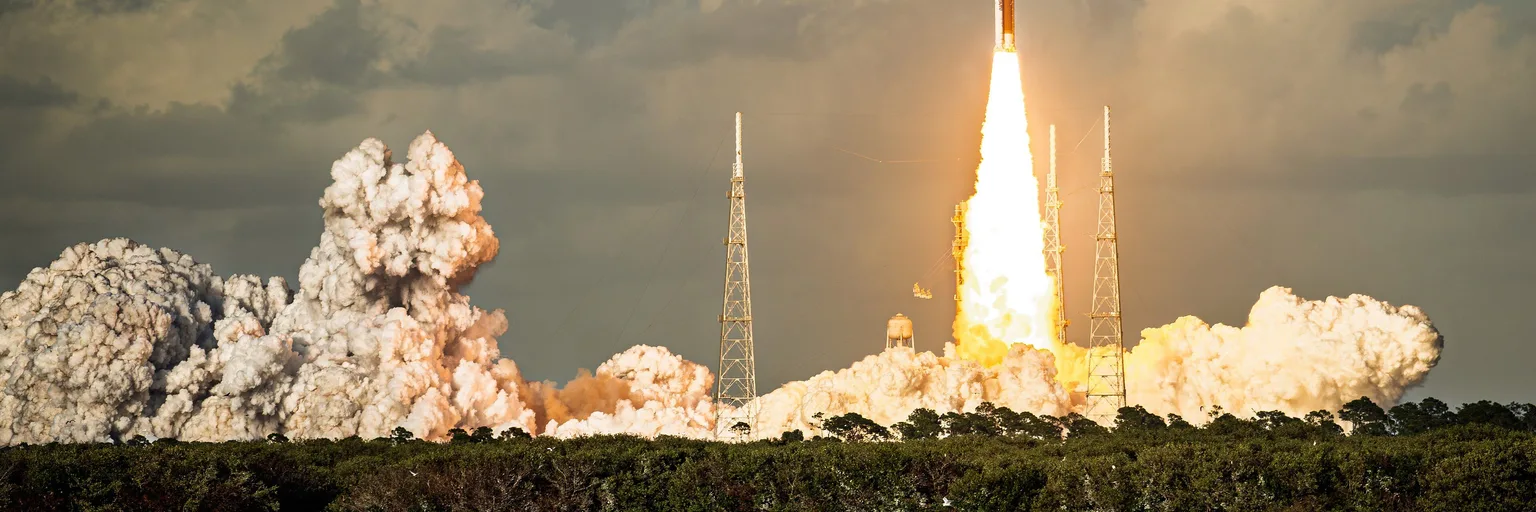
Photo: U.S. Space Force photo by Airman 1st Class Collin Wesson / Wikimedia Commons (Public domain)
What is the real price of a rocket failure: the 40 satellites, or the rocket you no longer have on the shelf? We think it's the second, and the Vulcan accident makes the case better than any white paper could.
On Sunday, November 15, ULA's Vulcan lifted off from Cape Canaveral carrying 40 Amazon Leo satellites. About 10 minutes later it suffered what the company called an anomaly and failed to deliver the payload to orbit. It was ULA's first total mission loss since its formation in 2006. The cause is unknown. Early reporting, which Ars Technica based on several sources, points to the booster stage, where the two BE-4 engines reportedly kept firing at least 30 seconds longer than planned. ULA has not confirmed any of this, so treat it as preliminary.
The satellites are the cheap part
Forty satellites is a painful number, but Amazon says it has built its 1,000th satellite, so hardware is not the bottleneck. Analyst Todd Harrison told the LA Times that the loss of 40 satellites worries him less than the delay it will cause in future ULA launches of Amazon's satellites. We agree. Amazon had about 400 Leo satellites in orbit and needs more than 3,200 for its first generation. It also booked 38 Vulcan missions, and this was the first. A grounded rocket turns a full warehouse into a parking lot.
The timing is bad. Amazon already missed a July deadline to have half its network in service, though the FCC gave it until July 2029 for the full first generation. A commercial start by year-end now looks doubtful, and that's our reading, not a company statement.
Diversity is insurance, and the policy is thinner than it looks
Here is the uncomfortable part. Amazon did spread its bets across several launch providers. The Next Web reports that its next flight, an Ariane 6 with 36 satellites, is set for November 23 at the earliest, and that it has 10 more missions booked on Falcon 9. That diversification is why one failure is a setback and not a catastrophe.
But look at the rest of the shelf. New Glenn has been grounded since a May explosion, which the same report traces to a faulty BE-4 valve, and Blue Origin has pushed its return to January. Vulcan and New Glenn share the BE-4. If that engine proves to be involved, two of the few alternatives would share one weak point. Reuters says it's unclear whether the engine played a role, so this is a risk to watch, not a finding. Meanwhile SpaceX has reportedly stopped taking new Falcon 9 bookings. Diversity on paper isn't diversity in practice when the options share parts or aren't flying.
Early failures decide who owns the road to orbit
A new rocket's first years are a political event as much as an engineering one. Vulcan debuted in 2024 and, as Gizmodo notes, flew four times before this. All four reached orbit, but two had solid booster problems, and after the second, in February, the Space Force suspended national security launches. Sunday was meant to be the return to normal. ULA was awarded 19 national security missions under the latest program against 28 for SpaceX, and the Pentagon hadn't yet cleared Vulcan to resume those flights.
Each stumble hands SpaceX more of that work by default. The company's Starship also returned from orbit and was caught by mechanical arms the same weekend, which made the contrast brutal. In our view, ULA's record is not the issue: two decades without a total loss is real. The issue is that a young rocket has little margin for error in a market where, in Harrison's words, demand is starting to exceed supply.
NASA's administrator wrote that "Artemis, Moon Base, and the nation need ULA." There is a concrete reason: a version of Centaur is planned for the Space Launch System. If the upper stage is implicated, Artemis feels it too. Nothing says it is.
Don't write off Vulcan, but do fix the concentration
Rockets that matter have survived worse, and ULA says customers will have visibility into the investigation. But policymakers and constellation builders should read this as a warning about concentration: shared engines, a single dominant provider and a grounded newcomer is a fragile arrangement. The sensible response is to fund and certify redundancy before the next anomaly, not after. The 40 satellites are replaceable. A launch market with one real option isn't.
No topics yet: start the first one.
More stories
Hera's real test for planetary defense isn't the crater. It's the why
DART moved an asteroid more than scientists expected. Hera's close-up of Dimorphos will show whether that was a repeatable physical rule or a lucky shot.
Starship's ship catch is the real reuse milestone, but only reliability will make it count
Catching the upper stage after 14 orbits is the hardest reuse step yet. The lost booster is a reminder that a repeatable routine matters more than a one-off spectacle.
Voyager 1's light-day is a milestone of stamina, not of distance
Reaching one light-day is a nice number, but the real story is a plutonium-powered probe shedding instruments to stay alive, and the question of what comes next.

Artemis II's GPS glitch is a warning, not a curiosity
A rocket punched holes in the ionosphere and may have skewed GPS by meters. With more launches coming, we should measure that effect, not file it under trivia.