Carbonado, the 'space diamond,' may be ancient Earth life in disguise
A century of cosmic-origin lore around black, porous diamonds is being challenged by carbon that looks like it came from ancient living things. The lesson is about scrutiny.
AI-generated image
Why do we keep reaching for the cosmos when the Earth has not finished talking? Carbonado, the black, porous diamond, has spent roughly a century as a poster child for "it must have come from space." Now a new study, as Futura reports, overturns that idea and points to a thoroughly earthly origin, with carbon that resembles what ancient living things leave behind. We think that is a better story than the one it replaces, precisely because it is less glamorous.
The new study is a strong challenge, not a closed case
The outline is simple. Carbonados are black, porous diamonds whose parent rock nobody has ever found. The extraterrestrial idea has dominated for a century. According to ScienceAlert, the researchers measured the proportions of different forms of carbon in the stones. In most of them, those proportions resembled carbon left behind by ancient living things. One grain landed between typical carbonado and diamonds formed deep inside the Earth, which hints at a mixture of sources.
Some caution is in order. The material we have doesn't say whether this is peer-reviewed, how many stones were measured, or how many of them fit the pattern. "Most stones" is not "all stones," and one odd grain is a reminder that these objects are messy. Note also that ScienceAlert's headline mentions an ancient cosmic impact, and a separate paper's title proposes a formation model from "impact-induced subduction." So even the earthly camp may keep a role for something arriving from above, just not necessarily as the source of the carbon itself. We would treat this as a strong challenge, not a closed case.
The space story was never as solid as it sounded
It's worth being fair to the old idea, because it wasn't foolish. Carbonado is strange. A GIA review notes that it is found only in Brazil and the Central African Republic, and that these strongly bonded, porous aggregates have melt-like glassy surfaces unlike any conventional diamond. A critical evaluation in ScienceDirect adds that the porosity precludes formation at high pressure and temperature in the deep interior, and that exotic inclusions of highly reduced metals, carbides and nitrides make the puzzle harder still. If you can't explain a stone with the usual toolkit, "not from here" feels like a tidy exit.
There was evidence cited, too. One account describes work finding that carbonado is consistent with a hydrogen-rich environment like the solar nebula, with nitrogen-hydrogen features closer to presolar diamonds than to terrestrial ones. French Wikipedia says a team from Florida International University and Case Western Reserve University believed that traces of nitrogen and hydrogen proved an extraterrestrial origin.
That word, "proved," is where we get uncomfortable. A chemical resemblance is a clue, not a birth certificate. And in our view, the cosmic hypothesis leaned heavily on the absence of a better explanation. No host rock, odd texture, odd chemistry. It looks like a gap with a flattering name on it.
Exotic claims should pay a higher price, not get a discount
This is the part that matters beyond diamonds. The more romantic an origin, the more it spreads. A gem from the solar nebula is a headline; a gem recycled from ancient biology is a footnote. That asymmetry creates pressure to keep the dramatic version alive long after the evidence thins out. A century is plenty of time for a hypothesis to harden into "the commonly accepted theory," which is exactly how French Wikipedia describes it.
Measuring the proportions of different forms of carbon is a blunt but useful instrument precisely because it can embarrass a good story. If a stone's carbon looks biological, an interstellar pedigree has a lot of explaining to do. Still, we'd argue the same standard must apply to the new claim. A mixed-source grain, a shortage of details, and the lack of a located parent rock mean the earthly story also has to earn its keep. Scrutiny is not a side we pick; it's a rule we apply to whoever is winning.
Our verdict
Bet against the cosmic version, but don't crown the earthly one yet. If you're reading about carbonado over the coming weeks, ask three things: is the paper peer-reviewed, how many stones were tested, and does the explanation also handle the porosity and the glassy skin? If the answer to the last question is vague, keep your skepticism in reserve.
And the broader lesson is almost a relief. A black diamond may carry a trace of ancient living things, squeezed into something hard enough to survive. That's no consolation prize. It's just a story we had to check before we could tell it.
No topics yet: start the first one.
More stories
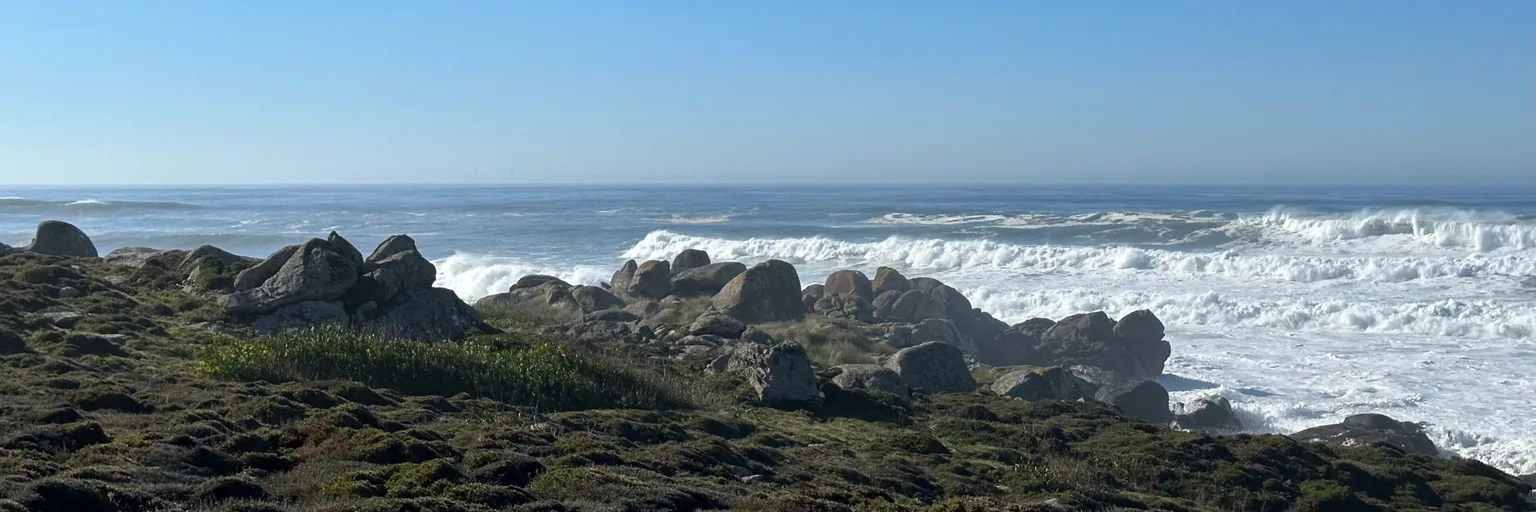
The Atlantic isn't closing on our watch, but Iberia should still worry
A possible new subduction zone off Portugal is real science. The "end of the Atlantic" is a geological metaphor, and the tsunami risk is the part that deserves your attention.
Amazon rain moves Earth's balance point, and that's the point
A few millimeters of drift in Earth's center of mass sounds trivial, but it shows the water cycle is planetary in scale and that precise measurement is a climate tool.
Judge climate policy by bodies, not degrees: the Lancet's emergency call
Nearly 3 million heat deaths since 2016 show why climate policy should be scored in lives and hours of dangerous heat, not only in fractions of a degree.

Glacier ice loss isn't evenly spread, and that should change how we watch it
A new study finds 3.2% of glaciers account for over half of ice loss. The lesson is to monitor the hotspots harder, not to relax about the rest.