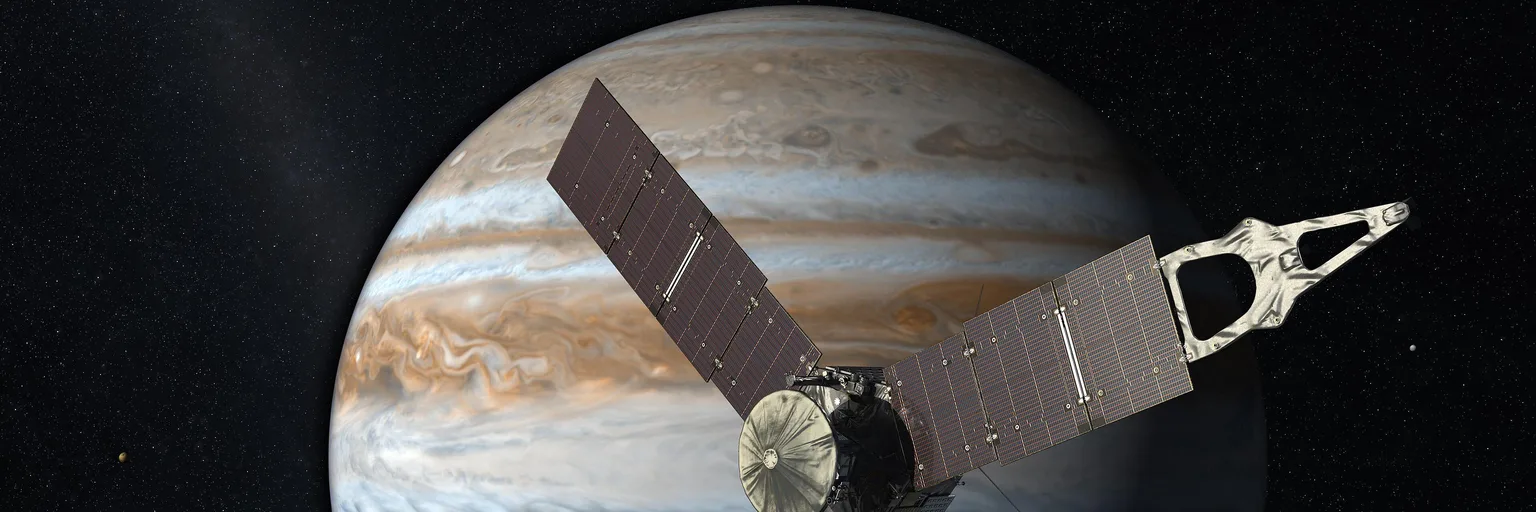
A Saharan rock from Mars shows what free samples can tell us
Teghaza 001, a meteorite at least 4.1 billion years old, hints at a wetter early Mars. It also shows why a lucky find from the desert needs careful, modest reading.
Photo: NASA/JPL-Caltech / Wikimedia Commons (Public domain)
Sending a spacecraft to Mars and back with a few rock samples is one of the hardest things space agencies attempt. Yet sometimes Mars delivers its own samples, for free, in a desert. That is the story of Teghaza 001, and it deserves enthusiasm and a little discipline in equal measure.
The rock puts a date on a wetter Mars
As Reuters reports, the meteorite was found in 2022 in the Sahara, in Mali. It formed in the Martian crust at least 4.1 billion years ago, which may make it the oldest of the 435 known meteorites from Mars. It is a coarse-grained igneous rock that cooled slowly underground. Its age was fixed using the decay of uranium into lead in zircon crystals. Oxygen and hydrogen isotopes in its minerals indicate that water was percolating down into the deeper crust and mixing with molten rock from the mantle. The results are in the journal Science.
That is the news. The interesting part is what it lets us argue.
A free sample is still a precious one
Mars has rovers, orbiters and landers, so why care about a rock that fell to Earth? Because a laboratory on Earth can do things no rover can. Lead author Yang Liu of NASA's Jet Propulsion Laboratory says such meteorites are "our only samples from Mars" and that the detail extracted from them complements and validates what satellites, landers and rovers see. We think that framing is exactly right. Orbital data tells you where water was likely. A zircon tells you when.
The scarcity matters too. Only three Martian meteorites, this one included, date to the planet's early history. One found in Antarctica in 1984 was first assessed at about 4.5 billion years but was later judged to be of similar age to Teghaza 001. When the sample count for an entire era is three, each new rock carries a lot of weight. And this one has chemistry distinct from the other known Martian meteorites, which, in our reading, makes it a window onto a part of Mars we have not sampled before. Liu says it may have come from the southern highlands, possibly near Hellas Basin. Note the "may" and the "possibly".
Habitable is not inhabited
It would be easy to turn this into a headline about life on Mars. The researchers themselves refuse to. Co-author Lee Saper of NASA's Ames Research Center said the findings support the idea that early Mars had the ingredients and conditions to harbor life, but "do not directly answer the question of whether there was life on Mars." Saper also describes a wetter Mars with a thick atmosphere whose habitable conditions were waning rapidly over its first billion years or so. In our reading, that is the more valuable message: not a miracle, but a timeline of decline.
There are other limits worth keeping in mind. A meteorite has no address label. Liu is candid that the team does not know when it landed on Earth, and where it came from on Mars is only a "may have." One rock is also one rock: it records water interacting with crust in one place, not a global ocean on a given date. A separate paper in Science Advances, as its abstract describes, finds hydrogen isotope signals in phosphates that mix magmatic water with a component retaining an imprint of the ancient Martian hydrosphere. That is a careful, layered claim, and it is stronger for being modest.
Meteorites are a supplement to sample return, not a substitute
The takeaway is not that sample return is obsolete. If anything, Teghaza 001 makes the opposite case: a rock whose exact origin on Mars we can only guess at is already changing how we talk about early Mars, so imagine what one collected at a known site, with known context, could do.
What should readers do? Enjoy the result, and be wary of any coverage that jumps from "water" to "life." The honest version is that a 4.1-billion-year-old rock from the Sahara makes a warm, wet early Mars harder to dismiss. That is plenty.
No topics yet: start the first one.
More stories
Betelgeuse calming down isn't an anticlimax: quiet is data too
After months of fading, the red supergiant has stopped sinking, for now. That's no letdown: each wobble of Betelgeuse is teaching us how little we knew about stars near the end of their lives.
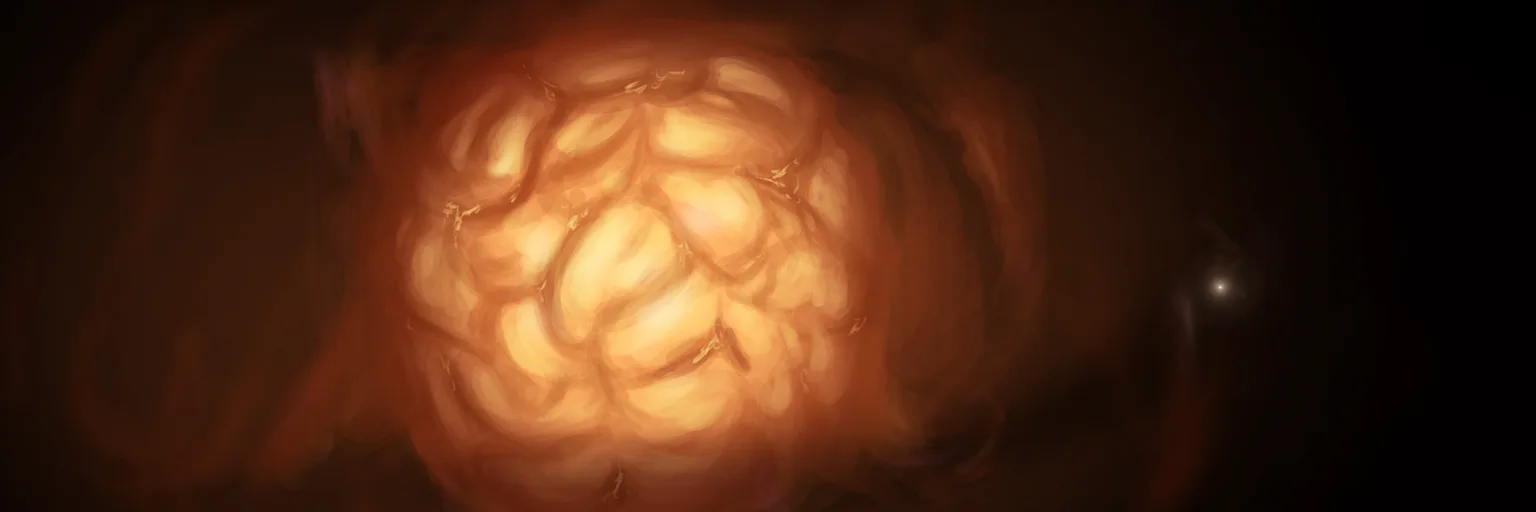
Teghaza 001 is a free Mars sample, and a reason to want more
A 4.1-billion-year-old rock from the Sahara shows how much meteorites can teach us about early Mars, and why that is an argument for sample return, not against it.
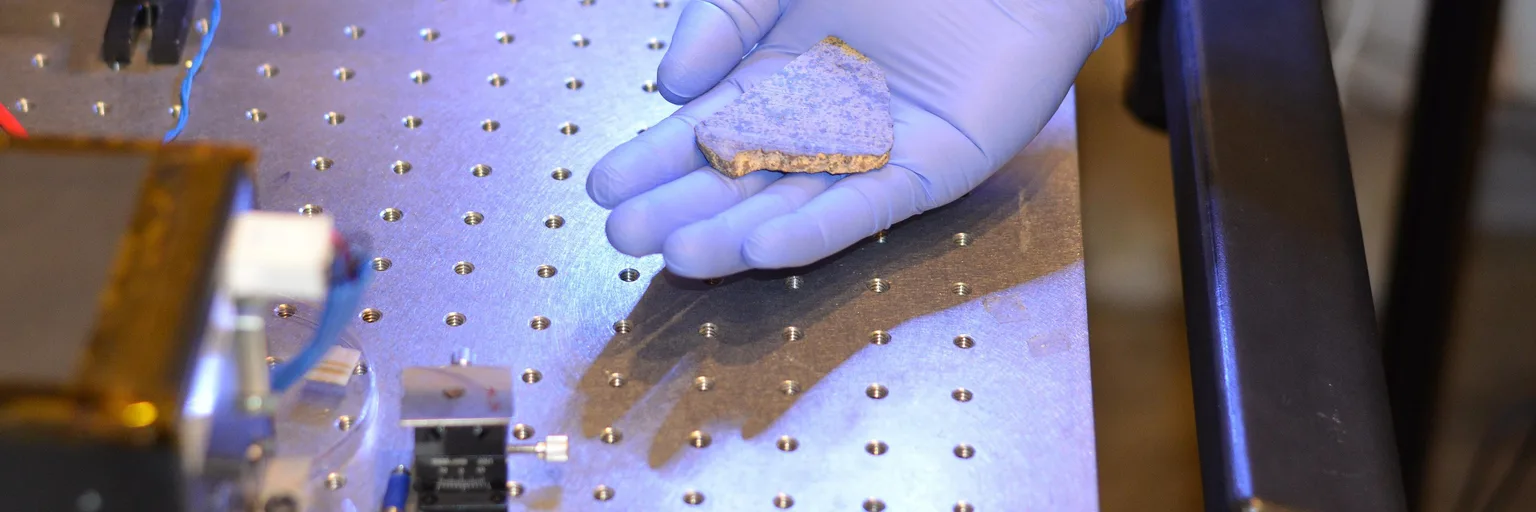
GRB 260310A shows why "modest" is a risky label for a cosmic blast
A gamma-ray burst that looked modest hid a far more energetic story in its afterglow. Brightness is a view from one angle, not a verdict on power.
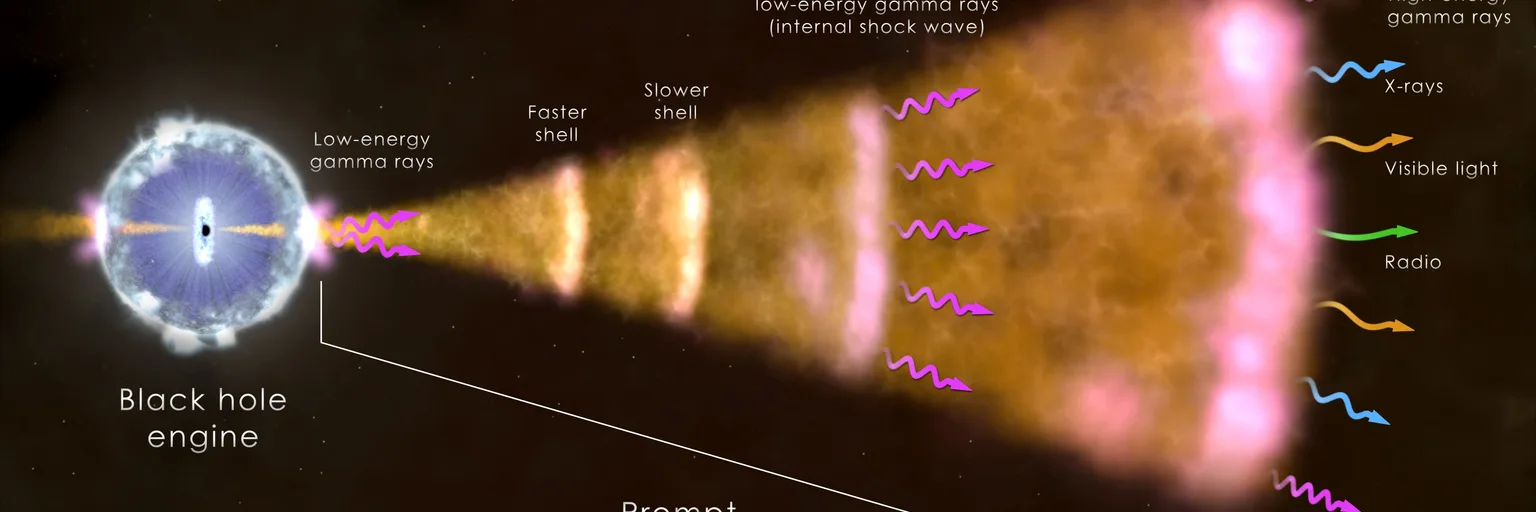
Jupiter's bow shock shows Earth is a poor template for planets
Juno found multi-frequency plasma waves and shocklets at Jupiter that Earth doesn't need. We think that makes our home planet a risky default for magnetosphere models.