Glacier ice loss isn't evenly spread, and that should change how we watch it
A new study finds 3.2% of glaciers account for over half of ice loss. The lesson is to monitor the hotspots harder, not to relax about the rest.
AI-generated image
What if the headline number about shrinking glaciers hides a much lumpier story? Picture more than 216,000 glaciers losing ice. Now consider that a sliver of them, about one in thirty, is doing most of the damage. That is the uncomfortable and useful message of a new study, and we think it deserves more attention than a "glaciers are melting" reflex.
What the study found
As Phys.org reports, glaciers ending in lakes, oceans or ice shelves make up 3.2% of the world's glaciers. Yet they lost 134 billion metric tons of ice each year between 2000 and 2019, which is more than half of all glacier ice loss. The team, from the University of Birmingham and the University of Leeds, examined 216,502 glaciers, excluding the Greenland and Antarctic ice sheets, and published in Nature Communications.
The result is not just about size. These glaciers are much larger than land-ending ones, together covering more than half of the world's glacier area. But, according to the University of Birmingham and the published analysis, lake-ending glaciers lost ice about 57% faster relative to their size than land-ending ones, after accounting for climate, size and elevation.
Averages are a bad way to look at glaciers
Treating "the world's glaciers" as one population is convenient and misleading. Well over 200,000 glaciers are in this dataset, and many of the smaller ones matter enormously to the valleys and towns that depend on them. But for the global ice ledger, and the sea-level contribution that comes with it, a relatively small group of water-terminating giants dominates. That should shape where satellites, field campaigns and modeling effort go.
The study itself points to a gap. According to the researchers, many models used to project glacier change don't yet fully account for lake-ending glaciers. Their new classification could help other teams improve projections of sea-level rise, water resources and natural hazards. In our view, that is the real payoff: not a dramatic statistic, but a better map for people who build the forecasts.
There is also a dynamic angle worth watching. The study reports that ocean-ending glaciers are retreating onto land in parts of the Arctic, which would likely slow them down. Meanwhile, growing glacier lakes are turning some land-ending glaciers into lake-ending ones, which could lose ice faster. Glaciers are changing categories, so we suspect that today's hotspot list will not be the hotspot list a couple of decades from now. Monitoring has to follow that migration.
Don't read this as a reason to relax
The tempting misreading is "so only a few glaciers matter." We'd resist that. Local water supply, hydropower and irrigation depend on specific glaciers, many of them probably small, and nothing in the study says those are safe.
Nor does it say that targeting hotspots replaces cutting emissions. Dr. Joe Mallalieu, who conducted the research, admits "we don't yet know exactly why" lake-ending glaciers lose ice so fast. It could be the lakes, the glaciers' size and shape, or both. Lakes can affect glaciers in several ways that may contribute, such as calving and lake water melting ice below the waterline, but the cause is still unresolved. Until it is, we would be cautious about turning this into engineering fixes or neat policy prescriptions. Mallalieu also notes that glacier lakes are becoming more common in a warming climate, so we think the hotspot group is likely to grow as temperatures rise. That is our inference, not a finding, but it points in one direction.
Our verdict
Concentrated loss is a case for sharper science, not smaller ambition. Funders and agencies should prioritize observation of lake- and ocean-terminating glaciers and push modelers to include them properly. Local adaptation planners should still look at their own glaciers, whatever their type. And the climate policy question stays the same: the warming that creates new glacier lakes is not something a better model will fix. Both jobs are needed, and the study makes the first one easier to do well.
No topics yet: start the first one.
More stories
Kikai's refilling magma is a monitoring story, not a doomsday clock
A Japanese supervolcano is recharging, but coverage of the study stresses that this does not mean an eruption is imminent. The real value is learning what to watch.
Champi was a monster, but the forecast was the real story
A 185 mph super typhoon was tracked for days, and Taiwan had time to cancel flights and evacuate. Forecasting is science's quiet success, and we undervalue it.
Trust the satellites, not the "super El Niño" headlines, to size up this event
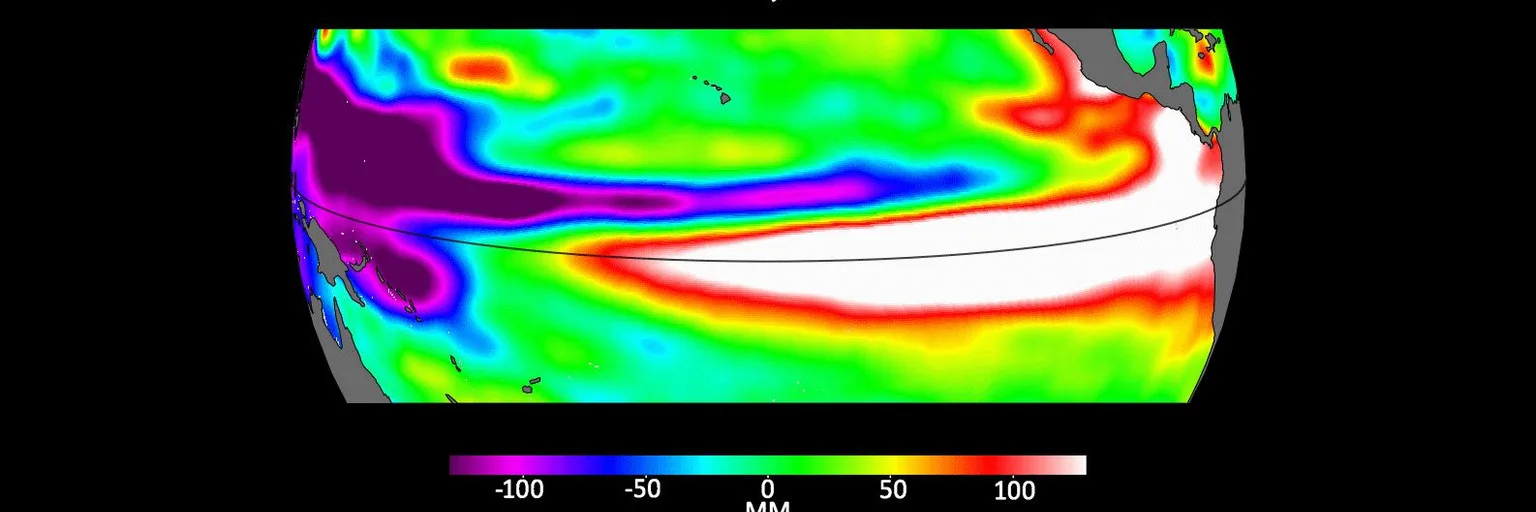
A 35-year altimetry record shows this El Niño rivals 1997, but NASA's own scientist warns that "looks like 1997" is a best guess, not a forecast of what happens to your town.
The Hochvogel crack is a monitoring win, not a spectacle
A summit splitting at up to five millimeters a week shows how water and warming loosen the Alps, and why the mountain's best sensors may matter more than its collapse.