Mars' Equatorial Ice Sea: A Game Changer for Martian History and Human Exploration
The discovery of a vast subsurface ice deposit near Mars' equator fundamentally reshapes our understanding of the planet's water distribution and unlocks new possibilities for its past climate and future human missions.
AI-generated image
Could the Red Planet, long considered a dry, desolate world, harbor an ocean's worth of ice hidden beneath its equatorial sands? New data from the European Space Agency's (ESA) Mars Express probe suggests precisely that, revealing a colossal subsurface ice deposit that dramatically reshapes our understanding of Mars's past and its potential for future human endeavors.
For decades, the presence of water ice on Mars has been largely confined to its polar regions. However, recent observations from the Mars Advanced Radar for Subsurface and Ionospheric Sounding (MARSIS) instrument aboard Mars Express indicate that vast layers of water ice lie buried beneath the Medusae Fossae Formation (MFF) near the Martian equator. These layers are estimated to be up to 3.7 kilometers thick, significantly deeper than initial 2007 findings. If this immense volume of ice were to melt, it could theoretically cover the entire planet in a global ocean between 1.5 to 2.7 meters deep, a quantity comparable to the Red Sea on Earth.
Rewriting Mars's Hydrological Story
The notion that such a substantial ice reservoir exists at low Martian latitudes challenges prevailing assumptions about where water can be found and preserved on the planet. Traditionally, the harsh equatorial environment, with its greater solar insolation and thin atmosphere, was deemed unsuitable for long-term ice stability near the surface. The radar signals obtained by MARSIS, which closely resemble those from known polar ice caps, strongly support the interpretation of layered ice. Researchers like Thomas Watters of the Smithsonian Institution and Andrea Cicchetti from the National Institute for Astrophysics in Italy have highlighted how models involving only dust or volcanic ash cannot account for the observed density and radar transparency, making ice a necessary component of the MFF's composition. This evidence points to a much more widespread distribution of water in Mars's past than previously conceived, radically altering our hydrological map of the planet.
A Window into Ancient Martian Climates
The existence of such massive equatorial ice deposits provides crucial insights into Mars's ancient climate history. These ice sheets could not have formed under current Martian conditions; they are relics of a bygone era when the planet was likely much warmer and wetter. Scientists have long found geological evidence of ancient riverbeds, lakes, and oceans, suggesting a dramatically different past. The MFF ice suggests periods when atmospheric conditions allowed for the accumulation and preservation of frozen water at lower latitudes. Reconstructing how and when these deposits formed could unlock critical clues about the planet's transition from a potentially habitable world to the arid one we observe today. As Colin Wilson, ESA's Mars Express project scientist, notes, understanding these deposits could help
No topics yet: start the first one.
More stories
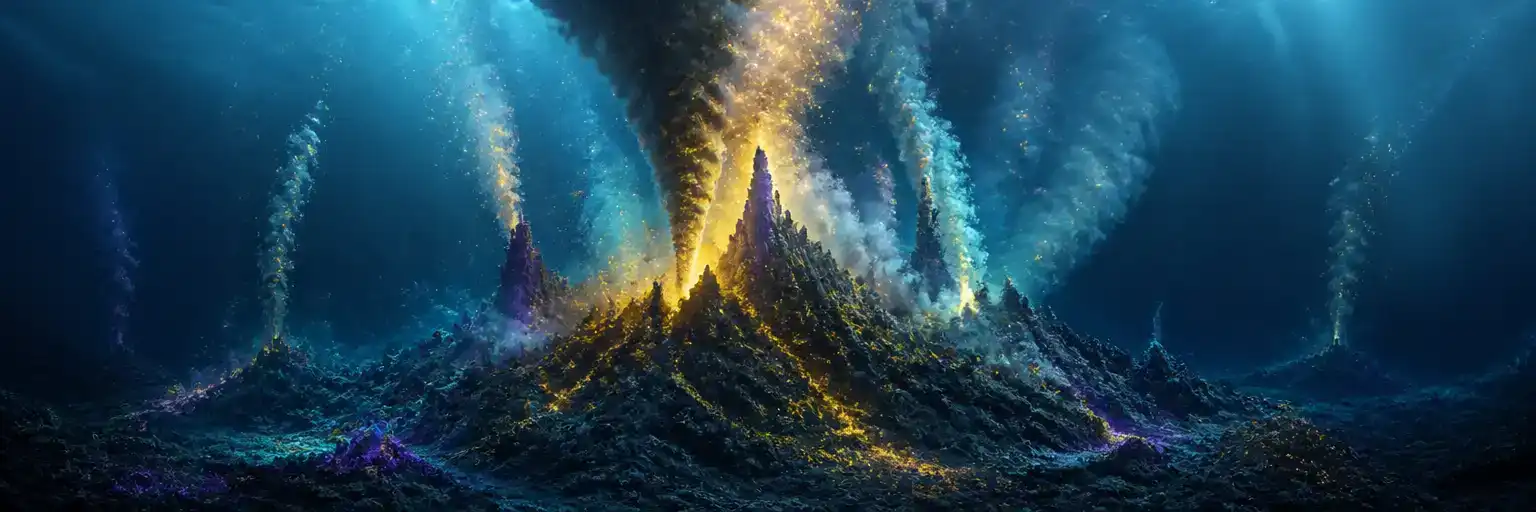
Volcanoes Aren't Just Destructive: They're Making Gold in Surprising Ways
The groundbreaking discovery of gold particles in hot fluids from deep-sea volcanic vents, alongside similar findings from Antarctica's Mount Erebus, is fundamentally reshaping our understanding of Earth's precious metal formation.
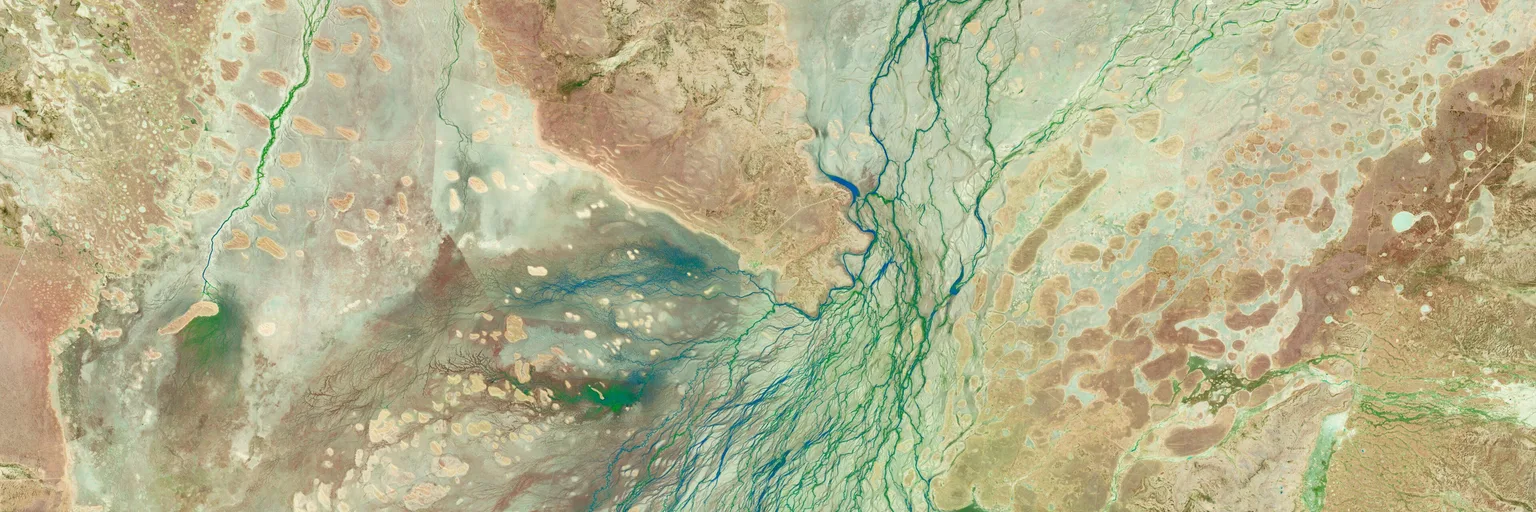
Australia's Green Outback: A Beautiful Illusion of Climate Instability
NASA's breathtaking images of a verdant Australian outback offer a visually stunning, yet deeply concerning, indicator of accelerating climate shifts and their extreme unpredictability, challenging notions of environmental recovery.
Gondwana's Ancient Ghost: How Piemonte Rocks Rewrite Alpine History
New findings of 530-million-year-old rocks in Val Chisone reveal an ancient fragment of the supercontinent Gondwana, compelling geologists to fundamentally rethink the Alps' true origins.
Chernobyl's Microscopic Paradox: Stable Fuel, Lingering Danger
Unexpectedly stable nuclear fuel particles found in Chernobyl decades after the accident challenge our understanding of radioactive decay and unveil a complex, lingering environmental hazard.