Enceladus' geysers: A cosmic shortcut for finding alien life
New research shows Saturn’s moon Enceladus is not just habitable, but actively aids in the search for life by 'preparing' samples for us.
Photo: NASA/JPL/Space Science Institute / Wikimedia Commons (Public domain)
What if one of the most promising places in our solar system for alien life also acted as a cosmic laboratory assistant, preparing samples for us? This intriguing prospect is precisely what two new studies on Saturn's moon Enceladus suggest, offering crucial insights that could fundamentally reshape our approach to astrobiology and underscore the vital importance of exploring ocean worlds. The implications are profound, making the search for extraterrestrial life not just more likely, but potentially much easier.
Enceladus, a relatively small moon with a diameter of just 500 kilometers, has captivated scientists since the NASA Cassini mission detected plumes of water vapor and ice erupting from its south pole in 2005. Beneath its thick, icy shell lies a global ocean, complete with hot, chemically active hydrothermal vents at its rocky seafloor. This makes it a prime candidate for harboring life as we know it, with conditions reminiscent of Earth's own deep-sea environments.
Now, two independent yet complementary studies published in Science Advances provide compelling new evidence. Researchers from Ludwig-Maximilians-Universität München (LMU) and Freie Universität Berlin have not only demonstrated that Earth-like microbes could thrive in Enceladus' extreme oceanic conditions but also revealed that the very geysers through which the moon expels ocean material actually concentrate potential biosignatures, making them significantly easier to detect by future missions.
Enceladus: A Self-Sampling Ocean World
The first study, led by Frank Postberg from Freie Universität Berlin, tackles a critical aspect of how material from Enceladus' ocean reaches space. Previously, it was often assumed that the ice particles ejected by the plumes were simple, unaltered samples of the subsurface ocean. However, this new research, based on a meticulous reconstruction of Cassini data combined with laboratory experiments and theoretical models, reveals a far more complex and advantageous process.
As ocean water droplets ascend through cracks in the moon's ice crust, they don't freeze instantaneously. Instead, they cool and freeze slowly. This gradual process causes the dissolved components, such as salts and organic molecules, to separate and concentrate in different regions within the freezing droplet. When these accelerated frozen grains — traveling at speeds up to 1,000 kilometers per hour — collide with the fissure walls, they shatter into microscopic fragments. The key finding is that many of these fragments end up containing a single substance in a highly concentrated form. As Postberg explains, "Enceladus thus takes on a certain part of the sample preparation for which we would have to put in considerable effort in a chemical laboratory on Earth," according to a statement from Freie Universität Berlin.
This natural segregation and enrichment act as an inherent 'sample preparation' system. For scientists searching for the subtle 'fingerprints' of life — biosignatures like specific organic compounds or even cellular material — this is a game-changer. It means future spacecraft won't be looking for dilute traces in a complex mix; instead, they might find highly concentrated evidence within individual ice particles, significantly improving the chances of a clear detection with existing measurement technology.
Life Thriving in Extreme Alkalinity
The second study, led by Vanessa Helmbrecht from LMU with contributions from Postberg and Nozair Khawaja, addressed the fundamental question of whether life could even survive in Enceladus' harsh ocean. Researchers meticulously recreated the moon's subsurface conditions in a laboratory: a dark, oxygen-free, highly alkaline environment (pH 10-11) with very little carbon dioxide and ongoing rock-water interactions typical of hydrothermal vents.
Into this simulated Enceladus ocean, they introduced Methanothermococcus okinawensis, a methane-producing microbe (an archaeon) found near Earth's own deep-sea hydrothermal vents. The results were surprising: the microbe not only survived but adapted, grew, and continuously produced methane by utilizing hydrogen generated from the water-rock reactions, even with scarce carbon dioxide. This demonstrated that the Enceladus ocean could provide sufficient chemical energy and nutrients to sustain simple life forms. As Ko-author Dr. Nozair Khawaja stated, "That was really a surprise for us," as reported by Merkur.de.
While this doesn't definitively prove life exists on Enceladus, it powerfully counters the argument that its specific geochemistry might be an insurmountable barrier. Instead, it suggests that the conditions are more favorable than previously thought, allowing for one of life's oldest metabolic pathways – methanogenesis – to thrive. David Rothery, a planetary scientist not involved in the studies, noted to the Guardian that this work removes "another hurdle for the possibility of microbial life there."
A New Era of Astrobiological Exploration
These findings collectively strengthen Enceladus' position as one of the most compelling targets in the search for extraterrestrial life, alongside other ocean worlds like Jupiter's moon Europa. The ability to directly sample the subsurface ocean via its plumes, now made even more efficient by the moon's natural 'sample preparation' mechanism, offers an unparalleled opportunity.
This is particularly relevant for upcoming missions. The European Space Agency (ESA) is already planning its L4 mission, an orbiter and lander targeting Enceladus, with a potential launch in the early 2040s and arrival in the 2050s. This mission is specifically designed to sample the plumes and search for biosignatures. The new research provides invaluable context for interpreting the data such missions might collect, guiding instrument design and data analysis.
In our view, these studies mark a pivotal moment. They don't just tell us where to look, but how the universe might be helping us look. Enceladus isn't just a habitable world; it's a world seemingly designed to make its secrets more accessible, pushing us closer than ever to answering one of humanity's most profound questions: Are we alone?
No topics yet: start the first one.
More stories
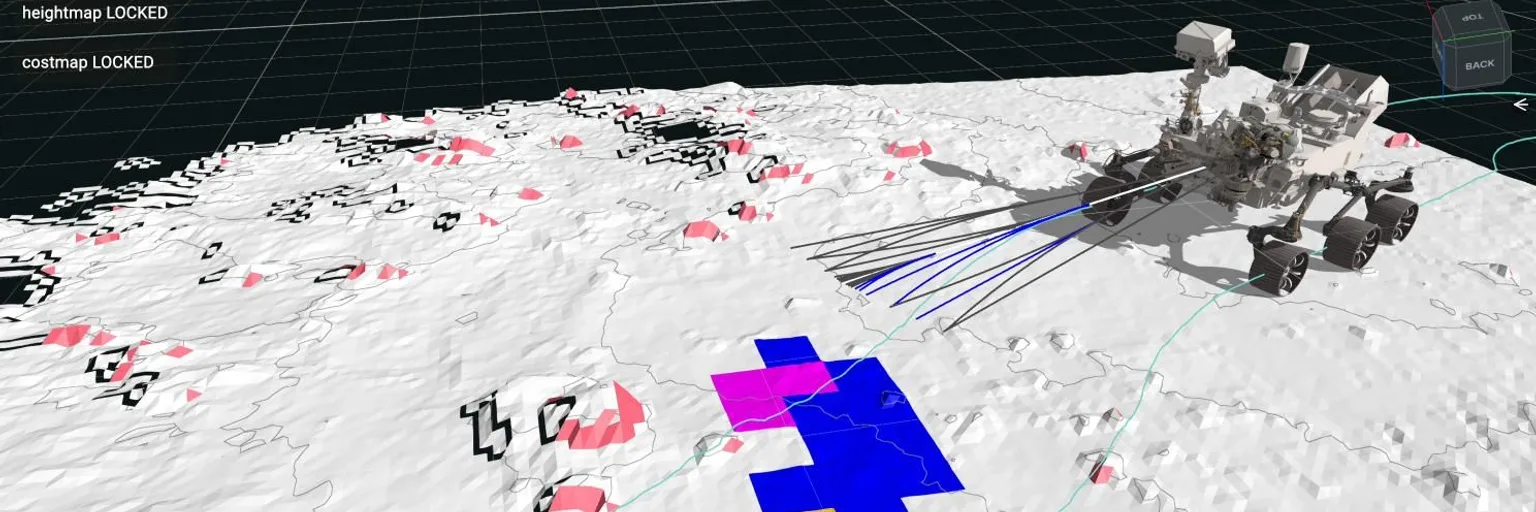
Perseverance's record: Mars rover autonomy is a blueprint for deep space
The Perseverance rover's record-breaking journey on Mars, driven by advanced autonomous navigation, reshapes our approach to extraterrestrial exploration and future human missions.
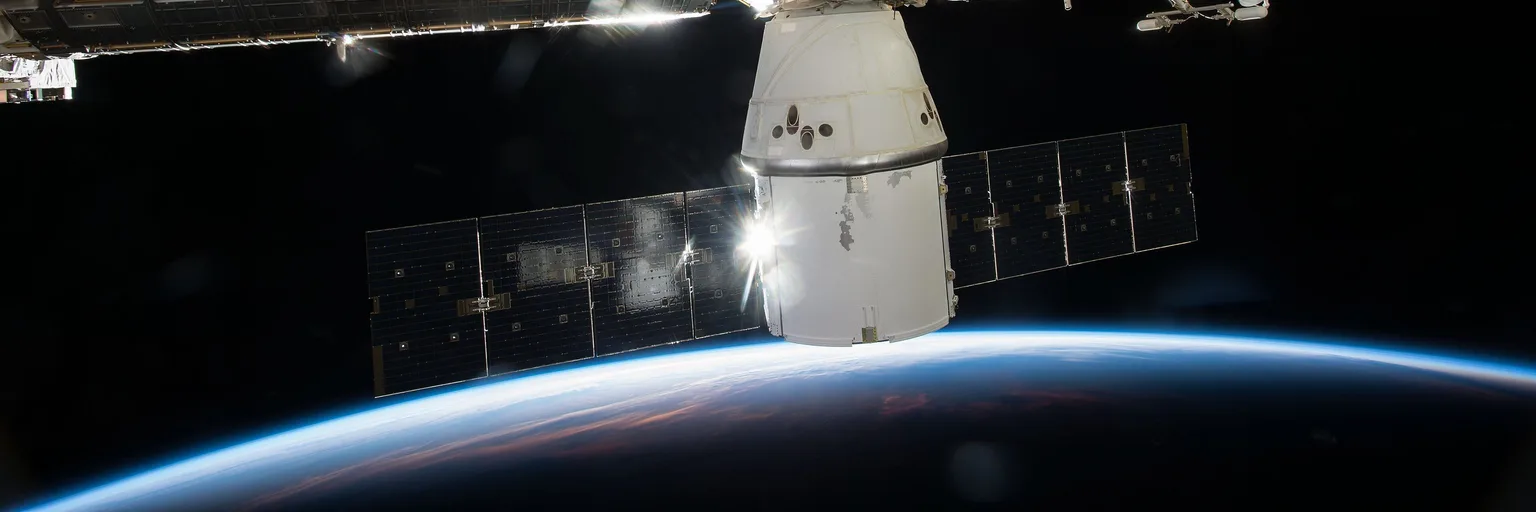
SpaceX's CRS-35: More Than Just Cargo, It's the Future of Space Science
The latest Dragon resupply mission, delivering critical research on human health and plant growth, underscores how private enterprise is reshaping the landscape of orbital scientific discovery.
Blue Origin's repeated New Shepard launches prove reusability isn't a fluke
The consistent success of Blue Origin's New Shepard in launching and landing its rockets marks a pivotal moment, affirming reusable space technology as a cornerstone for future missions beyond suborbital tourism.

This New World Obliterates Our Cosmic Definitions
The discovery of CD-35 2722, a Jupiter-sized object orbiting a brown dwarf, which then orbits a star, profoundly challenges the International Astronomical Union's definitions of planets and moons.