Volcanoes Aren't Just Destructive: They're Making Gold in Surprising Ways
The groundbreaking discovery of gold particles in hot fluids from deep-sea volcanic vents, alongside similar findings from Antarctica's Mount Erebus, is fundamentally reshaping our understanding of Earth's precious metal formation.
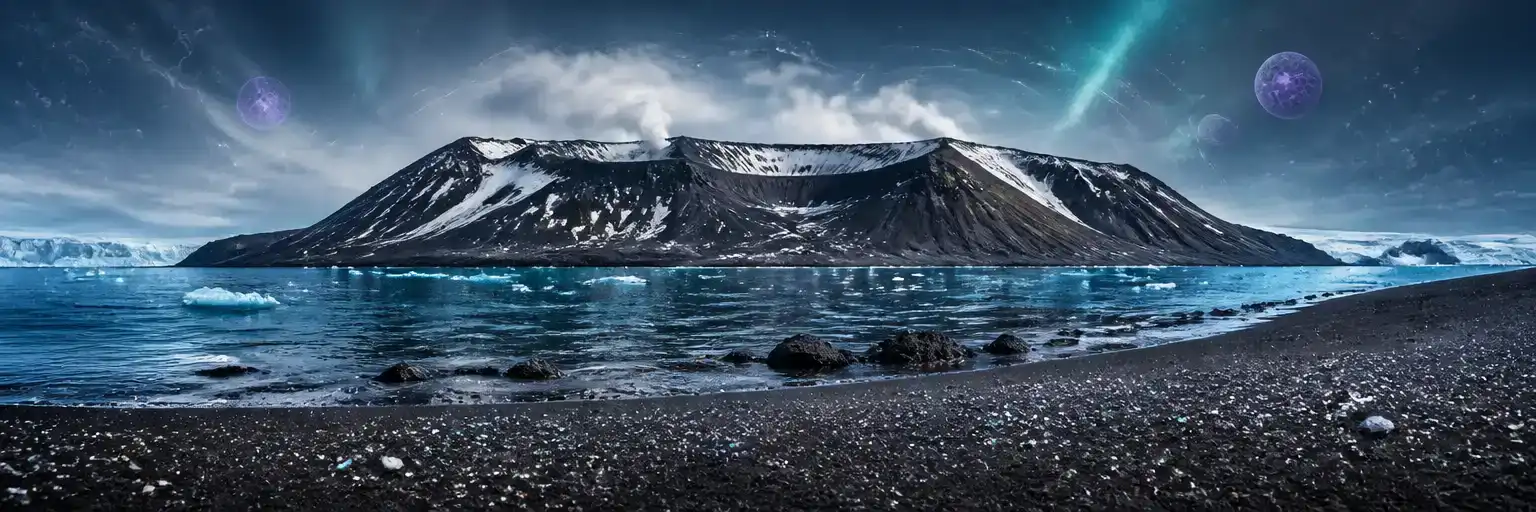
AI-generated image
What if the most improbable treasure hunt wasn't for buried chests, but beneath the very fabric of our oceans and within Earth's most extreme environments? Recent scientific findings are painting a very real, and far more fascinating, picture: gold particles have been observed in hot fluids emanating from submarine volcanoes. This isn't merely an intriguing anecdote; it represents a significant leap in our understanding of Earth's geochemistry and the surprising ways precious metals form and circulate deep beneath the ocean's surface and even into the atmosphere.
For the first time, scientists have confirmed the presence of gold particles in boiling fluids from hydrothermal vents associated with submarine volcanoes, as reported by the USGS in 2017. This observation aligns with theoretical work that suggested gold could indeed be transported in such hot volcanic fluids and gases. While the general association between gold formation and volcanic activity has long been recognized, the specific mechanism and location within active submarine systems represent a new frontier in geological exploration.
Unveiling Deep-Sea Gold Pathways
The deep ocean floor, far from being inert, is a dynamic realm of geological activity, with submarine volcanoes contributing to an estimated 80% of the planet's oceanic crust formation. These underwater giants, often located along fast-moving tectonic plate boundaries like oceanic ridges, are critical to Earth's continuous renewal. The discovery of gold in their hydrothermal emissions is particularly insightful because these vents are essentially natural chimneys, expelling superheated, mineral-rich fluids from the Earth's interior.
Our traditional understanding of gold formation often points to epithermal deposits, where hot waters near the surface carry dissolved gold that precipitates when the water boils. The submarine findings suggest a parallel, or perhaps even more fundamental, process occurring at extreme pressures and temperatures. The fact that sulfide-complexed metals like gold can ascend in vapor-dominated fluid expulsion hints at complex chemical interactions within these deep-sea environments. We believe this discovery fundamentally challenges previous assumptions about where and how gold precipitates, opening a new avenue for research into how such conditions allow gold particles to form, crystallize, and be transported rather than remaining dissolved or bound within rock formations.
Antarctica's Golden Anomaly and Global Implications
While the recent findings focus on submarine activity, they resonate with another unique volcanic phenomenon: the Monte Erebus in Antarctica. This exceptional active volcano continuously releases microscopic particles of gold into the atmosphere, a spectacle that has captivated researchers for decades. Estimates suggest Erebus expels around 80 grams of gold daily, with these tiny crystals capable of traveling up to 1,000 kilometers on the wind before settling on the ice, a phenomenon confirmed by multiple reports including UOL and Click Petróleo e Gás.
What makes Erebus particularly relevant to the submarine discoveries is the role of its persistent, moderate activity and a permanent lava lake. Philip Kyle, a specialist in vulcanology, explains that this slow, steady release of gas allows the gold particles to crystallize—a process that would likely be disrupted by more explosive eruptions, according to Click Petróleo e Gás. While Erebus is a subaerial volcano, its peculiar mechanism for gold transport offers a valuable terrestrial analogue, helping us conceptualize how delicate crystallization and transport processes could also occur in the equally unique, high-pressure, high-temperature environments of submarine vents. Both cases underscore the complex interplay between volcanic gases, temperature, and pressure in generating and distributing gold in ways we are only just beginning to grasp, highlighting nature's diverse geochemical toolkit.
Beyond the Sparkle: New Frontiers in Geochemistry
The implications of these discoveries extend far beyond simply locating new gold deposits. On a fundamental level, observing gold particles forming and moving in active volcanic systems, both submarine and subaerial, challenges and refines our models of metal transport and deposition in the Earth's crust. It compels us to re-evaluate the geochemical cycles of precious metals and the role of volcanic activity—whether explosive or quiescent, deep-sea or atmospheric—in their distribution.
From a resource perspective, the interest in drilling into active submarine volcanoes to potentially discover gold, as highlighted by Earth Magazine, speaks to the possibility of identifying previously untapped or misunderstood mineral reservoirs. However, we contend that the true value lies not just in potential economic gains, but in the scientific insights gained. These findings deepen our appreciation for Earth's dynamic geology, offering critical clues about how our planet works, how valuable resources form, and perhaps even hinting at similar processes on other planetary bodies. The quest for gold, it seems, continues to lead us to profound scientific understanding.
No topics yet: start the first one.
More stories
Australia's Green Outback: A Beautiful Illusion of Climate Instability
NASA's breathtaking images of a verdant Australian outback offer a visually stunning, yet deeply concerning, indicator of accelerating climate shifts and their extreme unpredictability, challenging notions of environmental recovery.
Gondwana's Ancient Ghost: How Piemonte Rocks Rewrite Alpine History
New findings of 530-million-year-old rocks in Val Chisone reveal an ancient fragment of the supercontinent Gondwana, compelling geologists to fundamentally rethink the Alps' true origins.

Chernobyl's Microscopic Paradox: Stable Fuel, Lingering Danger
Unexpectedly stable nuclear fuel particles found in Chernobyl decades after the accident challenge our understanding of radioactive decay and unveil a complex, lingering environmental hazard.

Antarctica's Beaches Under Siege: A Microplastic Wake-Up Call
The discovery of microplastics on Deception Island's pristine shores confirms that no corner of our planet remains untouched by human pollution, demanding urgent global accountability.