Ibirania parva proves "bigger is better" is a lazy story about evolution
A five-to-six-meter titanosaur from São Paulo shows that even the lineage famous for giants could shrink when the environment demanded it. Size is a response, not a goal.
Photo: Matheus F Gadelha / Wikimedia Commons (CC BY-SA 4.0)
If you wanted to draw the poster child for "evolution rewards size," you would draw a titanosaur. So what do we do with one that was barely the length of a large truck? Ibirania parva, a dwarf member of the most famously gigantic dinosaur family, is a polite but firm rebuttal to a story we love telling ourselves.
The fossils rule out the easy excuse
The animal was described in the journal Ameghiniana, in a paper that, according to Estadão, came out on September 15, 2022. The fossils were found in Ibirá, in the interior of São Paulo state. As Exame reported, it measured between 5 and 6 meters and lived about 80 million years ago, in the Late Cretaceous. Some sauropods, by comparison, passed 30 meters.
The obvious objection is that it might simply have been a juvenile. The researchers checked. Analysis of fossilized tissue showed the individual was already an adult that had reached its final size. That makes Ibirania, according to the same report, the first documented dwarf species on the American continent. (This rests on a single published study, and we are relying on press coverage of it.)
Small was not a failure, it was an answer
The part we find most interesting is the why. According to Exame's account, the study ties the dwarfism to the evolution of an endemic fauna responding to the environmental conditions of the São José do Rio Preto Formation, which were marked by prolonged dry periods. In other words, a harsh, dry setting, and a body plan that adjusted to it.
That matters because most dwarf dinosaurs had been found in places that were prehistoric islands. Ibirania suggests shrinking does not need a coastline; ecological and geographic pressure can do the job on the mainland too. We would be careful about going further: one species does not establish a rule. But it is a strong hint that "island dwarfism" is too narrow a label for what is really a general principle.
The lazy story and the better one
The lazy story says evolution climbs a ladder toward bigger, stronger, more impressive. Giants are the winners, small relatives the leftovers. It is an appealing instinct, because size is easy to picture and easy to rank.
Natural selection has no such ladder. It rewards whatever fits the local budget of food, water and risk. Gigantism was a spectacular solution for many titanosaurs. A frame of roughly 2.5 to 3 tons, as one reference site estimates (an undated web page, so treat the numbers as approximate), looks to us like an equally good solution for a dry landscape that probably offered little to eat. The same family, two answers.
Our view: the nickname "Bilbo" that it picked up is charming, but it slightly misleads. Ibirania was not a failed titanosaur or a miniature version of a real one. It was a titanosaur doing exactly what its ancestors did, adapting, only in the other direction.
Stop scoring dinosaurs by size
Be skeptical when a headline treats size as a score. The honest takeaway from Ibirania parva is modest and, we think, more satisfying: lineages are not defined by their biggest members. Next time someone asks which dinosaur "won," ask them what the weather was like.
No topics yet: start the first one.
More stories
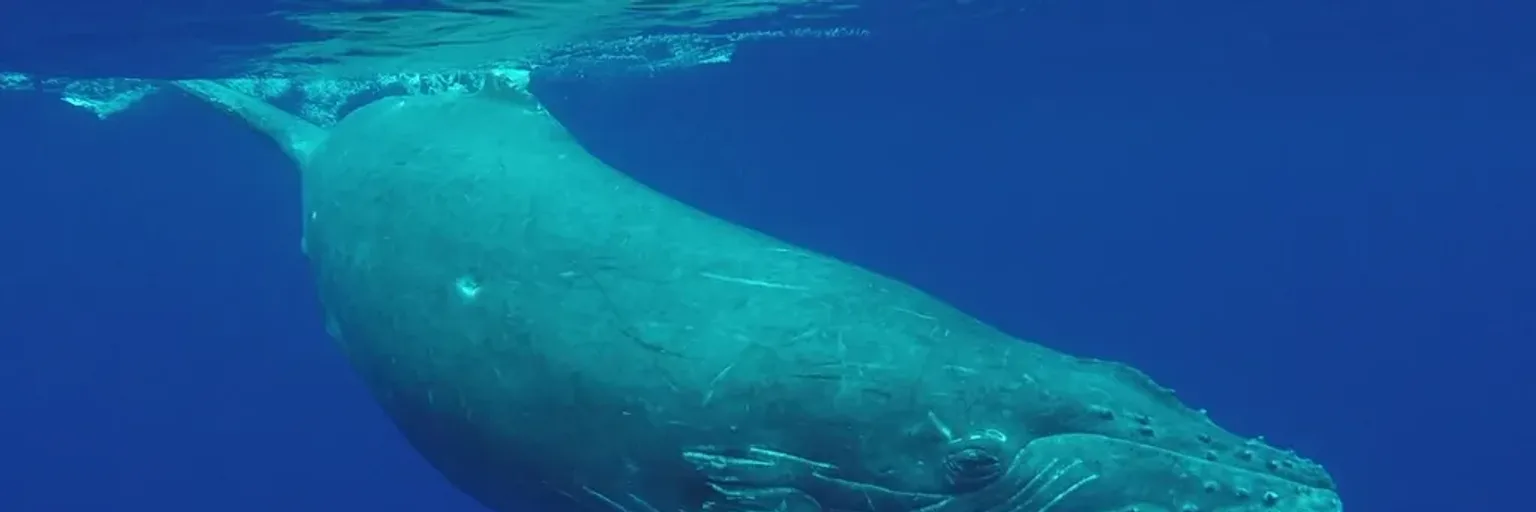
A 1949 whale song proves sound archives deserve fossil-grade care
A humpback recorded near Bermuda on a dictation disc could be a baseline for ocean noise that no one can recreate. Sound archives deserve the protection we give fossils.
Titanoboa isn't a monster story: it's a thermometer with scales
A snake from a Colombian coal mine, around 13 meters long and over a ton, matters less as a creature feature than as a measurement of how hot the ancient tropics were.

A Yellow Sea bacterium that eats xylene is exciting, but it's no climate fix
Paraburkholderia aromaticivorans FR-4 fixes CO2 and grows on a pollutant, which says more about our ignorance of ocean microbes than about any near-term cleanup tool.

A meter-long Devonian scorpion isn't a freak: it's evolution's habit
A 415-million-year-old scorpion the size of a dog says less about monsters than about empty ecosystems, and about how little we know of life's first steps onto land.