Kikai's refilling magma is a monitoring story, not a doomsday clock
A Japanese supervolcano is recharging, but coverage of the study stresses that this does not mean an eruption is imminent. The real value is learning what to watch.
AI-generated image
When a headline says a supervolcano is "waking up," what exactly is supposed to have changed? In Kikai's case, the honest answer is: our knowledge, not the volcano's mood. Headlines that turn a seismic map into a ticking clock are easy to write, and in our view the evidence here doesn't support that reading.
What the researchers actually found
A team at Kobe University, working with JAMSTEC, mapped the structure under Kikai caldera in southern Japan, most of which lies underwater. They fired airgun pulses and recorded how the waves traveled using ocean bottom seismometers. The results, published in Communications Earth & Environment, show a region with a high proportion of magma directly beneath the site of the eruption 7,300 years ago, the largest of the Holocene.
Chemistry suggests this is not leftover material. A lava dome has been growing in the caldera for about 3,900 years, and its composition differs from what the giant eruption expelled. Kobe geophysicist Nobukazu Seama concludes the magma is "likely newly injected magma." Science Daily's account states plainly that the replenishment "does not mean that another catastrophic eruption is imminent."
"Refilling" is a timescale problem
The word that misleads is "refilling." It evokes a bathtub with a visible waterline. But earlier JAMSTEC work on seafloor cores found that magma was being recharged from at least 43,000 years ago until the 7,300-year-old eruption, and that felsic magma resembling the eruption's was stored for over 9,000 years beforehand. That is the rhythm of this system: recharge measured in thousands to tens of thousands of years, not in headline cycles.
We also think it is worth being careful with "magma reservoir." The study describes a region with a high proportion of magma, which is not the same as a tank of liquid rock ready to go. Seismic imaging gives an approximate size and shape, and in our view it is best read as a snapshot. It tells us that a large body exists and how it likely got there. It does not tell us how close it is to erupting, and nothing in the coverage of the study claims it does.
The real prize is a better monitoring toolkit
Where the study matters is in generality. Seama says the re-injection model is consistent with the large shallow reservoirs beneath Yellowstone and Toba. If that holds, Kikai could become a rare laboratory: its underwater setting allows, in Seama's words, "systematic, large-scale surveys" that are hard to do on land. The team says it wants to refine the methods to "monitor the crucial indicators of future giant eruptions."
That is the right framing, and the one that deserves the attention. Kobe University's press release notes that we know very little about the processes leading up to a giant eruption and are therefore ill-equipped to make predictions. Better imaging could narrow that gap. It is slow, unglamorous infrastructure work, and it is precisely what helps prevent both complacency and panic.
Our verdict
Treat this as good news about science, not bad news about Japan. Be skeptical of any headline that pairs "supervolcano" with a date or a countdown, because nothing we have seen about this paper supports either. Note also that the findings come from a peer-reviewed journal, yet they describe a model and a measurement, not a forecast. The sensible takeaway is modest: a giant system appears to recharge over very long periods, and we are getting better tools to watch that happen. If something changes, it will probably be monitoring data that tells us, not a viral headline.
No topics yet: start the first one.
More stories
Champi was a monster, but the forecast was the real story
A 185 mph super typhoon was tracked for days, and Taiwan had time to cancel flights and evacuate. Forecasting is science's quiet success, and we undervalue it.
Trust the satellites, not the "super El Niño" headlines, to size up this event
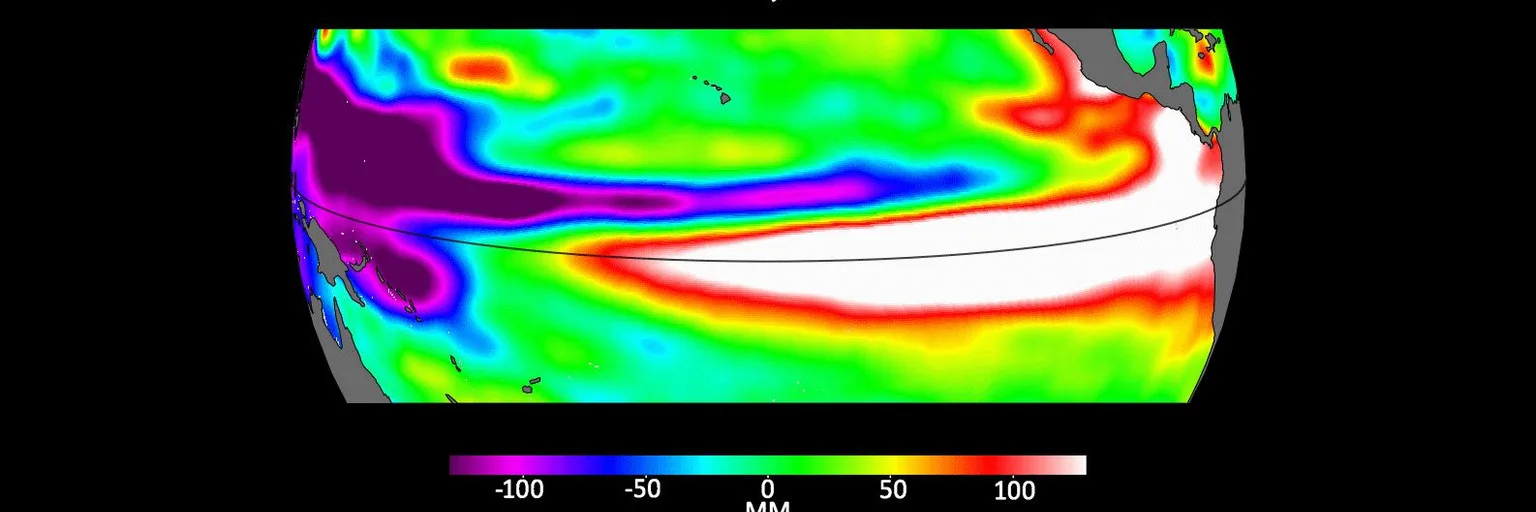
A 35-year altimetry record shows this El Niño rivals 1997, but NASA's own scientist warns that "looks like 1997" is a best guess, not a forecast of what happens to your town.
The Hochvogel crack is a monitoring win, not a spectacle
A summit splitting at up to five millimeters a week shows how water and warming loosen the Alps, and why the mountain's best sensors may matter more than its collapse.
Onkalo's safety green light shows geology works. Politics is the real bottleneck
Finland's regulator says Onkalo meets safety requirements, showing deep disposal can be engineered and regulated. The hard part is decades of patience, not rock.