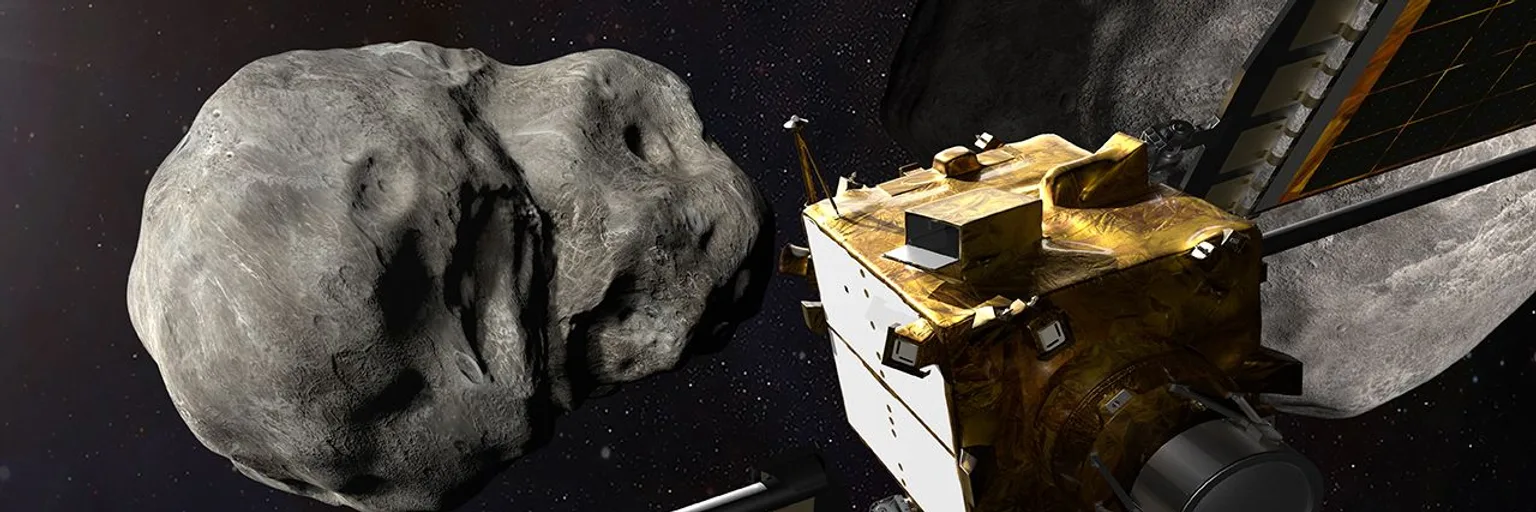
The Sun's death may be far rougher on Jupiter and Neptune than we assumed
A new simulation study says the Sun's lumpy mass loss could scramble the giant planets within billions of years. Treat it as a scenario, not a prophecy, but a useful one.
AI-generated image
We like to imagine the end of the Solar System as a slow sunset: the Sun swells, the innermost planets are swallowed, and the distant giants drift outward and wait. A new study argues that this picture may be too tidy. The outer planets may not get a quiet retirement at all.
The quiet retirement of the giant planets looks like an artifact of smooth math
As The Watchers summarizes, Batygin, Fuller and Adams (2026) revisited an old assumption: that the Sun sheds its envelope smoothly. Instead, they modeled thousands of discrete, asymmetric ejections, each giving the Sun a tiny recoil. In their fiducial case, that meant roughly 4,600 kicks with a median impulse near 7 m/s. The team ran 672 realizations spanning a range of ejection masses, and at the fiducial scale about 90% of the simulated outer systems turned unstable within 3 billion years. The smooth-loss control runs, by contrast, stayed qualitatively stable. Some simulations ejected Saturn, and in others Uranus and Neptune swapped places.
Italian outlet studenti.it reports that the study appeared in The Astrophysical Journal Letters and was led by Caltech. It frames the shift as a drop in survival time from roughly a hundred billion years to about one billion.
The villain is granularity, not violence
What we find most interesting is that no single event does the damage. One kick of about 7 m/s is nothing. Thousands of them at unrelated orbital phases add up like a random walk, and the planets' orbits slowly diffuse until neighbors start to cross. It is a nice reminder that in celestial mechanics, bookkeeping details (smooth versus lumpy) can matter more than the headline mass.
That is also why the result deserves caution. The outcome depends on how large each ejection is: at the low end of the simulated range, the planets stayed close to the smoothly expanded system. The episodic-ejection model is best motivated for the asymptotic giant branch, and when the same kicks were applied across other phases, instability set in earlier. So the study does not predict one inevitable future. It says that if the Sun loses mass the way white-dwarf recoil models suggest, the old comfort disappears.
We would also keep the headlines honest. Some coverage claims the Solar System could be destroyed "100 times faster," which The Times of India repeats in its headline. In our reading, that compares simulation timescales, not a countdown. And the events in question sit billions of years away, around the time the Sun becomes a white dwarf, which one source places about five billion years from now. Nothing here changes anything for anyone alive.
Why exoplanet hunters should care
The practical value is elsewhere. Planets around evolved stars are an observational target, and we tend to interpret them through a smooth-evolution lens: planets expand outward, survive, and sit there. If kicks from lumpy mass loss are real, then systems around white dwarfs may be more scrambled than expected, with odd eccentricities, resonances or missing giants. In principle that is a testable idea, not just a thought experiment, and we would not be surprised if the argument is settled, or sunk, by what turns up around other dying stars rather than by more simulations of our own.
It also complicates the reassuring consensus. One 2026 paper on Earth's fate, available on arXiv, concludes that Earth will likely survive the red giant phase, based on observational proxies for the Sun's late behavior. Older reasoning held that Mars and everything beyond would almost certainly survive. Both can be true: survive the swelling, then be shuffled in the long aftermath. Survival and stability are different questions, and popular coverage keeps blurring them.
Our verdict
Read this as a strong hypothesis from a careful numerical experiment, not as a measured fact. It leans on an assumption about how stars shed mass that nobody can yet check for our own Sun. But the lesson holds either way: the Solar System's end is a dynamical story, not a sunset. The best response is to stop treating the outer planets as the safe part of the forecast, and to watch what white-dwarf systems show us about how lumpy the death of a star really is.
No topics yet: start the first one.
More stories
Swift isn't dying of neglect: nobody ever built it to be fixed
NASA did try to reboost Swift, and the attempt failed. The real lesson isn't about skipped maintenance but about telescopes designed without a repair option.
Bennu's grains prove sample return is rewriting Solar System history
Stardust, outer-Solar-System ice and room-temperature water in 120 grams of rock: Bennu shows that bringing dirt home beats any flight milestone at changing what we know.
Psyche's slow blue burn is the real story, not a metal jackpot
NASA's Psyche is thrusting almost nonstop toward a metal-rich asteroid. The quiet triumph is solar-electric propulsion, and the prize is understanding how planetary cores form.
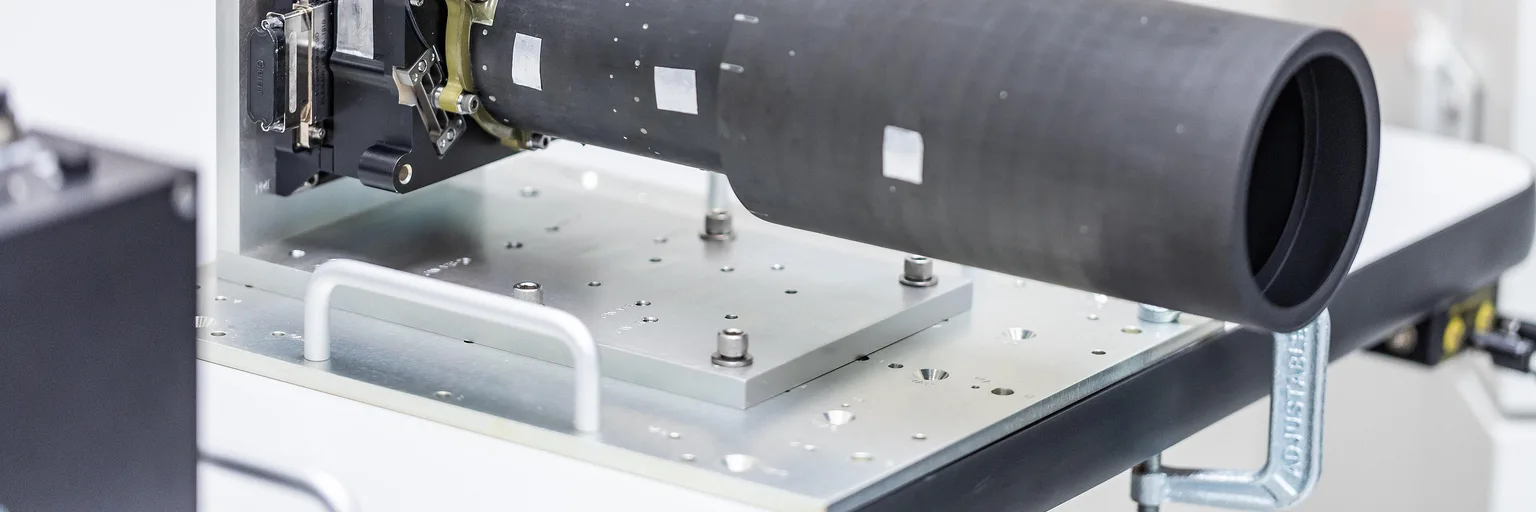
DART was the stunt; Hera is the science that makes it a defense
Crashing a spacecraft into an asteroid grabbed headlines in 2022. Hera, arriving at Didymos in early November, is what could turn that one-off shot into a method we can trust.