The first exomoon deserves applause, and a long wait before we believe it
A giant companion around a brown dwarf is a genuine milestone for method. But exomoon claims have burned us before, and "plausible" is not "confirmed."
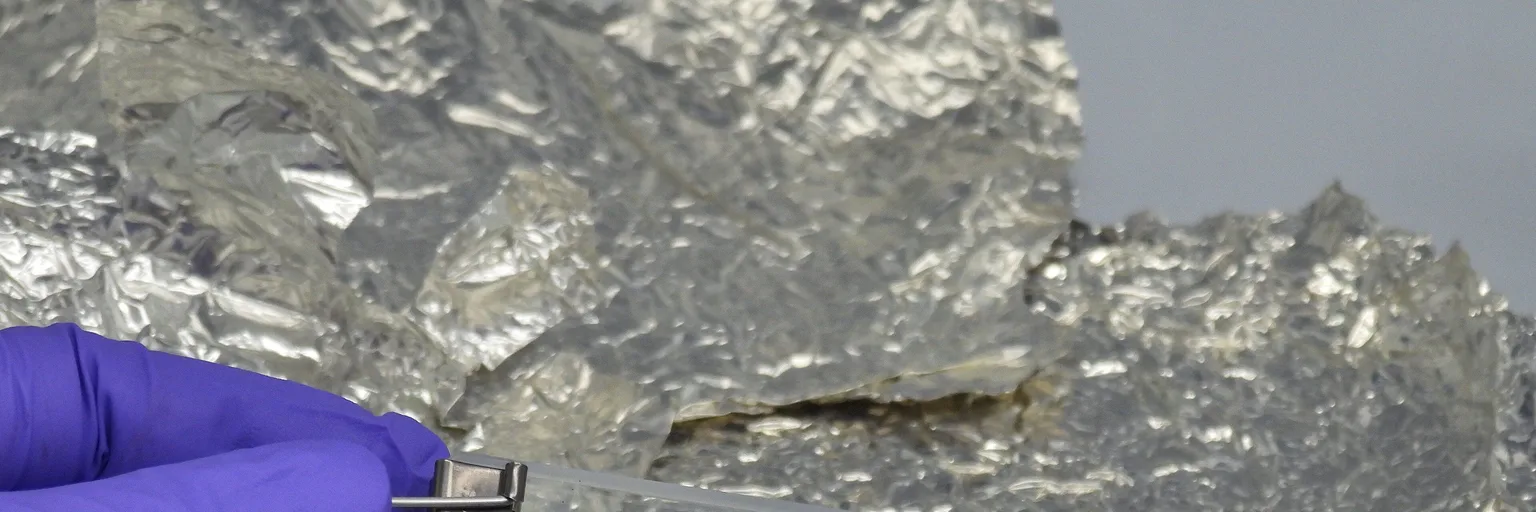
Photo: ESO/M. Kornmesser / Wikimedia Commons (CC BY 4.0)
Is this the first moon outside our Solar System, or the first object astronomers will argue about what to call? Probably both, and that is exactly why the headlines deserve a second look.
The announcement is far more cautious than the headlines
A team led by Kevin Hoy, an ESO student in Chile, used the CRIRES+ instrument on ESO's Very Large Telescope to look at the CD-35 2722 system. As ESO explains, the star has about half the Sun's mass and is orbited by a brown dwarf of more than 30 Jupiter masses. The team reports evidence of a further object circling that brown dwarf, at least as massive as Jupiter. They found it with the radial velocity method, by measuring small wobbles in the brown dwarf's motion. The paper, in Nature, is titled "Planetary-Mass Exosatellite Detected Around a Star's Substellar Companion."
Note the wording. Alice Zurlo, a collaborator on the study, calls it "the first plausible detection of an exosatellite," and ESO describes what the team believes to be strong evidence. ESO itself writes "if confirmed." The researchers are being careful. Some of the coverage is less so.
The track record says: hold your applause for the confirmation
Exomoon announcements have a poor history. In 2018, a team announced the candidate Kepler-1625b-i. Even the original paper said it could not be considered confirmed until it had survived years of scrutiny and community skepticism. Science News reported in 2019 that the evidence was weakening. By 2024, a study's first author said, in Astrobiology.com's account, that they would have liked to confirm exomoons around Kepler-1625b and Kepler-1708b. That is not the language of a success.
Even the "first" label is shaky. Earlier this year a team led by Quentin Kral reported hints of a satellite in HD 206893, with no firm detection. Wikipedia's exomoon entry still says no exomoon has been confirmed. Be wary too of low-quality explainers: one we came across says astronomers "have confirmed" the finding and gives a mass of about 0.9 Jupiter masses, which doesn't match ESO's wording (ESO says at least Jupiter's mass). It also carries real-estate promotion and says it was prepared with AI help. That is the sort of noise that builds around a claim like this.
The method is the real story, and the name is a distraction
Our view: the most durable part of this result is the technique. Radial velocity is the method used to find the first exoplanet around a Sun-like star. Pointing it at a brown dwarf, to catch a wobble caused by something smaller, is a clever reuse of an old tool. The Wikipedia entry notes that Doppler spectroscopy of a host star can't separate a planet from its moons, because together they behave like one point mass. Our reading, not a claim from the paper, is that a companion massive enough to tug visibly on its host may sidestep part of that problem, and that this is why this target worked.
The naming fight, by contrast, is mostly a sideshow. The object is at least Jupiter-mass and orbits something with more than 30 times Jupiter's mass. Hoy himself says it is "nothing like the small, rocky moons we have in our system," and ESO admits there is no officially accepted exomoon definition. Calling it a moon is a convenience. It tells us little about whether Earth-sized, potentially habitable moons are out there, and we'd resist any suggestion that it does. Hoy was candid in TIME that nobody knows whether high-mass systems like this are common or a weird case.
Our verdict
Celebrate the method, and treat the object as a strong candidate rather than a textbook entry. What would change our minds is independent follow-up: other teams, other instruments, and ideally a second data set that sees the same wobble. The ELT, which TIME says is expected to enter service in early 2029, should help, and Hoy says his team already has another undisclosed candidate. We'd rather see two candidates survive scrutiny than one headline survive a press cycle. Until then, "first exomoon" should wear its "if confirmed" label, and we'd keep the textbooks as they are.
No topics yet: start the first one.
More stories
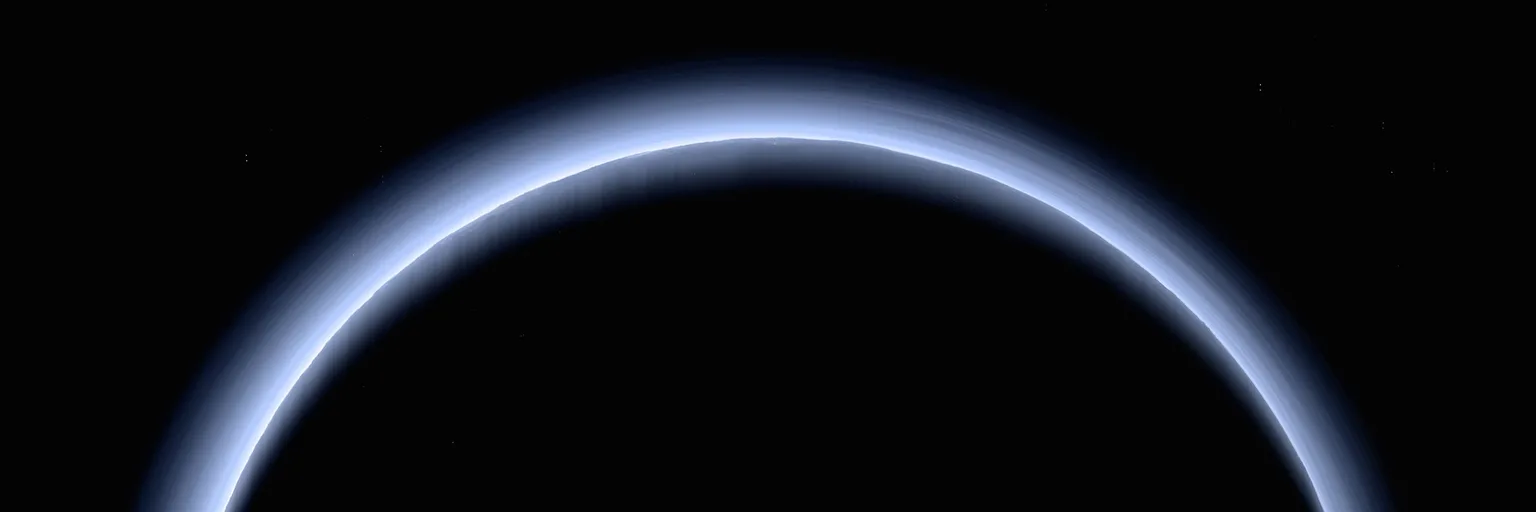
Pluto's landslides don't prove it's alive, but they bury the "dead ice ball" idea
Six huge collapses in New Horizons images show Pluto's surface has been reshaped in ways we hadn't confirmed. That's progress, but it's not proof of present-day activity.
The Sun's death may be far rougher on Jupiter and Neptune than we assumed
A new simulation study says the Sun's lumpy mass loss could scramble the giant planets within billions of years. Treat it as a scenario, not a prophecy, but a useful one.
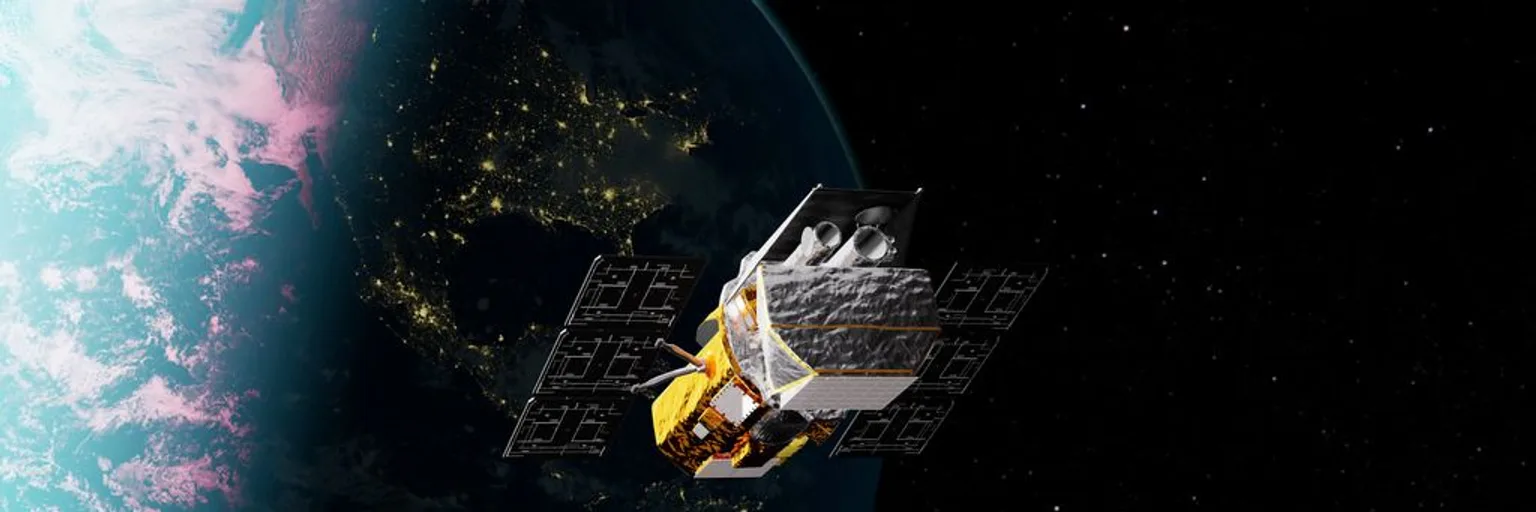
Swift isn't dying of neglect: nobody ever built it to be fixed
NASA did try to reboost Swift, and the attempt failed. The real lesson isn't about skipped maintenance but about telescopes designed without a repair option.
Bennu's grains prove sample return is rewriting Solar System history
Stardust, outer-Solar-System ice and room-temperature water in 120 grams of rock: Bennu shows that bringing dirt home beats any flight milestone at changing what we know.