SpaceX's CRS-35: More Than Just Cargo, It's the Future of Space Science
The latest Dragon resupply mission, delivering critical research on human health and plant growth, underscores how private enterprise is reshaping the landscape of orbital scientific discovery.
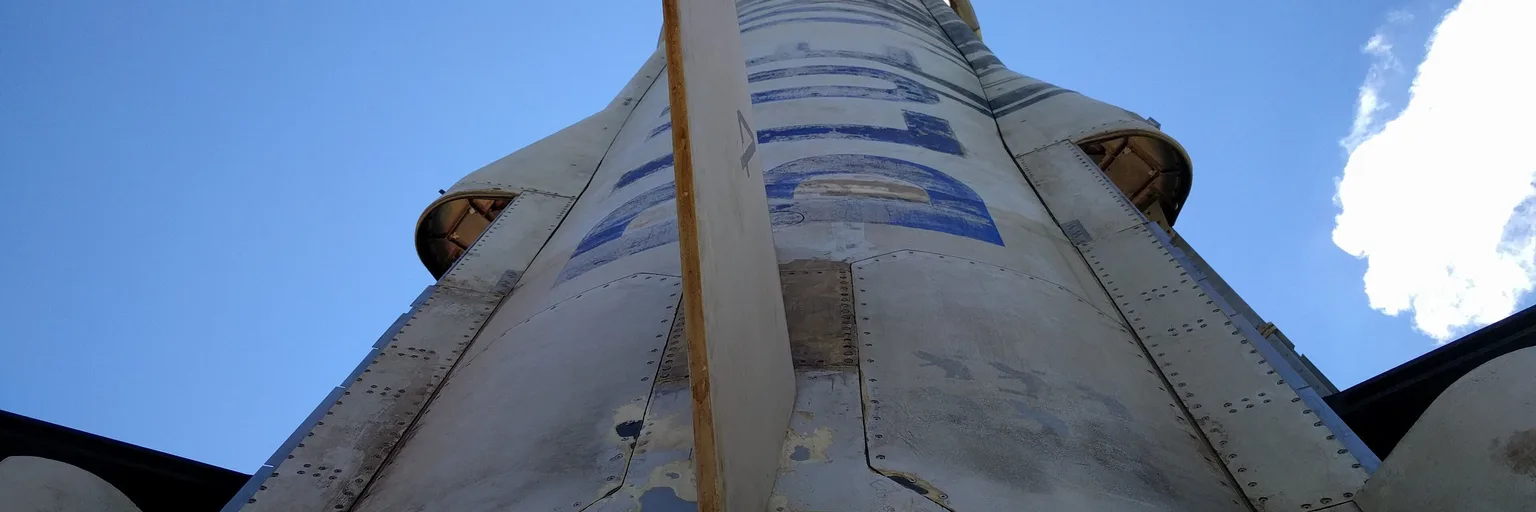
Photo: NASA / Wikimedia Commons (Public domain)
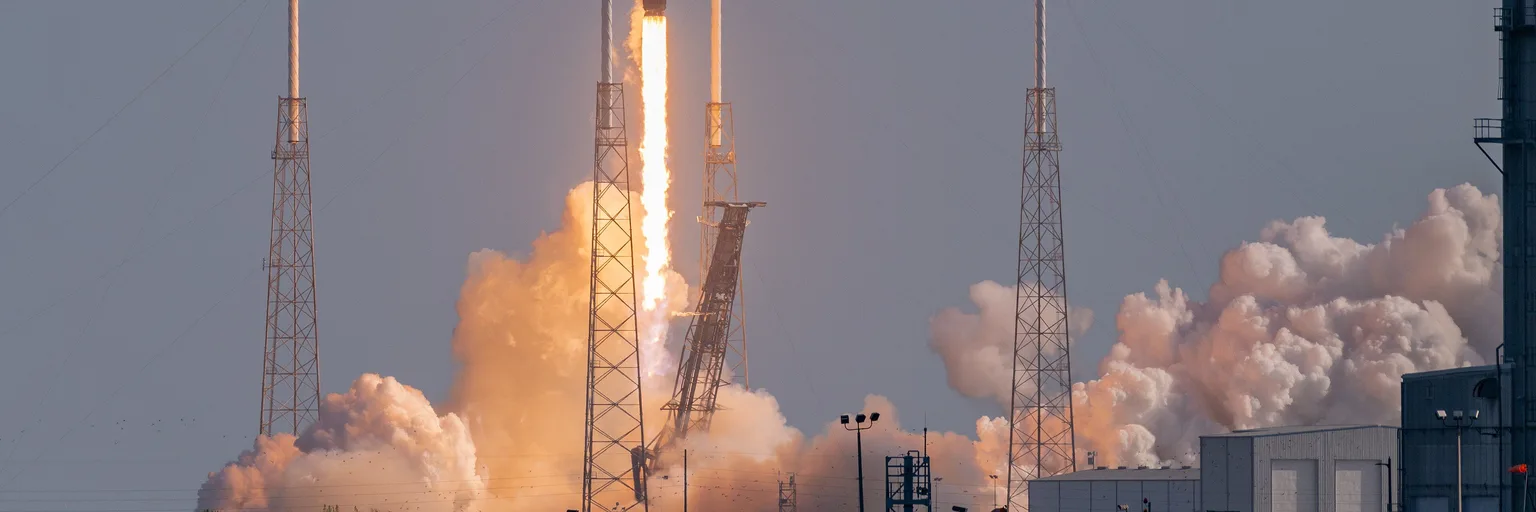
The predawn launch of SpaceX's CRS-35 mission this Tuesday, painting the Florida sky with a mesmerizing 'space jellyfish' effect, was far more than just a spectacular visual. It was a potent symbol of a fundamental shift in how we approach scientific research beyond Earth. This 35th commercial resupply mission by SpaceX for NASA, carrying more than 6,300 pounds (approximately 2,857 kilograms) of vital experiments and hardware, isn't merely about restocking the International Space Station; it's a testament to the increasing privatization of space logistics and its profound impact on the pace and scope of scientific endeavor in orbit, as Fox35 Orlando reports.
The Falcon 9 rocket's launch from Cape Canaveral Space Force Station saw a Dragon spacecraft — making its fourth flight, a clear demonstration of reusability, according to SpaceX — embark on an approximately 52-hour journey to the ISS. This mission's cargo manifests a strong focus on challenges inherent to long-duration spaceflight, from human health to sustainable living, while also deploying the final pair of ISS Roll-Out Solar Arrays (iROSAs) to complete the station's power upgrade. What truly stands out, however, is the innovative suite of experiments aboard, many of which leverage microgravity to tackle questions impossible to answer on Earth.
Unlocking Health Secrets in Microgravity
One of the most compelling aspects of the CRS-35 mission is its dedication to understanding and mitigating the physiological toll of space on the human body. Among the critical payloads are tiny, lab-grown 3D human brain models, part of the MINDS experiment. These models will spend five weeks in orbit, allowing researchers to observe cellular stress responses and changes at a fundamental level, potentially revealing new insights into conditions like Alzheimer's, Parkinson's, and multiple sclerosis. This isn't just about astronaut well-being; it's about translating space-derived knowledge to terrestrial medical advancements, as NASA Science details.
Further emphasizing this focus is the Stellar Spheroids experiment, which will examine how microgravity affects 3D human heart tissue, offering a unique perspective on blood vessel network development and the progression of heart disease. Simultaneously, the LambdaVision-1 experiment aims to manufacture artificial retinas in space, hoping that microgravity can enable more uniform layering for improved implants for retinal diseases. Such investigations underscore a clear trend: the ISS is increasingly a vital platform for medical research that directly benefits life on Earth, beyond the immediate needs of astronauts.
Accelerating Discovery with On-Orbit Analysis
The mission also carries a compact microplate reader, a device designed to detect and measure biomarkers like antibodies and proteins directly on the space station. This seemingly logistical detail is, in our view, a game-changer for orbital science. Traditionally, many biological samples collected in space must be frozen and returned to Earth for analysis, a process that can take weeks. With an on-board reader, results could be available in hours, enabling timely medical interventions and significantly expanding the scope of science possible in remote exploration scenarios where resupply is difficult and slow.
This immediate feedback loop has implications not only for astronaut health but also for the long-running study on antibiotic-resistant bacteria aboard the ISS. This is the fourth and final planned stay for an investigation that monitors how these 'superbugs' survive and evolve in microgravity, a closed ecosystem providing unparalleled insights into bacterial evolution. The ability to analyze these samples in orbit could dramatically accelerate our understanding of drug resistance, offering crucial data for combating such threats both in space and in terrestrial hospitals.
Cultivating a Future Beyond Earth
Beyond human health, CRS-35 addresses the practicalities of future long-duration missions with its plant disease study. Researchers are infecting plants with a pathogenic fungus to observe if diseases develop faster or more severely in microgravity. Understanding these dynamics is vital for developing disease-resistant crops, which will be essential for feeding crews on voyages to the Moon and Mars. Plants in space are not merely sustenance; they absorb carbon dioxide, generate oxygen, recycle water, and provide invaluable psychological benefits. The insights gained here could shape future space agriculture systems and even inform plant breeding strategies back on Earth.
In our view, the CRS-35 mission brilliantly illustrates the symbiotic relationship forming between public space agencies and private enterprise. NASA's partnership with companies like SpaceX not only ensures a reliable and frequent cadence of resupply missions, making orbital research more accessible and responsive, but also drives innovation in reusable technology. This commercial integration is not just a cost-saving measure; it is a catalyst, pushing the boundaries of what is possible in scientific research, transforming the ISS into a more dynamic and productive laboratory for the benefit of all. The era of private space logistics is here, and with it, a new frontier for scientific discovery unfolds.
No topics yet: start the first one.
More stories
Blue Origin's repeated New Shepard launches prove reusability isn't a fluke
The consistent success of Blue Origin's New Shepard in launching and landing its rockets marks a pivotal moment, affirming reusable space technology as a cornerstone for future missions beyond suborbital tourism.
This New World Obliterates Our Cosmic Definitions
The discovery of CD-35 2722, a Jupiter-sized object orbiting a brown dwarf, which then orbits a star, profoundly challenges the International Astronomical Union's definitions of planets and moons.

SpaceX's Starlink Mobile: A Game Changer, But Not a Monopoly
The FCC's approval for SpaceX's 15,000 direct-to-device satellites heralds a new era for connectivity, yet market reactions and industry complexities suggest a nuanced future for the space and telecom sectors.
Europe's Space Paradox: Autonomy or Irrelevance?
Despite advanced capabilities, Europe and Italy grapple with a critical choice: forge true strategic autonomy in space or risk being sidelined in a rapidly militarized and commercialized cosmic arena.