Blue Origin's repeated New Shepard launches prove reusability isn't a fluke
The consistent success of Blue Origin's New Shepard in launching and landing its rockets marks a pivotal moment, affirming reusable space technology as a cornerstone for future missions beyond suborbital tourism.
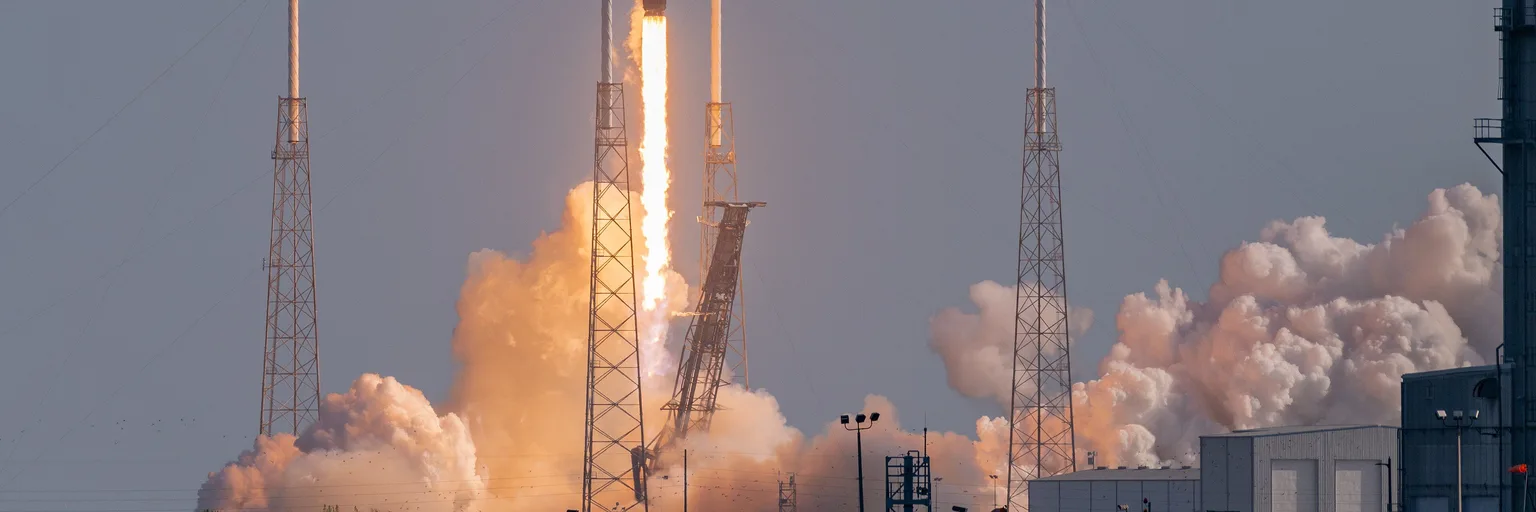
Photo: ThePenultimateOne / Wikimedia Commons (CC BY-SA 4.0)
Is the era of truly reusable rocketry finally here? For years, the promise of rockets that launch, land, and fly again has been held up as the holy grail for making space access affordable and routine. Blue Origin's New Shepard program, with its recent, repeated successes in reusing its suborbital launcher, strongly suggests that this vision is not merely aspirational but increasingly becoming a practical reality.
While the headlines often focus on the spectacle of crewed flights, the real story brewing is the quiet accumulation of operational data. After completing its development flight test program in 2021 with 16 consecutive successful tests, New Shepard has continued to demonstrate its capability. As of January 2026, the company had successfully launched and landed the New Shepard vehicle 38 times, consistently proving its reusable design for both humans and payloads. This steady drumbeat of operations, culminating in flights like the NS-36 mission in October 2025, where the first stage returned to Earth just minutes after launch, underscores a fundamental shift in spaceflight.
Reusability's Ascent to Routine Operations
The ability to reuse a rocket's main booster isn't just a neat trick; it's an economic imperative. The sheer cost of building a new launch vehicle for every mission has historically been a major barrier to expanding space access. Blue Origin's journey with New Shepard highlights a commitment to overcoming this. The company even received the prestigious Collier Trophy in 2016 for demonstrating rocket reusability with the New Shepard vehicle, a testament to the foundational engineering at play. What once seemed like a distant goal — launching, landing, and repeating, as Blue Origin put it back in 2016 — is now an established procedure for this particular vehicle.
New Shepard's design, which features a launch rocket and a crew capsule capable of housing up to six passengers or cargo, is fundamentally built for this cycle. The capsule returns to Earth via parachutes, while the rocket lands vertically, precisely 3.2 km north of its launch pad. This routine, observed across dozens of missions, including uncrewed flights like NS-29 in February 2025 for moon-related technologies and crewed missions like NS-31 in April 2025 with six passengers, solidifies the operational maturity of the system. We are no longer talking about experimental flights, but an increasingly reliable, if suborbital, transport service.
Suborbital Success Paving the Way for Deeper Space
It is important to acknowledge New Shepard's primary role: suborbital space tourism and research, carrying humans like the
No topics yet: start the first one.
More stories
This New World Obliterates Our Cosmic Definitions
The discovery of CD-35 2722, a Jupiter-sized object orbiting a brown dwarf, which then orbits a star, profoundly challenges the International Astronomical Union's definitions of planets and moons.

SpaceX's Starlink Mobile: A Game Changer, But Not a Monopoly
The FCC's approval for SpaceX's 15,000 direct-to-device satellites heralds a new era for connectivity, yet market reactions and industry complexities suggest a nuanced future for the space and telecom sectors.
Europe's Space Paradox: Autonomy or Irrelevance?
Despite advanced capabilities, Europe and Italy grapple with a critical choice: forge true strategic autonomy in space or risk being sidelined in a rapidly militarized and commercialized cosmic arena.

Mars' 'impossible cloud' rewrites the rules of planetary atmospheres
A Spanish-led team has deciphered the mystery of Mars' 1,800-kilometer cloud, revealing a never-before-seen atmospheric process that challenges our understanding of other worlds.