AI isn't just decoding whale 'language,' it's reshaping our view of intelligence
The latest breakthroughs in deciphering sperm whale communication are not merely a scientific curiosity but a profound re-evaluation of animal cognition and our place in the natural world.
Photo: Bernard Spragg. NZ from Christchurch, New Zealand / Wikimedia Commons (Public domain)
For centuries, the vast oceans have held secrets, none more intriguing perhaps than the complex communication of its largest inhabitants. Now, breakthroughs in artificial intelligence are beginning to pull back the curtain on the intricate world of sperm whale 'conversations,' suggesting a level of sophistication in animal cognition that challenges our long-held assumptions about language itself.
At the University of Toulon, researchers have made remarkable strides, using AI to identify individual sperm whales by their unique click sequences, known as 'codas,' and even reconstruct exchanges between them. In one fascinating observation, two female whales, Vanessa and Delphine, were seen acoustically influencing each other's click rhythms, a compelling hint at dynamic interaction. This work, alongside the efforts of Project CETI, a nonprofit dedicated to translating sperm whale communication, paints a picture far richer than previously imagined, moving us beyond simple signals to the cusp of understanding genuine interspecies dialogue.
The AI Advantage: Unlocking a Hidden World
One of the most compelling aspects of these discoveries is the indispensable role of artificial intelligence. Sperm whales, with brains six times the size of humans, communicate through rhythmic sequences of clicks in the deep ocean, an environment alien to our senses. Historically, these clicks were viewed much like Morse code – more signal than speech. However, as Project CETI founder David Gruber suggests, AI acts as a new kind of 'telescope' or 'microscope' for bioacoustics, allowing scientists to process immense datasets and detect patterns invisible to the human ear.
AI models like Project CETI's WhAM (Whale Acoustics Model) can translate sounds into whale vocalizations, predicting plausible sequences and identifying 'fine-grain changes' in vocalisations, such as variations in tempo or added clicks, which suggest a richer information content than previously thought. The shift from a believed 21 coda types to 156 distinct codas, identified by AI, is a testament to the technology's ability to uncover previously unknown diversity and complexity. This ability to operate across a 'semantic gap,' focusing purely on acoustic structure, allows AI to uncover features of communication that human biases might otherwise overlook, pushing the boundaries of what we understand as language.
Beyond Simple Sounds: The Architecture of Whale 'Language'
The implications of these findings go far beyond identifying who says what. Researchers are beginning to uncover structures within sperm whale communication that bear striking resemblances to human language. Project CETI scientists have described a 'sperm whale phonetic alphabet,' consisting of basic building blocks similar to human phonemes. While they cautiously emphasize that definitive proof of meaning or 'duality of patterning' (where meaningless elements combine to form meaningful words) is not yet established, the mere existence of a combinatorial coding system is a significant step.
Furthermore, the observation of 'vocal traditions' or 'dialects'—such as different coda lengths between clans in Mauritius and the Mediterranean—underscores the cultural complexity of these animals. These findings force us to confront the possibility that animal communication is not just about instinctual responses but involves learned, shared knowledge passed down through generations. It suggests a social intelligence that demands a deeper appreciation and respect.
A New Era for Conservation and Ethics
The profound impact of understanding whale communication extends directly to conservation efforts. Sperm whales are highly sensitive to noise pollution from shipping and human activities, which severely impairs their ability to communicate, navigate, and hunt. As the University of Toulon researchers highlight, identifying zones and periods of intense whale interaction could inform crucial protection measures.
More fundamentally, a deeper understanding of whale language could reshape our ethical obligations. A collaboration between Project CETI and NYU Law's MOTH (More Than Human Life) Program is already exploring how scientific data on animal communication could bolster legal arguments for more expansive animal rights, including protection from undersea noise pollution or even the possibility of legal personhood for cetaceans. As legal scholar César Rodríguez-Garavito told NYU Law News, recognizing the complexity of nonhuman communication could weaken the categorical distinction between humans and other species in law.
In our view, these scientific endeavors are not just about listening to whales; they are about learning to listen to nature itself with unprecedented clarity. The ability of AI to help us parse the 'conversations' of sperm whales marks a pivotal moment, transforming what was once a scientific curiosity into a powerful tool for conservation and a catalyst for re-evaluating our relationship with the intelligent life that shares our planet. It’s a journey toward interspecies understanding that is only just beginning, and its implications could be truly transformative.
No topics yet: start the first one.
More stories
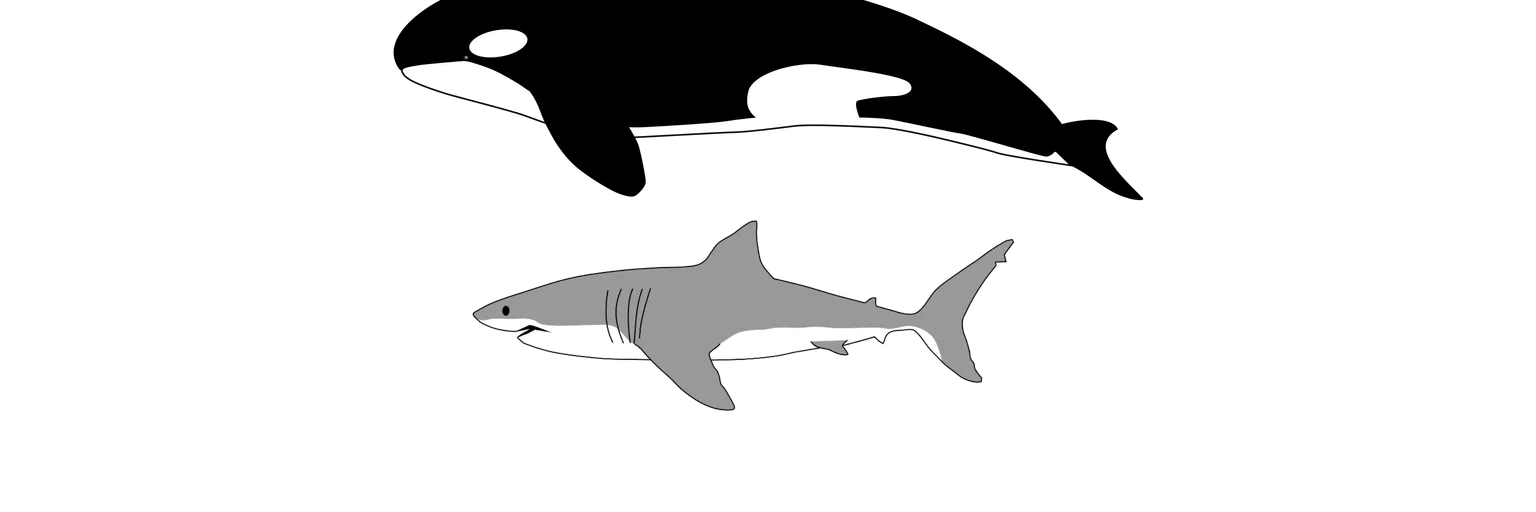
Orcas vs. Great Whites: Climate Change Forges a New Apex Predator Dynamic
The dramatic escalation of orcas hunting great white sharks, once a rare sight, is now a documented pattern, reflecting how climate change is subtly yet profoundly reshaping marine ecosystems.
Fungi 500 Meters Down: Reshaping Our View of Life and Carbon
A recent discovery of fungal communities thriving deep beneath Michigan's surface, extracting energy from ancient rocks, forces us to rethink the very boundaries of life on Earth and its impact on global carbon cycles.

Brazil's hidden species unveil an urgent conservation imperative
Recent discoveries of fish and a glass frog in Brazil's less-explored biomes highlight the nation's profound, often overlooked, biodiversity and the critical need for expanded protective measures.

France's 'hurricane' trend: A ghostly reminder of climate volatility
The current fascination in France with a 1987 'hurricane' storm, alongside 2026's tardy but intense Hurricane Isaias, underscores a troubling pattern of extreme weather fueled by warming oceans and climate change.