The Kármán Line: A Political Boundary for a Physical Frontier
The persistent debate over whether space begins at 80 or 100 kilometers above Earth underscores that this 'scientific' boundary is deeply entangled with legal, commercial, and geopolitical interests.
AI-generated image
When does a flight become a spaceflight? When does a pilot earn the coveted title of astronaut? These are not mere semantic debates for enthusiasts; they are increasingly practical questions with significant commercial, legal, and geopolitical implications tied to the Kármán line, the widely recognized—yet fiercely debated—boundary between Earth's atmosphere and outer space. For decades, the exact altitude of this line has been a point of contention, primarily oscillating between 80 kilometers (50 miles) and 100 kilometers (62 miles). As humanity’s presence in orbit expands, making space a vital global asset, the absence of a unified, legally binding definition creates an ambiguity that demands urgent resolution.
Traditionally, the Fédération Aéronautique Internationale (FAI), the international record-keeping body for aeronautics and astronautics, has set the Kármán line at 100 kilometers above mean sea level [2]. This convention, established in the 1960s, largely defines the altitude where aeronautics gives way to astronautics [2, 6]. Above this height, the atmosphere becomes too thin for conventional aircraft wings to generate sufficient aerodynamic lift to stay aloft at reasonable speeds [2, 7]. Instead, a vehicle would need to travel at orbital velocity, at which point centrifugal force alone provides support, effectively placing it in orbit [2, 3]. In essence, it marks a natural physical transition from lift-based flight to orbit-based flight.
The Enduring 80km vs. 100km Dispute
However, this 100-kilometer boundary is far from universally accepted. United States agencies, including NASA, the Air Force, and the FAA, recognize a lower threshold of 80 kilometers (50 miles) as their working boundary [3, 7]. This US figure originates from the early space program: the Air Force awarded astronaut wings to X-15 pilots who flew above 50 miles in the 1960s, a practice NASA later adopted in 2005 to ensure consistency for civilian and military pilots flying similar vehicles [3, 5].
Supporting the lower figure, astrophysicist Jonathan McDowell, in a 2018 paper published in Acta Astronautica, argued for 80 kilometers. His analysis of orbital data from approximately 50 low Earth orbit satellites found that several had maintained orbital trajectories at altitudes as low as 80 kilometers, while none could sustain orbits below roughly 70 kilometers [3, 1]. McDowell noted this aligns with Theodore von Kármán's own original calculation in the mid-1950s, which for the point where aerodynamic lift could no longer support an aircraft, landed near 83.8 kilometers (52 miles) [3, 7]. The 100-kilometer mark, a later rounded figure adopted by the FAI for its records, has a debated origin among historians, with some attributing the rounding to space lawyer Andrew G. Haley, who also calculated a boundary closer to 84 km, while others suggest von Kármán himself opted for the clean metric number [3, 5]. The Earth's atmosphere does not have a distinct edge but gradually thins, making any fixed boundary inherently a conventional definition [2, 3, 6].
Commercial Imperatives and Astronaut Credentials
This seemingly academic distinction carries significant commercial and reputational weight in the burgeoning private space sector. For instance, Blue Origin's New Shepard rocket crosses 100 kilometers, a fact the company often highlights in its marketing, positioning its passengers as unequivocally having reached space by international standards [2, 3]. In contrast, Virgin Galactic's SpaceShipTwo typically reaches altitudes between 80 and 87 kilometers. While this clears the US definition, it falls short of the FAI's 100-kilometer line [3].
No topics yet: start the first one.
More stories
James Webb's 'Empty' Signal: The Universe is Stranger Than We Thought
The James Webb Space Telescope has detected an intense, unexplained infrared signal from a region of space long considered barren, forcing a profound reevaluation of cosmic emptiness and the limits of our observation.
The First Green Star: Why Stellar Hues Are More Than Just Temperature
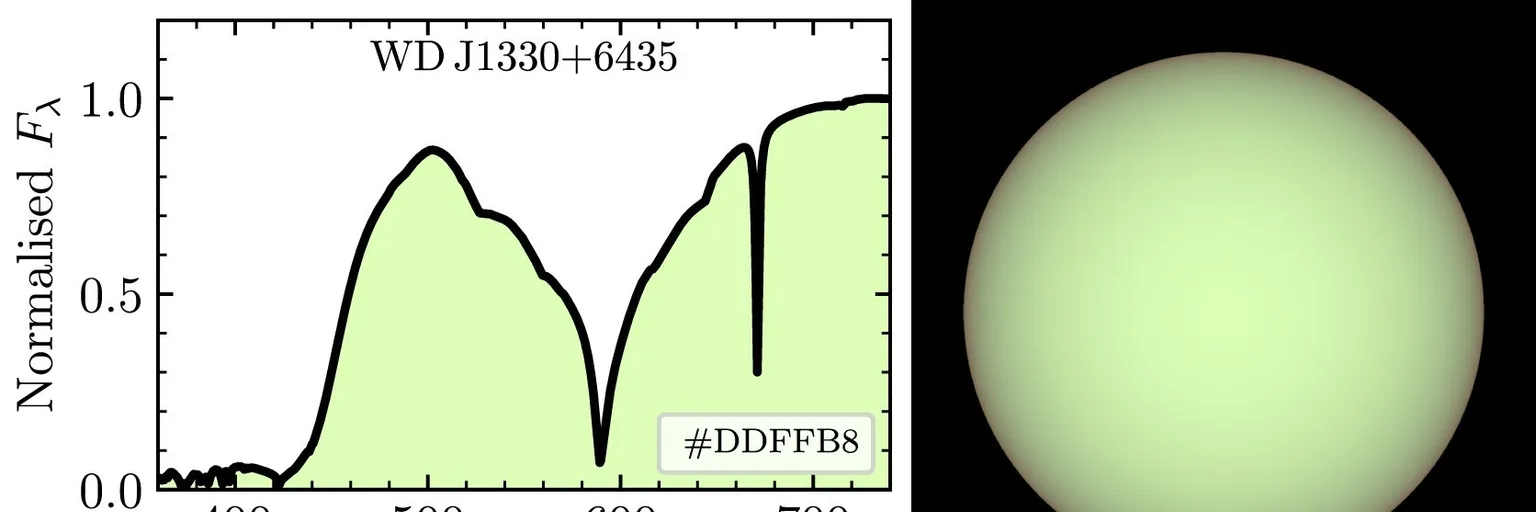
Astronomers have discovered the first star that would appear green to human eyes, challenging long-held assumptions about stellar colors and revealing a universe far more vibrant than we previously imagined.
Mars' Geometric Puzzles Hold the Key to Our Future on the Red Planet
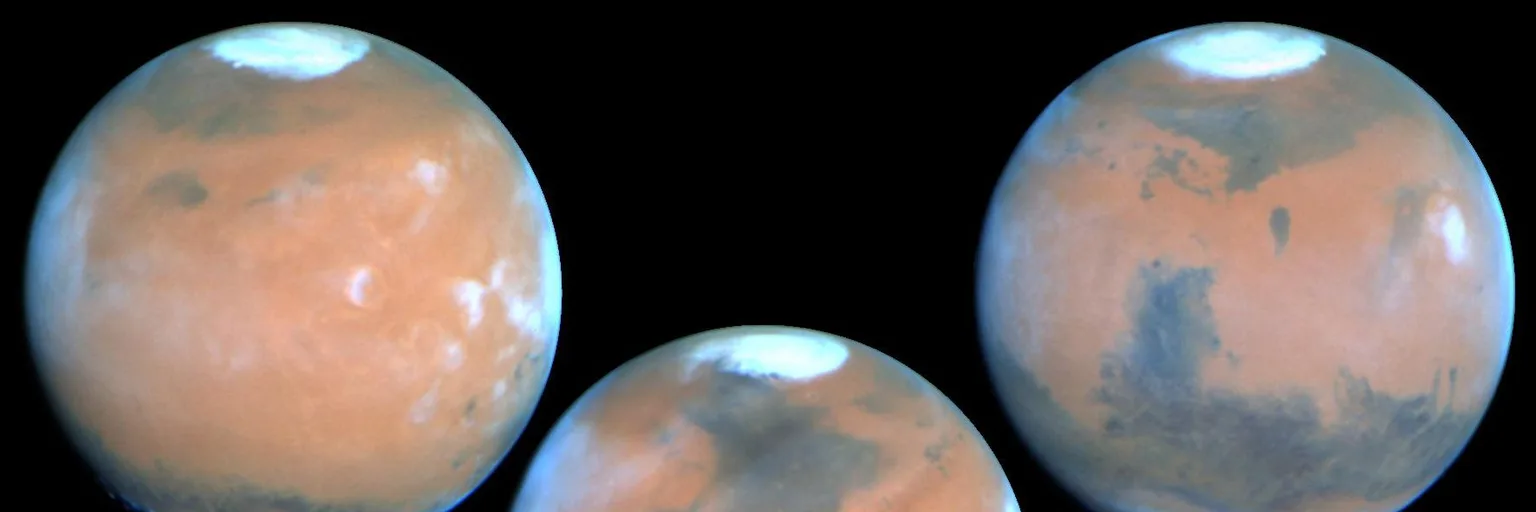
Mysterious geometric patterns on the Martian surface are far more than aesthetic oddities; they are critical indicators of subsurface ice, offering a roadmap for human exploration and a deeper understanding of Mars' climatic evolution.
Artemis' Calculated Ascendancy: Why NASA's Patient Approach is Paying Off
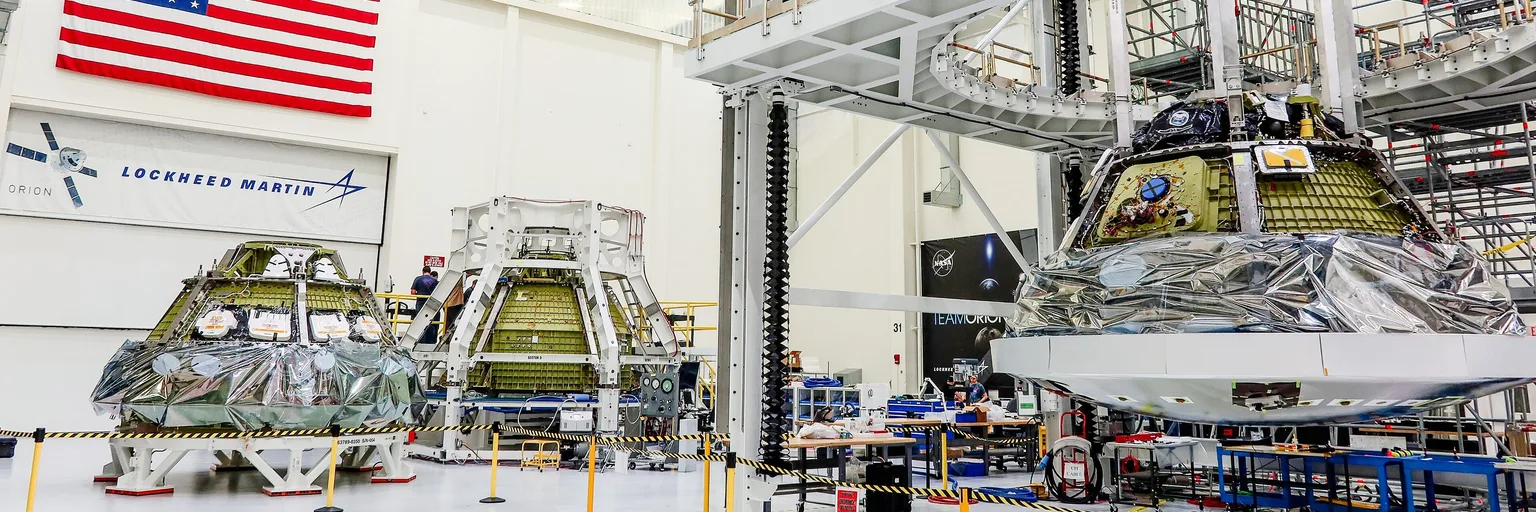
After the Artemis II mission confirmed the Orion heat shield's robust performance and astronaut training intensified, NASA's deliberate, iterative strategy is clearly building a solid foundation for sustained lunar presence and deep-space exploration.