Fungi 500 Meters Down: Reshaping Our View of Life and Carbon
A recent discovery of fungal communities thriving deep beneath Michigan's surface, extracting energy from ancient rocks, forces us to rethink the very boundaries of life on Earth and its impact on global carbon cycles.
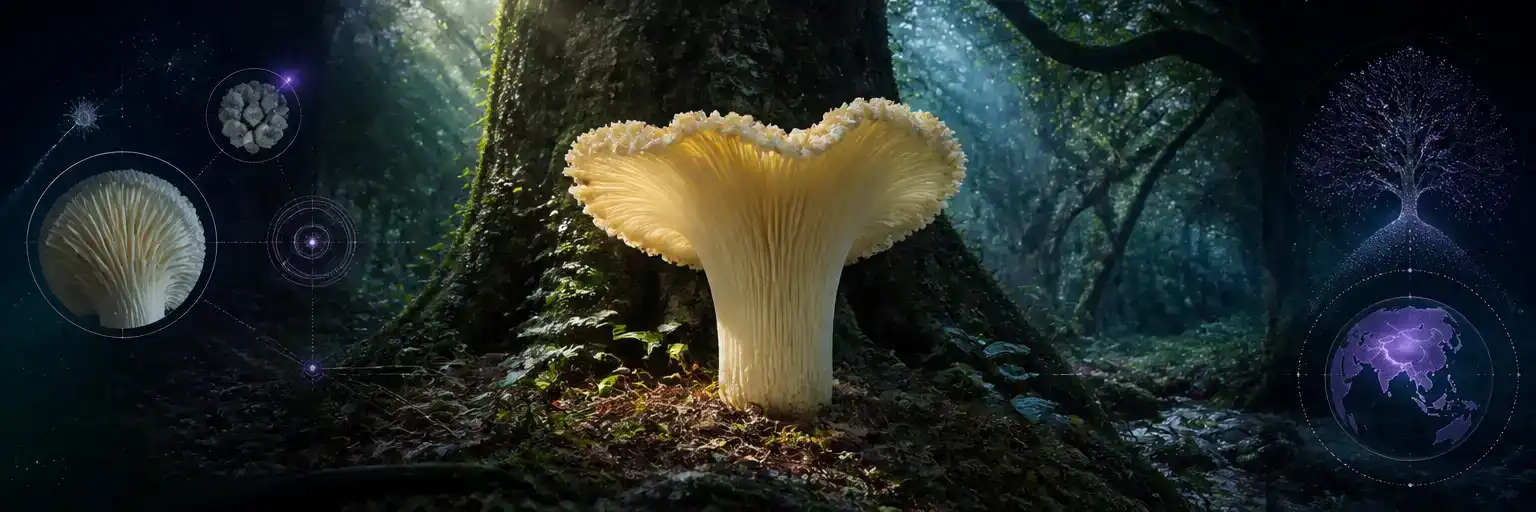
Photo: Édouard Bergé ( Raoudoudou ) / Wikimedia Commons (CC BY 3.0)
What if much of what we thought we knew about the fundamental requirements for life on Earth—sunlight, oxygen, surface-level nutrients—was just one chapter in a much larger, darker story? A recent discovery in the United States suggests exactly that, unveiling a hidden world beneath our feet where complex life thrives against all conventional expectations. This profound finding isn't merely about organisms surviving in extreme conditions; it's about a complete re-evaluation of Earth's habitable zones, the planet's carbon cycle, and even the very potential for life beyond our world.
Scientists led by a team from the University of Michigan have unearthed extensive and diverse fungal communities flourishing hundreds of meters deep within the Antrim Shale formation, beneath the state of Michigan. These fungi were found in water samples drawn from gas wells, isolated from the surface for an astonishing 11,000 years, since the end of the last Ice Age. The study, published in The ISME Journal on July 29, 2026, details the identification of 689 distinct taxonomic units of fungi, with 13 of these representing potentially new species, alongside other complex multicellular organisms like tardigrades and worms.
This isn't just a simple collection of microbes; it's a vibrant, self-sustaining ecosystem that challenges the notion of the deep subsurface as a biological desert. Operating in an environment devoid of light and with minimal oxygen, these fungi have developed extraordinary strategies to harness energy and nutrients from their ancient surroundings.
Redefining Life's Extremes
For generations, our understanding of life's energy foundation has been inextricably linked to the sun. Photosynthesis fuels the vast majority of surface ecosystems, with chemosynthesis filling specialized niches. However, this Michigan discovery flips that paradigm on its head. Here, at depths ranging from 247 to 556 meters, fungi are actively consuming ancient organic matter trapped within the Antrim Shale, a rock formation laid down some 380 million years ago. We are seeing primary producers, not of light-based energy, but of rock-derived sustenance.
The research suggests a sophisticated metabolic network at play. These fungi employ a multi-pronged approach: secreting organic acids like lactic, acetic, oxalic, and citric acids directly onto the shale. This chemical corrosion, a process known as bioweathering, dissolves minerals and releases carbon and nutrients, which the fungi then absorb. Beyond this, they engage in parasitism and predation, using their hyphae to penetrate and feed on subterranean bacterial communities and other microscopic organisms sharing their aquatic habitat. Complex symbiotic relationships with bacteria further enhance their ability to process compounds from the rock, creating a closed-loop energy cycle where nothing goes to waste. The sheer abundance, with up to 6,800 fungal cells per milliliter of water, comparable to ocean water, underscores that this is not a fringe existence but a flourishing, integrated biosphere.
The Subsurface: A Crucial Player in Earth's Cycles
The implications of this subterranean activity extend far beyond biological curiosities. Geoscientists and fungal biologists previously believed that much of the planet's organic carbon, an estimated 90% stored deep underground in fossil fuels and shale, remained largely inert. The revelation that these fungi are actively breaking down and consuming this ancient material suggests a much more dynamic subsurface carbon cycle than previously accounted for. As they process this carbon, it could be converted into gases like methane and carbon dioxide, potentially influencing atmospheric concentrations and, by extension, global climate models. As Quinn Moon, the lead author, notes, this calls for a fundamental re-evaluation of how we calculate carbon movement, while senior author Tim James emphasizes that fungi must be incorporated into models of subsurface carbon cycling and sequestration.
This also raises critical questions about human intervention. Industries frequently drill into these deep formations and inject biocides without full knowledge of the unique biodiversity they might be impacting. Disturbing these long-isolated ecosystems could have unforeseen consequences, not just for the life within them, but for the broader biogeochemical cycles they help regulate. We risk destroying unique pockets of biodiversity before we even understand their full significance or potential.
A New Lens for Astrobiology
Perhaps one of the most exciting aspects of this discovery lies in its astrobiological significance. The search for life beyond Earth often focuses on planets and moons with conditions akin to our surface—liquid water, a stable atmosphere, and a clear energy source. Yet, this finding showcases life thriving in extreme isolation, deep underground, fueled by geochemical processes rather than stellar energy.
No topics yet: start the first one.
More stories
Brazil's hidden species unveil an urgent conservation imperative
Recent discoveries of fish and a glass frog in Brazil's less-explored biomes highlight the nation's profound, often overlooked, biodiversity and the critical need for expanded protective measures.

France's 'hurricane' trend: A ghostly reminder of climate volatility
The current fascination in France with a 1987 'hurricane' storm, alongside 2026's tardy but intense Hurricane Isaias, underscores a troubling pattern of extreme weather fueled by warming oceans and climate change.

Dianjunus rex: A Gigantic Leap for Fungal Evolution and Biodiversity
The discovery of a colossal 65-million-year-old fungus in China, named Dianjunus rex, not only redefines our understanding of fungal scale but also offers a profound glimpse into Earth's post-dinosaur ecosystems.
From Oil Rig to Ocean Lab: A New Deep-Sea Discovery Paradigm
The surprising repurposing of an offshore oil vessel into a state-of-the-art research ship is not just about discovering new species; it signals a profound shift in how we might approach industrial decommissioning and unlock the ocean's remaining mysteries.