Jupiter's bow shock shows Earth is a poor template for planets
Juno found multi-frequency plasma waves and shocklets at Jupiter that Earth doesn't need. We think that makes our home planet a risky default for magnetosphere models.
Photo: NASA/JPL / Wikimedia Commons (Public domain)
Why do we keep treating Earth as the normal planet? It is the one we can measure most easily, and that is the only real qualification. Juno's latest results from Jupiter are a good reminder that convenience is not the same as typicality.
Here is what was reported. According to ScienceDaily, a University of Iowa-led team used NASA's Juno data, collected in December 2024, to produce the most detailed observations yet of Jupiter's bow shock. That is the boundary where the solar wind meets a planet's magnetic environment. The team found that Jupiter slows and heats incoming particles with plasma waves at several frequencies, called harmonics. Earth's bow shock mostly relies on waves concentrated around a single frequency. Jupiter also has smaller shock structures, called shocklets, that slow the flow before it reaches the main shock. The work was published in Nature Communications, so it is peer-reviewed rather than a press-release claim.
Earth's simple shock is the exception, not the rule
The researchers' own explanation is telling. Co-author Bill Kurth says Earth "does not need to take these extra steps to handle the solar wind because the impact isn't as powerful." In other words, Earth's simpler arrangement is not the standard design with Jupiter adding extras. It is what you get when the problem is easy.
That reframes the usual hierarchy. It is easy to slide from "best studied" to "reference case" without noticing, and the terrestrial bow shock is the one we know best. Jupiter shows that the same basic physics, converting flow energy into heat, can be carried out by a richer toolkit once the conditions get harsher. We think the sensible reading is that Earth sits at the gentle end of a range, not at its center.
One caveat matters here. According to the paper's abstract in Nature Communications, waves at Jupiter's bow shock resemble those at Earth but exhibit distinct differences. So this is a difference of degree and structure, not a different universe of physics. The paper also notes that quantifying power dissipation is challenging. We would not oversell it.
Space-weather models should stop hard-coding our planet
The thesis we'd defend, and it is our opinion rather than the paper's conclusion, is that any model of planetary magnetospheres tuned mostly on Earth should be treated with suspicion when it is exported elsewhere. If a shock can hide extra layers, such as shocklets upstream and harmonic-rich waves inside, a model that assumes one clean boundary and one dominant wave frequency will probably misjudge where the energy goes.
The documentation does not say that current space-weather models fail, and we won't claim they do. It says, as SciTechDaily reports, that earlier spacecraft confirmed Jupiter's bow shock but lacked the measurements to resolve the more complicated wave structures. That is a data gap, and a gap is exactly where assumptions harden into defaults. Juno closed part of it with high-resolution plasma wave measurements, using the Waves instrument that Iowa physicists built. Our recommendation is simple: treat Earth as one calibration point, not the template, and ask of every model which of its parameters were only ever tested under Earth-like conditions.
The real payoff may be far from Jupiter
The most interesting argument is not about Jupiter at all. Corresponding author Jayasri Joseph calls the bow shock "a nearby natural laboratory" for understanding how nature turns enormous flow energy into heat and energetic particles. The same kinds of processes operate in supernova remnants, whose shocks are vastly more powerful and much harder to measure directly.
This is where we would be careful and enthusiastic at once. Careful, because Jupiter's shock is not a supernova remnant, and the documentation only says the underlying processes share important similarities. Enthusiastic, because a laboratory you can fly a spacecraft through beats one you can only model. If Earth is the easy case and a supernova remnant is the extreme one, Jupiter looks like a useful middle step.
Our verdict
Who wins? Anyone who studies shocks across scales, because they just got a better reference. Who loses? The habit of calling Earth "typical." The thing to watch is whether models of other planets, and eventually exoplanets, start being validated against more than one local example. Until then, when someone calls Earth's magnetic shield the norm, a fair reply is: compared with what?
No topics yet: start the first one.
More stories
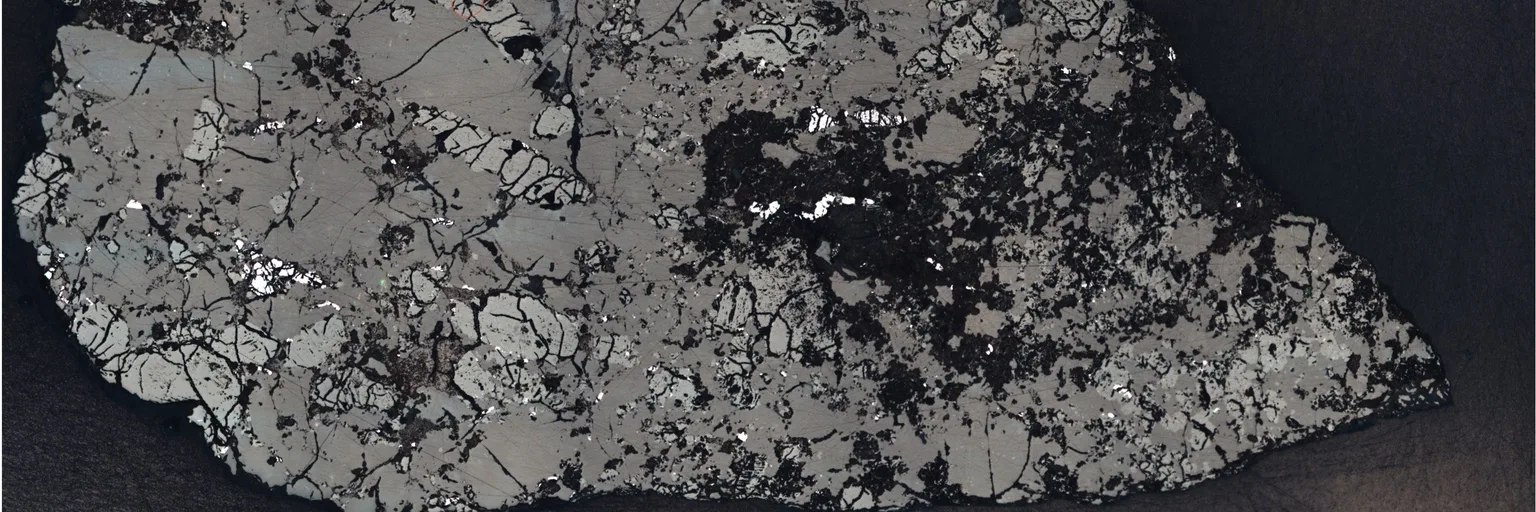
A Saharan rock from Mars shows what free samples can tell us
Teghaza 001, a meteorite at least 4.1 billion years old, hints at a wetter early Mars. It also shows why a lucky find from the desert needs careful, modest reading.
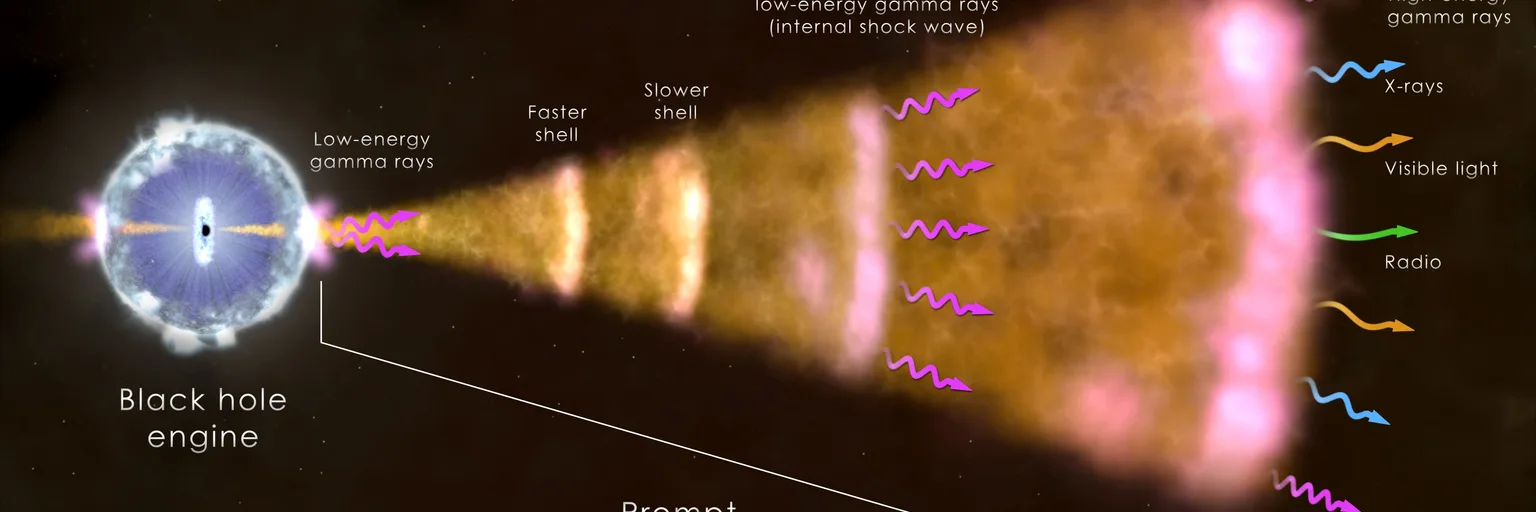
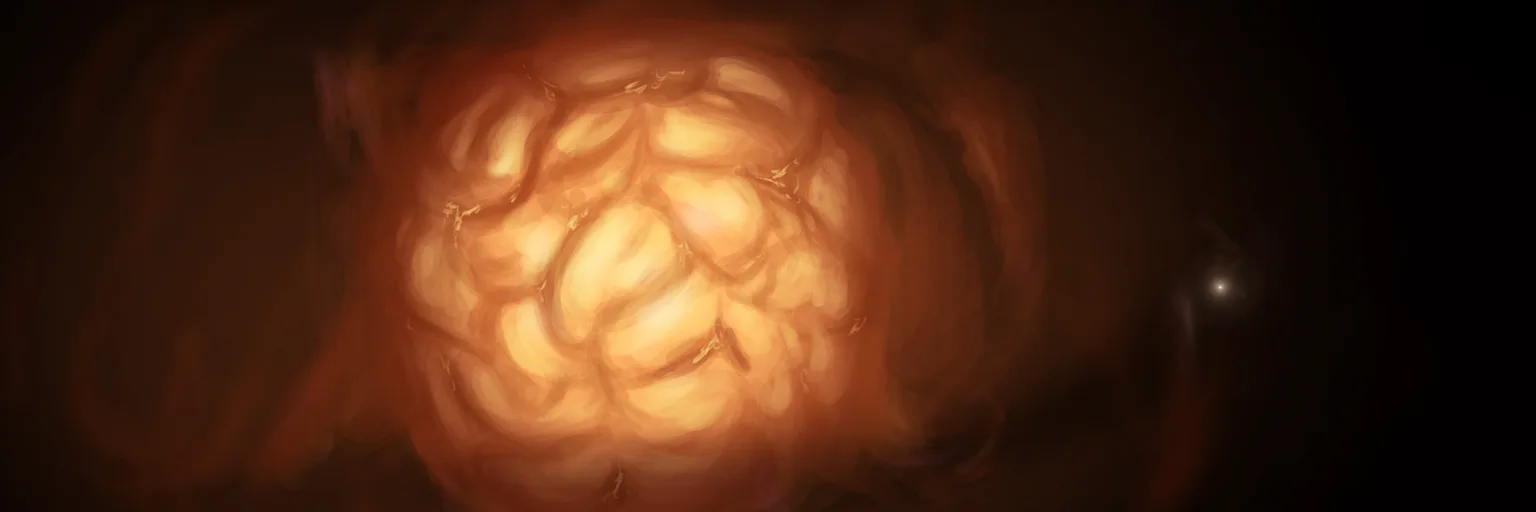
Betelgeuse calming down isn't an anticlimax: quiet is data too
After months of fading, the red supergiant has stopped sinking, for now. That's no letdown: each wobble of Betelgeuse is teaching us how little we knew about stars near the end of their lives.
Teghaza 001 is a free Mars sample, and a reason to want more
A 4.1-billion-year-old rock from the Sahara shows how much meteorites can teach us about early Mars, and why that is an argument for sample return, not against it.
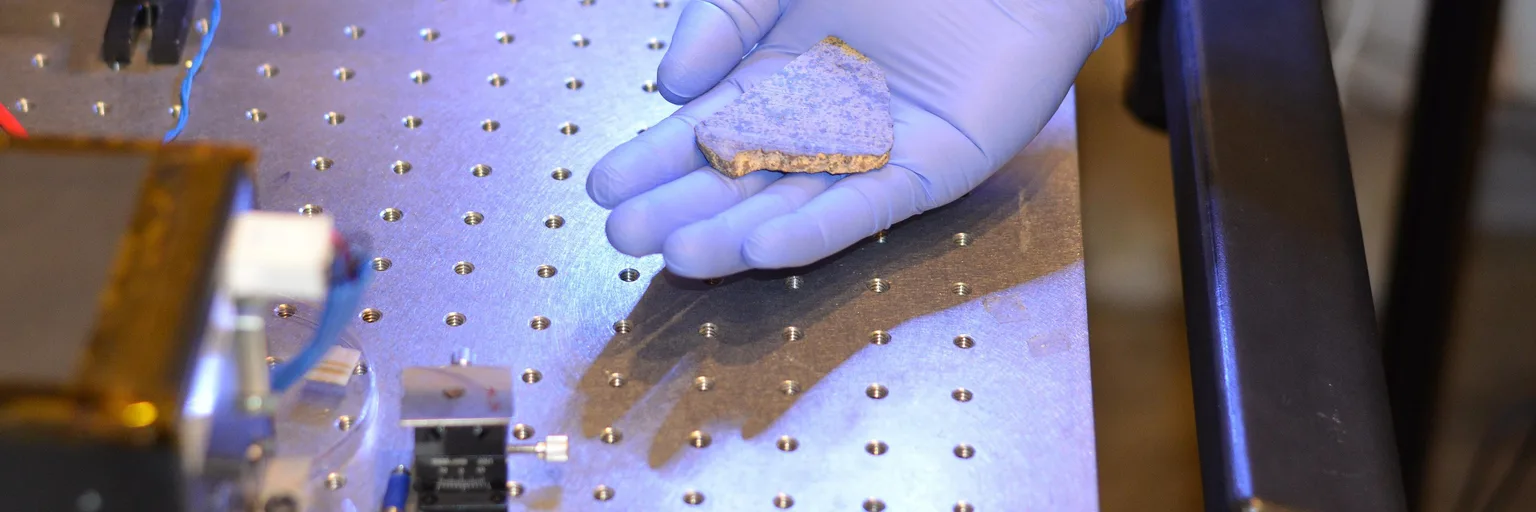
GRB 260310A shows why "modest" is a risky label for a cosmic blast
A gamma-ray burst that looked modest hid a far more energetic story in its afterglow. Brightness is a view from one angle, not a verdict on power.