A Dog's Paw Print on History: Lascaux and the Art of Serendipity
The serendipitous discovery of the 17,000-year-old Lascaux cave paintings, sparked by a curious dog, offers profound insights into ancient human creativity and the delicate balance of archaeological preservation.
AI-generated image
Some of humanity's most breathtaking scientific and archaeological discoveries aren't the result of meticulous planning or advanced technology, but rather pure, unadulterated chance. Often, it's a child's curious glance or an animal's instinct that leads to a breakthrough. We're reminded of this profound truth by the enduring story of the Lascaux cave paintings, a 17,000-year-old artistic marvel brought to light by a dog.
In September 1940, in the forested hills above Montignac, France, eighteen-year-old Marcel Ravidat was walking with his dog, Robot. The dog's attention was caught by a hole left where a tree had been uprooted. Ravidat, intrigued by local legends of a secret underground passage, returned a few days later with three friends: Jacques Marsal, Georges Agniel, and Simon Coencas. Together, they widened the opening and descended some 15 meters into what would become one of the most significant archaeological finds of the 20th century. In the dim light of their lamp, the walls of the cavern revealed a staggering gallery of prehistoric art: approximately 600 animal paintings and signs, and around 1,500 engravings, some animals stretching over five meters long, rendered in vibrant reds, blacks, and yellows Futura.
The discovery quickly garnered the attention of prehistory specialist Henri Breuil, who immediately recognized the site's immense importance. The art, created by people living in the valley some 17,000 years prior, offered an unprecedented window into the Upper Paleolithic period.
The Unpredictable Path to Discovery
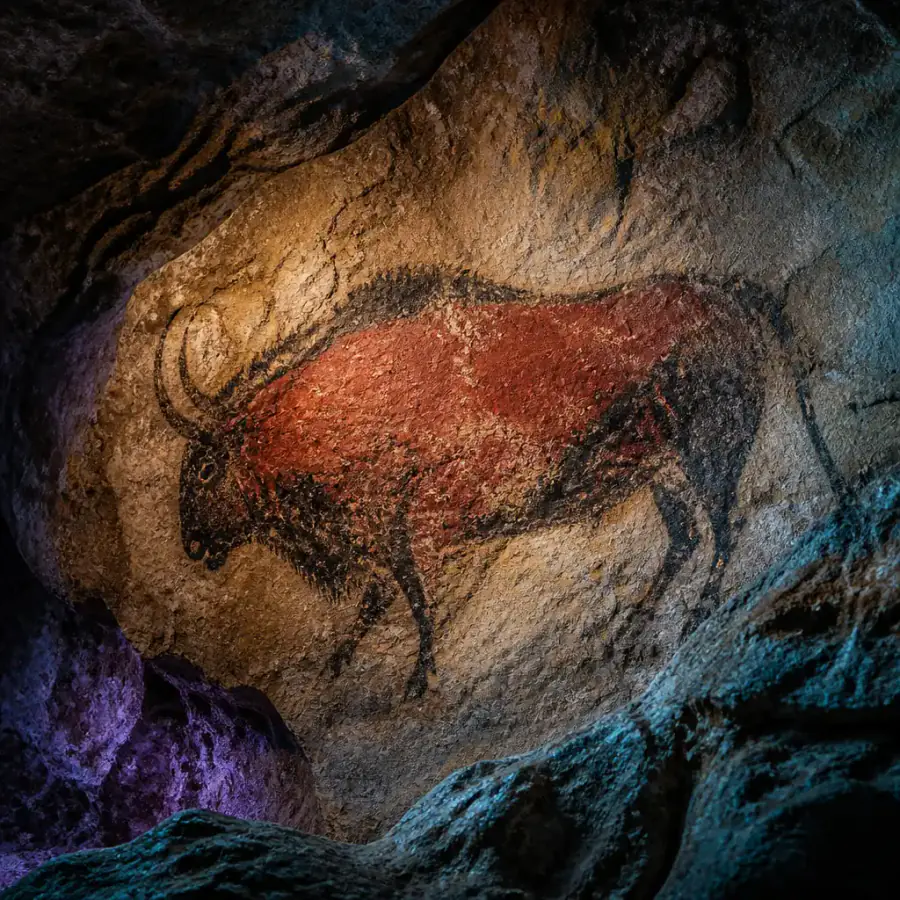
Lascaux's story is far from unique in highlighting the role of serendipity in archaeology. It is a recurring theme that underscores how much remains hidden, waiting for an unexpected prompt. The famed Altamira cave paintings in Spain, for instance, were also brought to light by a hunter and his dog in 1868, with a subsequent discovery of the iconic bisons by an eight-year-old girl, Maria, years later Il Tascabile. These incidents suggest that while scientific exploration is methodical, the initial spark of discovery often stems from ordinary moments. We often imagine archaeologists meticulously digging through layers of earth, but some of the most profound sites have simply been stumbled upon, their secrets preserved by obscurity until a dog chasing a rabbit, or a child exploring, revealed them. This element of chance humanizes the grand narrative of discovery, reminding us that the past is constantly interacting with our present in unforeseen ways.
Reshaping Our View of Prehistoric Humanity
The artistic sophistication of Lascaux, much like that of Chauvet, which is roughly twice as old and discovered in 1994, utterly transformed our understanding of Stone Age humans. Before such discoveries, the prevailing image of our Ice Age ancestors was often that of
No topics yet: start the first one.
More stories
The Great Pyramid's Hidden Depths: A New Era for Archaeology
Modern physics, through techniques like muography and ground-penetrating radar, has transformed our understanding of the Great Pyramid and the Giza plateau, revealing secrets untouched for millennia.

Milt Windler's Lasting Legacy: Why Human Ingenuity Still Trumps Tech
The passing of Milt Windler, a pivotal NASA flight director during the Apollo 13 crisis, reminds us that human ingenuity, calm under pressure, and collaborative leadership remain irreplaceable, even in our increasingly automated world.