Milt Windler's Lasting Legacy: Why Human Ingenuity Still Trumps Tech
The passing of Milt Windler, a pivotal NASA flight director during the Apollo 13 crisis, reminds us that human ingenuity, calm under pressure, and collaborative leadership remain irreplaceable, even in our increasingly automated world.
AI-generated image
What does it truly take to avert disaster in the vast emptiness of space, far from Earth, when technology fails catastrophically? The recent passing of Milt Windler, a name synonymous with NASA's most improbable rescue, compels us to confront this question once again. His death at 94 on October 1, 2026, as reported by multiple outlets including KeepTrack.space and collectspace.com, serves as a poignant reminder of the sheer human brilliance and resilience that defined what many consider the golden age of space exploration, especially during the harrowing Apollo 13 mission.
Windler was one of four dedicated flight directors who orchestrated the round-the-clock effort to bring the Apollo 13 crew — Commander Jim Lovell, Lunar Module Pilot Fred Haise, and Command Module Pilot Jack Swigert — safely back to Earth in 1970 after an oxygen tank exploded on their spacecraft. This wasn't merely a technical challenge; it was an unprecedented test of human problem-solving under unimaginable pressure, showcasing the profound impact of calm, collective expertise when every second counted.
The Unsung Architects of Survival
While the astronauts aboard Apollo 13 became symbols of courage, the true architects of their survival were the teams on the ground. Milt Windler, along with fellow flight directors Gerald Griffin, Glynn Lunney, and Gene Kranz, represented the epitome of leadership in crisis, as Daniel Marín on Naukas points out. In an era before advanced computational models could predict every contingency, these individuals relied on their deep understanding of engineering, their ability to think creatively under duress, and an unwavering commitment to their crew. Their work wasn't about following a pre-written playbook; it was about improvising solutions to problems that had never been encountered, using whatever limited resources were available.
We often focus on the dramatic cinematic portrayals, but the reality was a grueling, continuous exercise in applied physics and ingenious problem-solving. This required not just individual brilliance, but seamless collaboration across multiple teams, often under severe time constraints and with the world watching. Windler and his colleagues embodied a leadership style that prioritized clear communication, trust in their engineers, and the courage to make high-stakes decisions with incomplete information. It’s a testament to their foresight and rigorous training that they could even conceive of the unconventional solutions necessary to bring the crew home.
Beyond the Machines: A Timeless Lesson in Resourcefulness
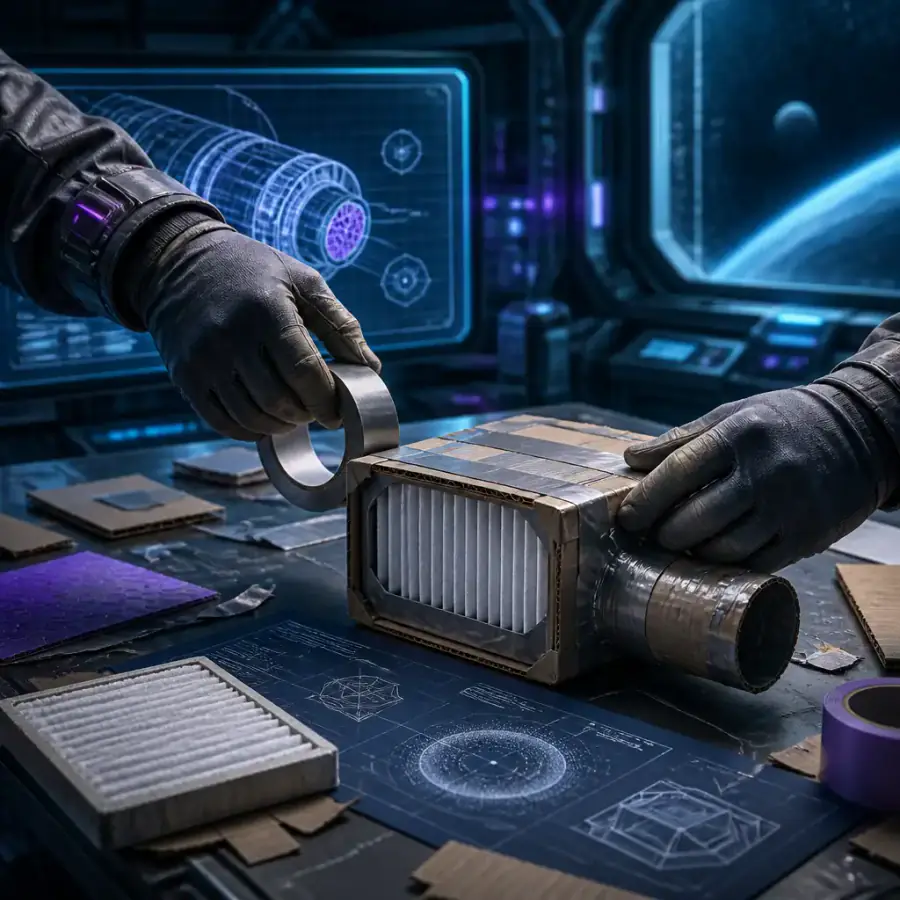
The Apollo 13 crisis wasn't just a moment for heroic individual actions; it was a powerful demonstration of systemic ingenuity. The famous challenge of fitting a square carbon dioxide scrubber into a round opening, essential for the astronauts' survival, became a symbol of this collaborative engineering. Teams on the ground, far removed from the direct danger, worked tirelessly with everyday materials—like plastic bags, cardboard, and duct tape—to devise a solution that could be communicated to and implemented by the astronauts in space. This wasn't an act of technological sophistication but rather one of fundamental engineering principles combined with extreme resourcefulness. The success of Apollo 13 underscores that hardware is only as good as the human minds designing, operating, and, crucially, repairing it when it inevitably falters.
The ability of NASA's flight directors to maintain control and provide clear, actionable instructions, even while facing unprecedented technical failures, speaks volumes. They turned a potentially fatal catastrophe into what many now consider one of the greatest feats of rescue in human history. This required not just technical knowledge, but an extraordinary capacity for leadership, problem diagnosis, and real-time decision-making—skills that transcend specific technologies and remain vital in any complex endeavor.
Why Human Judgment Remains Irreplaceable
Milt Windler's passing prompts us to reflect on the enduring value of human ingenuity in an increasingly automated world. As we push the boundaries of space exploration and rely more heavily on artificial intelligence and complex systems, the lessons from Apollo 13 are more relevant than ever. Technology, however advanced, will always be susceptible to unforeseen failures. When these moments inevitably arrive, it is the capacity for human critical thinking, adaptability, and courageous leadership that ultimately determines success or failure. The confidence in human ability that defined Windler's generation is a powerful reminder that our most sophisticated tools are extensions of our intellect, not replacements for it.
In our view, the legacy of Milt Windler and the Apollo 13 mission serves as a potent argument against the overreliance on technology to solve all problems. It highlights that the human element—the ability to innovate under pressure, to collaborate across disciplines, and to lead with conviction—remains the most indispensable asset. It encourages us to cultivate these deeply human skills, not just in engineers and astronauts, but in every field, recognizing that even the most complex systems ultimately depend on the wisdom and resilience of the people behind them.
No topics yet: start the first one.