The UK's Robot Claw Mission: More Than Just Cleaning Up Space Junk
The UK's ambitious mission to deploy a refuelable robot claw for active debris removal is not merely about clearing orbital trash, but strategically building a sustainable space economy.
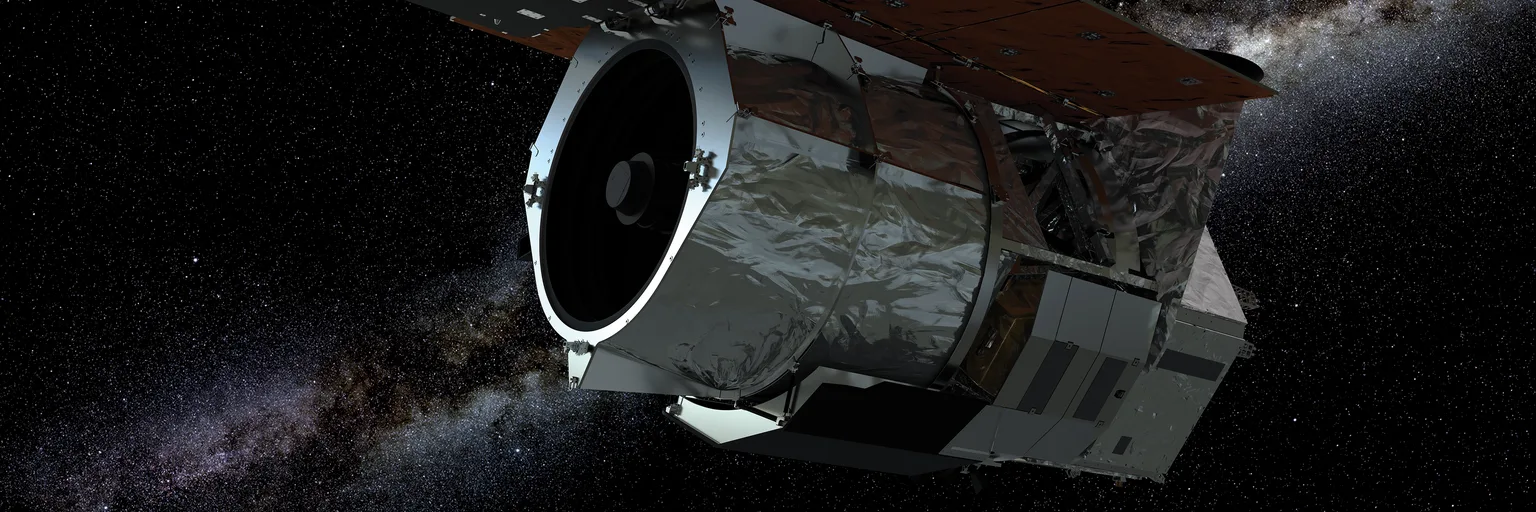
Photo: NASA / Wikimedia Commons (Public domain)
Is our reliance on space technology creating an unsustainable future for critical infrastructure? The growing problem of space junk, silently threatening everything from GPS and weather forecasts to global communications, is a stark reminder that what goes up must eventually be managed. Into this increasingly hazardous orbital environment steps the United Kingdom, launching a mission that we believe marks a significant, proactive shift in how humanity approaches its cosmic backyard.
Just days ago, the UK government announced its Active Debris Removal mission (UK ADR), a pioneering effort to deploy a spacecraft armed with giant robotic claws. This ambitious project, spearheaded by the UK Space Agency (UKSA) with ClearSpace UK as its industry partner, aims to launch from Saxavord Spaceport in Scotland in 2029. Its initial task is to remove two UK-registered satellites by 2032, releasing them into a lower atmosphere where they will burn up naturally. Notably, the mission design features a refuelable spacecraft, intended to "sweep space for years to come" after its initial cleanup, a critical detail that distinguishes it from previous efforts. The public has even been invited to name the spacecraft, injecting a layer of national engagement into a technically complex challenge.
The Inevitable Reckoning with Orbital Trash
The scale of the space junk problem is truly immense, and its threat immediate. Hundreds of thousands of tracked debris objects hurtle around Earth at speeds exceeding 17,000 miles an hour. As the UK Space Agency's Paul Bate notes, the need to safeguard the space environment has "never been more pressing," especially with 1,700 satellites launched last year alone. These fragments—from spent rocket stages and defunct satellites to tiny paint flecks—pose a significant collision risk to operational satellites, which underpin national security and everyday services. We've already seen the consequences: the 2009 collision between an abandoned Russian spacecraft and a U.S. Iridium satellite created an additional 2,300 large pieces of debris, demonstrating the potential for a catastrophic cascade effect. The current paradigm, where satellites are treated as "single-use items" that are simply discarded when they run out of fuel or malfunction, is clearly unsustainable. This mission represents a vital acknowledgment that we must actively address the pollution we've created in orbit.
A Strategic Move Beyond Simple Cleanup
While the immediate goal of the UK ADR mission is debris removal, its true significance lies in its broader implications for future space operations. This initiative is framed as a key part of the nascent In-orbit Servicing, Assembly and Manufacturing (ISAM) sector. As Dr. Alice Bunn, co-director of the UK Space Agency, explains, this mission is "about much more than removing debris"; it's about developing the capabilities for future servicing, assembly, and manufacturing in orbit. This means creating technology to repair, refuel, and protect orbital assets, transforming them from disposable items into reusable, maintainable infrastructure. Analysts estimate the space debris removal and in-orbit services market could reach a cumulative $14.3 billion by 2031, positioning the UK as a potential leader in an industry predicted to grow into a billion-dollar sector within a decade. The refuelable design of the UK ADR spacecraft is a clear signal of this forward-thinking approach, aiming to provide a lasting capability rather than a one-off solution.
The UK's Bold Bet on a Sustainable Space Future
The UK's backing of this mission, including £60 million in government funding, reflects a determination to lead global efforts in space cleanup and to fortify its own thriving space sector, currently valued at £18.6 billion and supporting over 55,000 skilled jobs. This is their "Space Strategy in action," as Liz Lloyd, UK Space Minister, puts it, aiming to strengthen Britain's world-class satellite sector and drive economic growth. The selection of ClearSpace UK, a subsidiary of a Swiss company, as the industry delivery partner, further emphasizes a strategic build-up of domestic expertise and supply chains across the UK. While a public naming competition might seem like a minor detail, it serves to engage the public and build support for what is undeniably a high-stakes, cutting-edge endeavor. The mission requires designing, building, and testing a spacecraft capable of safely capturing objects never intended to be caught—a monumental engineering challenge that, if successful, will establish the UK at the forefront of a new generation of space services.
In our view, the UK's Active Debris Removal mission is more than just an attempt to tidy up space; it's a foundational step towards a sustainable, economically viable future in orbit. By prioritizing active debris removal and investing in ISAM capabilities, the UK is not only addressing an urgent environmental crisis but also strategically positioning itself to shape the next era of space exploration and utilization.
No topics yet: start the first one.
More stories
The Mars Sample Return Race: A New Era of Space Competition
The high-stakes competition between NASA and China to bring Martian samples to Earth is reshaping space exploration, accelerating our quest to understand the Red Planet's secrets.

Roman telescope is set to rewrite our cosmic understanding
NASA's Nancy Grace Roman Space Telescope, with its wide-field infrared vision and powerful instruments, promises profound insights into dark energy, exoplanets, and the universe's structure.
The Kármán Line: A Political Boundary for a Physical Frontier
The persistent debate over whether space begins at 80 or 100 kilometers above Earth underscores that this 'scientific' boundary is deeply entangled with legal, commercial, and geopolitical interests.

James Webb's 'Empty' Signal: The Universe is Stranger Than We Thought
The James Webb Space Telescope has detected an intense, unexplained infrared signal from a region of space long considered barren, forcing a profound reevaluation of cosmic emptiness and the limits of our observation.