The Ice Walls Are Falling: A Climate Crisis Beyond Sea Level Rise
The rapid melting of polar ice caps and glaciers is not just raising sea levels; it's unleashing a cascade of environmental feedback loops that accelerate global warming and reshape our planet's future.
AI-generated image
The image of a polar bear on a shrinking iceberg has long symbolized climate change, but do we truly grasp the intricate, escalating crisis that polar ice melt represents? This isn't merely a picturesque warning or a distant threat of rising coastlines; it's a dynamic, multifaceted process that is actively reshaping our planet's climate system in profoundly alarming ways.
Indeed, the scientific consensus is stark: our planet's frozen reservoirs, from vast ice sheets to alpine glaciers, are diminishing at an accelerated rate. This phenomenon, highlighted by recent years seeing record lows in ice extent, is a direct consequence of warming air and ocean temperatures, adding substantial amounts of freshwater to the world's oceans and setting off a chain reaction of environmental shifts. It's a critical indicator of global warming's relentless progress.
The Cascading Crisis of Rising Waters
One of the most immediate and widely understood consequences of melting ice is its contribution to global sea level rise. As glaciers and ice sheets lose mass, this influx of freshwater directly elevates ocean levels, intensifying coastal erosion and making storm surges in coastal areas more dangerous, as reported by sources like World Wildlife Fund and Climate.gov. Regions like Antarctica, which is warming at nearly double the global average, are particularly concerning; a 2021 study projected that without dramatic cuts in emissions, Antarctic ice melt could accelerate around 2060, nearly doubling its contribution to sea level rise, according to NSIDC.
However, the issue extends far beyond simply higher water marks. The sheer volume of freshwater entering the oceans also has the potential to alter the crucial salinity balance of marine environments. This change, in turn, can create a significant ecological imbalance and impact oceanic currents, which are vital in regulating global climate, as Iberdrola points out. We are witnessing not just a rise in water, but a fundamental shift in the ocean's very composition and dynamics.
Dangerous Feedback Loops: Beyond Simple Melt
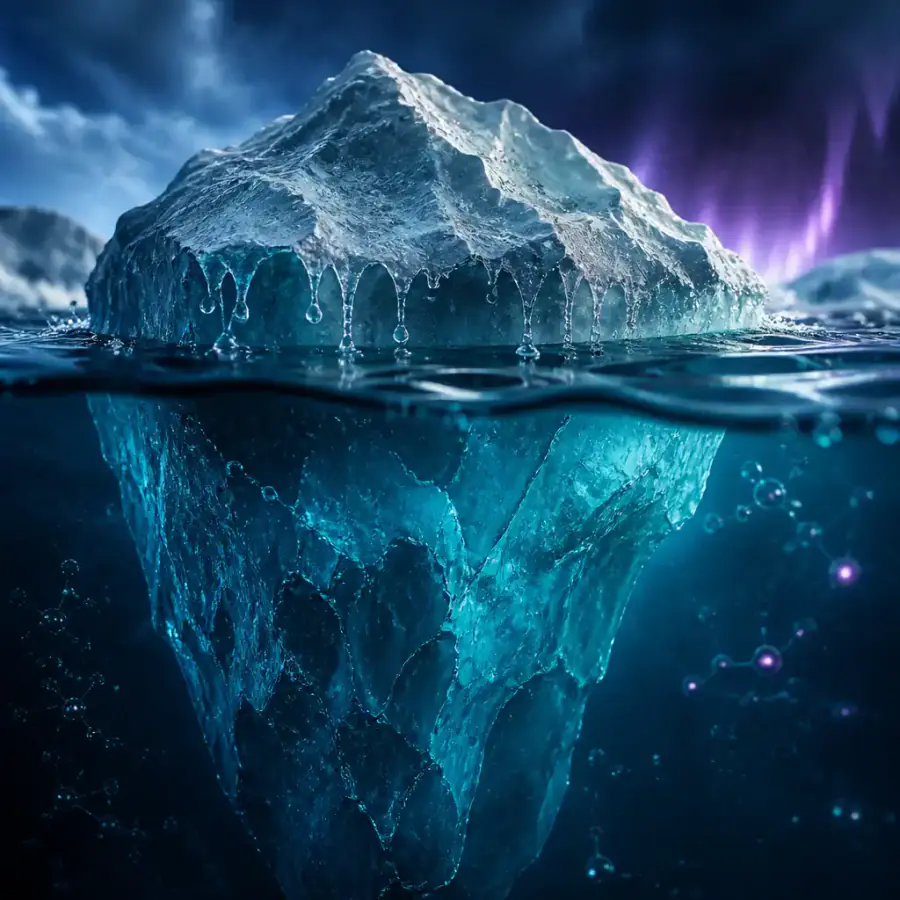
Perhaps the most insidious aspect of polar ice melt lies in its capacity to trigger dangerous feedback loops that further intensify global warming. A key example is the albedo effect: ice, being white, reflects a significant amount of the sun's energy back into space. As ice melts, it exposes darker land or ocean surfaces, which absorb more solar radiation, leading to further warming and, inevitably, more melting. This creates a self-reinforcing cycle of warming and ice loss, as explained by Study.com.
Another critical feedback mechanism is the thawing of permafrost. The soils in polar regions, frozen for millennia, contain vast amounts of greenhouse gases. As global warming causes this permafrost to thaw, it releases these trapped gases, primarily methane and carbon dioxide, into the atmosphere, directly contributing to an amplified greenhouse effect. This phenomenon, detailed by the UCAR Center for Science Education, adds another layer of complexity and urgency to the climate crisis, effectively releasing historical emissions back into our present.
A Global Web of Consequences
The ripple effects of polar ice loss are not confined to the Arctic and Antarctic; they impact weather patterns and ecosystems worldwide. The loss of Arctic ice, for instance, is linked to global impacts ranging from increased heat waves and unpredictable weather to altered polar vortexes. These disruptions can have significant damage to agricultural crops, affecting global food security, as highlighted by World Wildlife Fund. The future is likely to see more extreme weather events, including heat waves, floods, and storms, according to Greenpeace.
Beyond direct climatic shifts, the melting of ice also represents a loss of invaluable scientific data. Melt-affected ice cores, crucial for polar research, are being compromised in a warming world, hampering our ability to understand past climates and predict future scenarios, as a 2024 paper in Copernicus.org suggests. The disappearance of glaciers also means a reduction in freshwater reserves, impacting regions that rely on glacial melt for their water supply.
The ongoing and accelerating melt of polar ice is arguably one of the most alarming manifestations of global warming. It is a stark indicator not just of rising temperatures, but of a fundamental unraveling of our planet's delicate climate balance. The complex ecological disruptions and dangerous feedback loops it triggers mean that the consequences will extend far beyond initial predictions, intensifying climate change in ways we are only beginning to fully comprehend. To mitigate the profound and potentially irreversible changes ahead, the urgency for dramatic cuts in emissions is paramount; the melting ice is not just a symptom, but a profound warning system for the entire planet.
No topics yet: start the first one.