LiDAR's Amazonian Revelation: A Monumental Past Uncovered
New lidar technology is not just uncovering structures, but dramatically rewriting the narrative of sophisticated pre-Columbian civilizations and their profound, geometric impact on the Amazonian landscape.
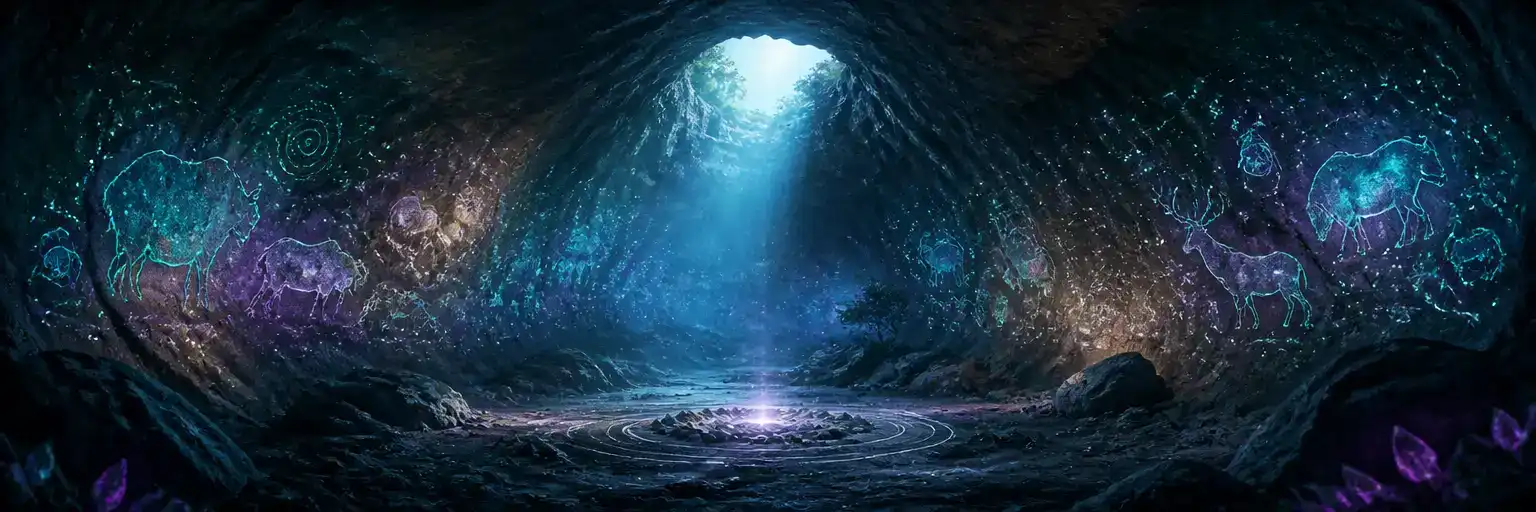
AI-generated image
For centuries, popular imagination has painted the Amazon rainforest as a vast, largely untouched wilderness before European arrival, a natural expanse minimally altered by human hands. This perception, however, is being dramatically challenged by cutting-edge technology that penetrates the dense canopy, revealing a past far more complex and monumental than we ever imagined. What if, beneath that seemingly pristine green carpet, lay the remnants of thriving, geometrically advanced societies that rivaled contemporary civilizations across the globe?
Recent revelations, fueled by the revolutionary power of LiDAR (Light Detection and Ranging) technology, confirm precisely this. Scientists have identified hundreds of monumental structures hidden beneath the Amazonian foliage, specifically in regions spanning the Brazilian states of Amazonas and Acre. An international team of researchers, whose findings were published in the journal Nature in July, documented 432 earthworks across a 4,497 km² area, with a staggering 396 of these never before recorded, as reported by outlets like es.Gizmodo. This monumental discovery suggests that the Amazon was home to complex pre-Columbian societies capable of transforming the landscape on a grand scale.
Redefining Amazonian History
These findings force us to fundamentally rethink the narrative of human occupation in the Amazon. The idea of a sparsely populated region, barely touched by human activity, is crumbling under the weight of evidence. The newly identified structures, often called geoglyphs or earthworks, are not mere drawings but significant landscape architecture: intricate geometric enclosures, ditches up to 15 meters wide and 5 meters deep, and interconnected networks of paths spanning hundreds of kilometers. These were built between 600 B.C. and 850 A.D., coinciding with the period when figures like Pythagoras were active in ancient Greece, a comparison made by paleontologist Alceu Ranzi, one of the study's authors, according to Diario CAMBIO 22.
What these discoveries point to is a sophisticated culture, often grouped under the name Aquiry civilization, which occupied an estimated 183,000 km² and, between 100 and 300 A.D., could have supported a population of up to three million people. This is a considerable figure that utterly transforms our image of ancient Amazonia from an empty expanse to a vibrant, populated landscape where communities thrived and reshaped their environment with monumental feats of engineering and geometrical knowledge.
LiDAR: The Unseen Architect's Lens
The ability to unveil such a past is a testament to the transformative power of LiDAR. Unlike traditional aerial photography or satellite imagery that are blocked by the dense forest canopy, LiDAR systems mounted on aircraft emit laser pulses. Some of these pulses penetrate the gaps in the vegetation, reaching the forest floor and reflecting back. By precisely measuring the time it takes for these pulses to return, the technology can digitally strip away the trees and reconstruct a detailed 3D map of the bare ground below. This allows researchers to
No topics yet: start the first one.
More stories
A Dog's Paw Print on History: Lascaux and the Art of Serendipity
The serendipitous discovery of the 17,000-year-old Lascaux cave paintings, sparked by a curious dog, offers profound insights into ancient human creativity and the delicate balance of archaeological preservation.
The Great Pyramid's Hidden Depths: A New Era for Archaeology
Modern physics, through techniques like muography and ground-penetrating radar, has transformed our understanding of the Great Pyramid and the Giza plateau, revealing secrets untouched for millennia.

Milt Windler's Lasting Legacy: Why Human Ingenuity Still Trumps Tech
The passing of Milt Windler, a pivotal NASA flight director during the Apollo 13 crisis, reminds us that human ingenuity, calm under pressure, and collaborative leadership remain irreplaceable, even in our increasingly automated world.