The Universe’s Oldest Fast Radio Burst Challenges Its Origins
The discovery of the most distant Fast Radio Burst, detected by MeerKAT and pinpointed by the James Webb Space Telescope, provides unprecedented insights, forcing us to rethink how these enigmatic signals originate in the early universe.
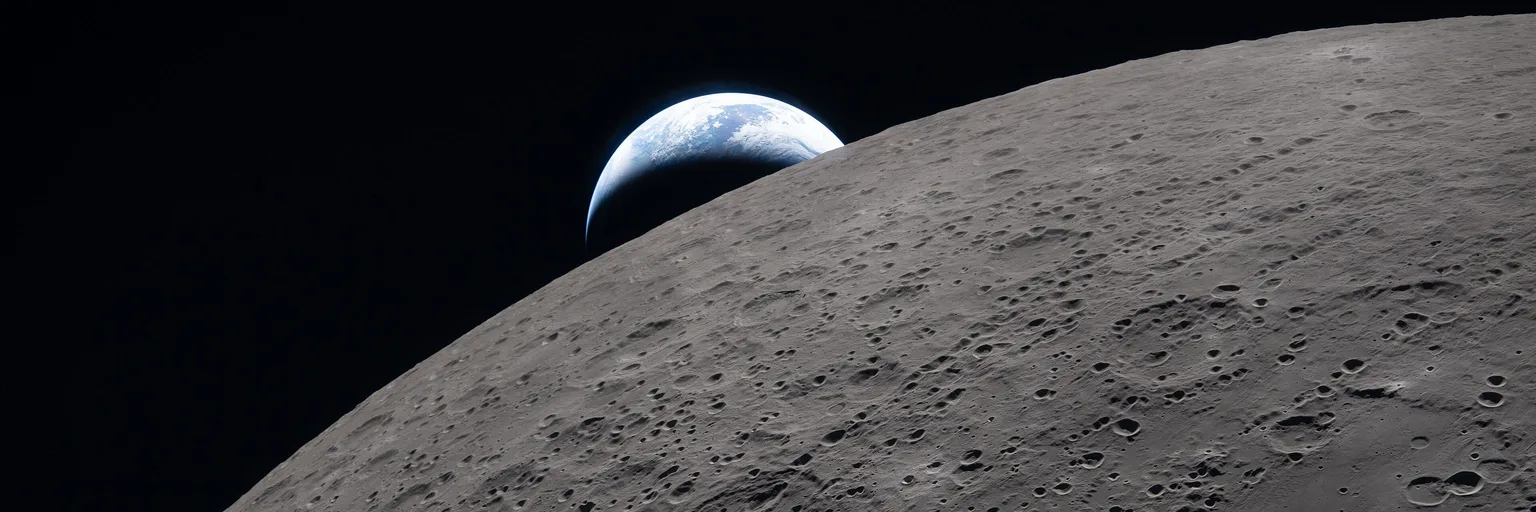
Photo: NASA, ESA, CSA, J. Olmsted (STScI). Science: M. Caleb (SIfA) / Wikimedia Commons (CC BY 4.0)
What if the most distant flash of radio waves ever recorded could fundamentally change our understanding of cosmic phenomena and the universe's infancy? This isn't science fiction; it is the profound implication of FRB 20240304B, the most distant Fast Radio Burst (FRB) to date. The MeerKAT telescope initially detected this burst, and NASA's James Webb Space Telescope meticulously pinpointed its host galaxy, allowing astronomers to confirm its incredible distance and unexpected characteristics.
First discovered in 2007, FRBs are enigmatic, millisecond-long flashes of radio emission from the distant universe, their origins largely a mystery. The MeerTRAP team detected FRB 20240304B on March 4, 2024. Its signal traveled for over 11 billion years to reach Earth, originating from a time when the universe was just 3 billion years old, during the peak of star formation known as “cosmic noon.” This remarkable find, with a redshift of 2.148, more than doubles the redshift reach of previously localized FRBs, pushing our observational boundary deeper into the universe's youth, as reported by NASA.
A Tiny Galaxy Challenges Massive Theories
One of the most compelling aspects of FRB 20240304B is its host galaxy. Astronomers expected a massive, well-formed galaxy, typical of other FRB hosts. Instead, the Webb telescope revealed a diminutive dwarf galaxy, actively forming stars, yet 1,000 times less massive than anticipated. As Manisha Caleb of the University of Sydney, lead author on the study published in Science, put it: “We thought it would be a big, nicely formed galaxy with lots of stars, and instead it was a little dwarf galaxy, although it was actively forming stars.” Ben Stappers of the University of Manchester, a co-author, added, “The host sticks out in the whole galaxy sample that we have. And it definitely was not what we were expecting.”
This unexpected host has significant implications for our theories about what creates these powerful bursts. One leading hypothesis suggests FRBs might result from the merger of two neutron stars. However, this process would typically take billions of years, implying FRBs should originate in older galaxies with more evolved stellar populations. This dwarf galaxy, with most of its stars potentially formed within just 30 million years, directly contradicts that idea. Caleb stated unequivocally, “Our work suggests that it’s very unlikely that this FRB was produced by a merger.”
Stronger Support for Magnetars
Instead, this discovery lends strong support to an alternative theory: that FRBs originate from young, highly magnetic neutron stars known as magnetars. A magnetar, born from a massive star's supernova explosion, could produce an FRB relatively quickly. The observed young, actively star-forming nature of FRB 20240304B's host galaxy fits perfectly with the magnetar model. This isn't merely an academic debate; understanding the progenitor of FRBs is crucial to unlocking their full potential as cosmic probes.
Indeed, the intense star formation during “cosmic noon” would have produced numerous massive stars, many of which would have ended their lives as supernovae, leaving behind magnetars. The presence of FRB 20240304B in such an environment strongly suggests a link between these powerful bursts and young, energetic stellar populations, validating the magnetar hypothesis for this particular event and potentially for many others.
FRBs as Cosmic Flashlights
The immense distance of FRB 20240304B makes it more than just a source of fascination; it transforms into an invaluable tool for mapping the otherwise invisible matter and structures that permeate the cosmos. As co-author J. Xavier Prochaska of the University of California, Santa Cruz, describes it, “A fast radio burst is almost like a cosmic flashlight. It lights up everything along the path. It carries an imprint of everything that it travels through, so you can use it to trace the ‘cosmic web’ – the otherwise invisible matter and structures that it encounters along the way.”
The team found the imprint of two cosmic structures on the FRB’s signal: one previously unknown galaxy cluster at a redshift of 0.3 (about 3.5 billion light-years from Earth) and the nearby Virgo Cluster, which is located about 54 million light-years from Earth. By analyzing these imprints, scientists can learn more about the distribution of matter—both visible and invisible—between the FRB source and Earth. This ability to probe the intergalactic medium across such vast cosmic distances offers an unprecedented opportunity to study the evolution of the universe's structure, revealing secrets about the cosmic web that would otherwise remain hidden.
The findings from FRB 20240304B mark a significant step forward in astrophysics. By observing these fleeting, energetic events from the early universe, we are gaining clearer insights into the fundamental processes that shaped the cosmos, from star formation to the mysterious origins of FRBs themselves. As new radio telescope facilities and instruments continue to come online, the potential to discover and characterize even more distant FRBs will undoubtedly grow, with the James Webb Space Telescope remaining essential for unraveling the mysteries of their host galaxies and the early universe they illuminate.
No topics yet: start the first one.
More stories
Mars' Moons Hold Solar System's Secrets: MMX Mission Ready to Deliver
The upcoming MMX mission, a collaboration between Japan, France, and other nations, is poised to solve the enduring mystery of Mars' moons and offer unprecedented insights into our solar system's tumultuous early days.
Cosmic Alchemy's Crucible: X-rays Reinforce Gold's Violent Birth
A distant flash of X-rays from colliding neutron stars offers compelling new evidence, deepening our understanding of how precious metals like gold are forged in cataclysmic cosmic events.
Beyond Footprints: Nuclear Power and Lunar Caves Pave the Way for Permanent Space Presence
NASA's dual push for advanced nuclear propulsion and the discovery of lunar lava tubes signals a profound strategic pivot towards enabling long-term, self-sustaining human outposts on the Moon and Mars.
Human Eyes Still See What Machines Miss: Artemis II Proves It
NASA's Artemis II mission delivered a treasure trove of data, but it's the astronauts' unique observations of lunar impacts and strange colors that underscore humanity's indispensable role in space science.