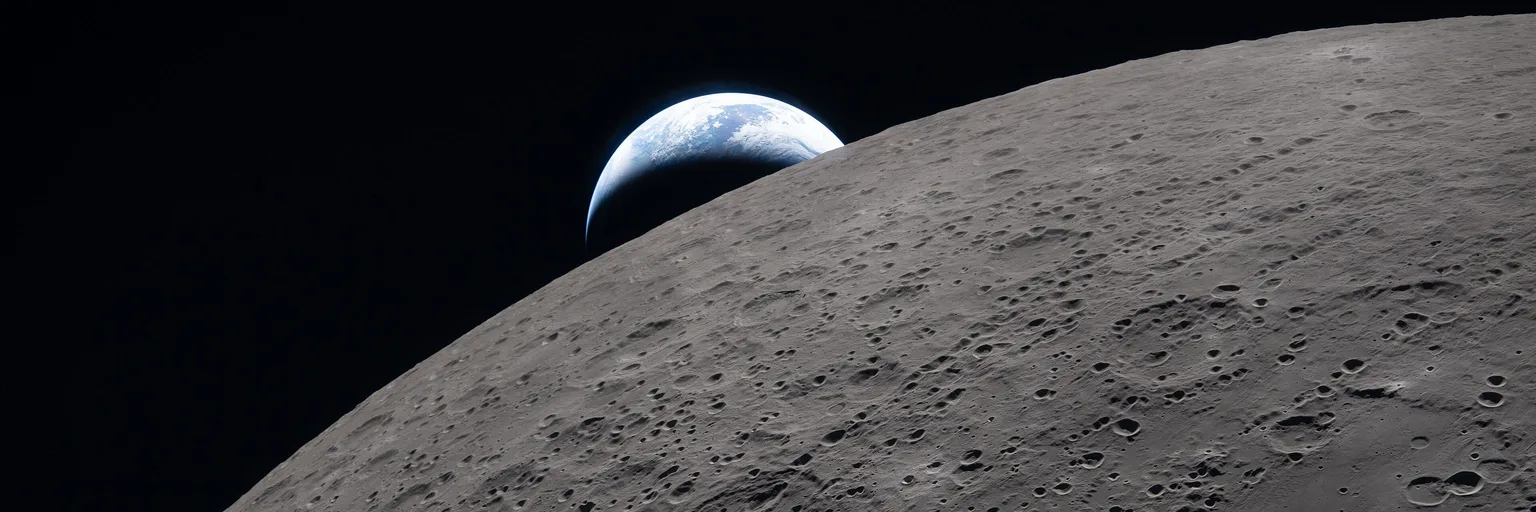
Mars' Moons Hold Solar System's Secrets: MMX Mission Ready to Deliver
The upcoming MMX mission, a collaboration between Japan, France, and other nations, is poised to solve the enduring mystery of Mars' moons and offer unprecedented insights into our solar system's tumultuous early days.
Are Mars' enigmatic moons, Phobos and Deimos, remnants of a catastrophic collision, or merely captured asteroids from the outer solar system? This isn't just a trivial astronomical puzzle; the answer could redefine our understanding of how planets, including our own, came to be. For decades, these small, irregularly shaped bodies have held a tantalizing secret, one that the upcoming Martian Moons eXploration (MMX) mission is finally ready to unravel.
Led by the Japan Aerospace Exploration Agency (JAXA) and supported by an impressive international consortium including NASA, the French space agency CNES, the German Aerospace Center (DLR), and ESA, MMX represents a monumental stride in planetary science. Scheduled for launch on October 20, 2026, the mission will embark on a multi-year journey to survey both Phobos and Deimos, with its primary objective being to collect and return samples from Phobos to Earth by 2031, a feat never before accomplished from the Martian sphere.
Unlocking the Genesis of Terrestrial Worlds
The enduring debate over the origin of Phobos and Deimos centers on two compelling hypotheses: the giant impact theory, suggesting they formed from debris ejected after a celestial body collided with Mars, much like Earth's own moon; or the capture hypothesis, positing they are asteroids snared by Mars' gravity. The distinction is critical. If they are impact ejecta, their composition would reflect the early conditions of Mars, potentially revealing how water and organic matter—key ingredients for life—were present or transported in the inner solar system. Conversely, if they are captured asteroids, they might retain pristine materials from the outer solar system, offering clues about the diverse building blocks available during planetary formation. As JAXA explains, MMX is humanity's first attempt to settle this mystery by directly exploring and bringing back samples, providing tangible evidence to finally take a side in this cosmic debate.
A Triumph of Robotic Precision and International Collaboration
Returning samples from Phobos is an engineering challenge of immense proportions. Phobos's gravitational pull is incredibly weak; for perspective, the 25 kg Idefix rover, a joint French-German contribution from CNES and DLR, will weigh the equivalent of just 15 grams on its surface, as ESA highlights. This necessitates innovative landing and maneuvering techniques. MMX is equipped with two sophisticated sampling systems: a corer for subsurface material and a pneumatic sampler that uses pressurized gas to collect surface regolith. These technologies, including the pneumatic sampler which The Planetary Society helped enable and test, represent significant advancements in our capability to interact with celestial bodies in low-gravity environments. The sheer complexity of a round-trip mission to the Martian sphere, coupled with the precision required for sample collection, underscores the monumental technological leap MMX embodies, a testament to the collaborative spirit of the involved space agencies.
Peering into the Future of Mars and Humanity's Reach
The implications of MMX extend far beyond the immediate understanding of Phobos and Deimos. The samples, once returned, will allow scientists on Earth to utilize laboratory equipment too large and complex to send into space, performing in-depth analyses of their mineralogical composition and thermophysical properties. This will not only shed light on the moons' origins but also on the evolution of the Mars system itself, including the long-term interaction between the planet and its orbital companions. Moreover, the mission will help clarify the mechanisms that transported water and organic matter necessary for habitability on terrestrial planets, a direct link to the conditions for the emergence of life. Furthermore, MMX is developing critical technologies for future human exploration, establishing capabilities for round-trip missions to the Martian sphere and sustained operations on planetary moons. It's a mission that not only seeks answers about our past but also paves the way for our future among the stars.
MMX stands as a beacon of scientific ambition and international cooperation. It promises to deliver not just rocks and dust, but fundamental answers about planetary formation, the distribution of life's building blocks, and the engineering prowess required to expand humanity's reach across the solar system. By daring to touch and retrieve a piece of Mars' mysterious companions, we are taking an invaluable step towards understanding our cosmic neighborhood, and ultimately, our own place within it.
No topics yet: start the first one.
More stories
The Universe’s Oldest Fast Radio Burst Challenges Its Origins
The discovery of the most distant Fast Radio Burst, detected by MeerKAT and pinpointed by the James Webb Space Telescope, provides unprecedented insights, forcing us to rethink how these enigmatic signals originate in the early universe.

Cosmic Alchemy's Crucible: X-rays Reinforce Gold's Violent Birth
A distant flash of X-rays from colliding neutron stars offers compelling new evidence, deepening our understanding of how precious metals like gold are forged in cataclysmic cosmic events.

Beyond Footprints: Nuclear Power and Lunar Caves Pave the Way for Permanent Space Presence
NASA's dual push for advanced nuclear propulsion and the discovery of lunar lava tubes signals a profound strategic pivot towards enabling long-term, self-sustaining human outposts on the Moon and Mars.

Human Eyes Still See What Machines Miss: Artemis II Proves It
NASA's Artemis II mission delivered a treasure trove of data, but it's the astronauts' unique observations of lunar impacts and strange colors that underscore humanity's indispensable role in space science.