Antarctica's Beaches Under Siege: A Microplastic Wake-Up Call
The discovery of microplastics on Deception Island's pristine shores confirms that no corner of our planet remains untouched by human pollution, demanding urgent global accountability.
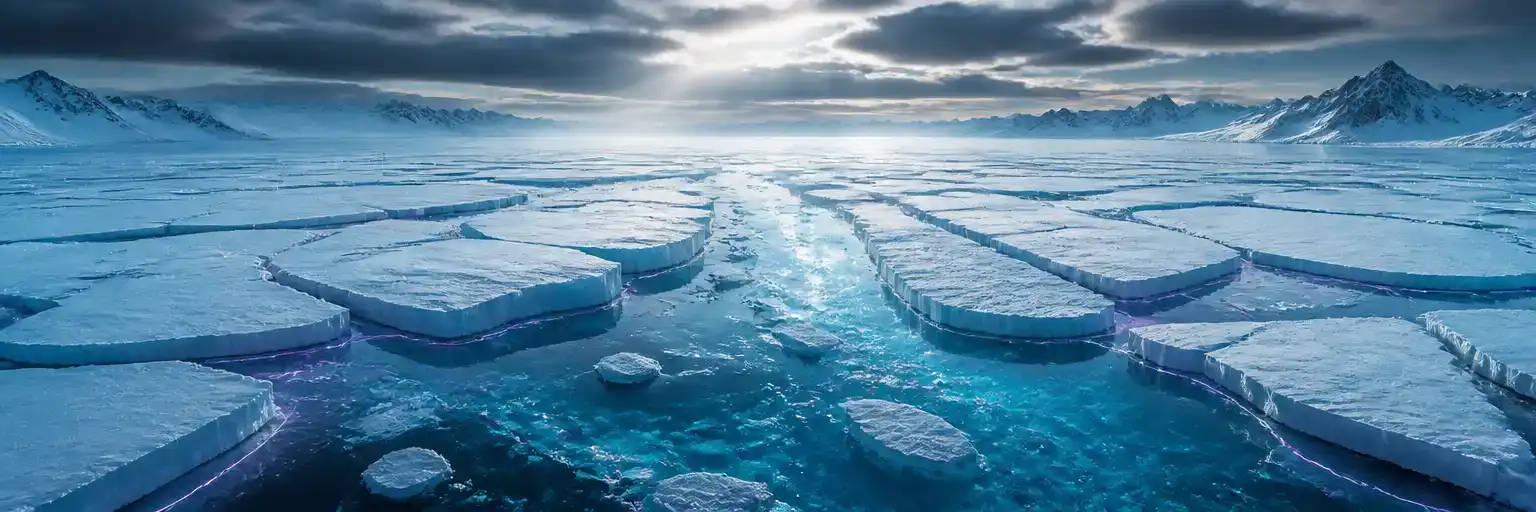
AI-generated image
For decades, Antarctica has stood as a symbol of pristine wilderness, a remote bastion untouched by the relentless tide of human impact. Yet, this comforting narrative is crumbling. The recent detection of microplastics on the beaches of Deception Island, an active volcanic isle in the South Shetland archipelago, serves as a stark reminder: there is no sanctuary left on Earth from our waste.
Scientists, led by María B. Alcauza from the University of Cadiz and the Marine Research University Institute, found these tiny plastic fragments across all ten sampled intertidal zones of Deception Island. As Noticias Ambientales reported recently, this marks the first specific database for microplastic contamination in the island's intertidal sediments. While concentrations were lower than in many urban coastal areas, the mere presence of polyethylene and PVC, predominantly as irregular fragments, sends an unequivocal signal that even the most isolated ecosystems are now part of the global pollution matrix.
The Unwavering Reach of Our Footprint
This latest finding on Deception Island is, in our view, less about the quantity of plastic and more about its profound symbolic weight. Polyethylene, a common plastic, accounted for about 40.8% of the identified microplastics, with PVC close behind at 28.6% (Source 1). These aren't exotic compounds; they are the ubiquitous materials of our daily lives, breaking down and traveling unimaginable distances. While the concentrations on Deception Island's beaches varied between 2.22 and 31.09 particles per kilogram of sediment, the highest levels were found in Whalers Bay, a frequently visited location (Source 1). This reinforces the idea that human activity, even in controlled scientific and tourist contexts, leaves a mark. This isn't the first time microplastics have breached Antarctica's perceived defenses; they've been found in its surface waters, deep-sea sediments, snow, and even inside ice cores, as previous studies have demonstrated across the continent's diverse environments (Source 2, 4, 10, 11, 12, 14, 16). The notion that any corner of the planet can remain untouched is, regrettably, a fiction we can no longer afford to entertain.
A Confluence of Sources: Local and Global
The origin of these microplastics on Deception Island is a complex puzzle, likely without a single answer. Researchers suggest a dual source: local activities and distant transport. Deception Island itself hosts permanent scientific stations and significant tourist activity during the austral season (Source 1). Past research indicates that scientific bases can release microplastics into nearby coastal environments, even with wastewater treatment systems in place, and general navigation contributes to introducing plastic waste (Source 1). Indeed, other studies in 2026 also detected micro-waste within the island's volcanic caldera, with higher concentrations near scientific facilities, leading authors to recommend stronger waste management strategies (Source 1).
However, the problem extends far beyond local human presence. The scientific community has shown that microplastics can traverse vast distances via ocean currents, with some even crossing the Antarctic Polar Front – a significant oceanic barrier that separates Antarctic waters from more temperate regions (Source 1). This means a portion of the debris on Deception Island could originate thousands of miles away, a testament to the ocean's role as a vast, interconnected conveyor belt for pollution. The ubiquity of microplastics means they can travel through the atmosphere, in marine mammal excretions, and contaminate marine life far from their point of origin (Source 4).
The Silent Threat to Antarctic Life
The ecological ramifications of microplastic contamination in Antarctica are concerning. The continent's fragile food web, critically dependent on species like krill, faces an insidious new threat. Krill, which feed on algae within the ice, often mistake microscopic plastic particles for food (Source 2, 4). Once ingested, these plastics, and the toxins that adhere to them, can enter the entire food chain, impacting larger predators such as whales, seals, and penguins (Source 4, 6). The long-term effects on the reproductive and developmental functions of marine and terrestrial animals are still being studied, but early indications are alarming (Source 3, 4, 5).
Beyond direct ingestion, microplastics pose a broader threat to the Antarctic environment. According to the International Atomic Energy Agency, microplastics could further damage the white continent by reducing ice reflectivity, altering surface roughness, stimulating microbial activity, and acting as a thermal insulator (Source 4). The sheer presence of these foreign materials introduces a new stressor to ecosystems already grappling with climate change and increased human activity, as highlighted by a 2020 study finding polystyrene fragments in terrestrial arthropods on King George Island (Source 5, 15). Antarctica, once thought to be insulated, now acts as a
No topics yet: start the first one.
More stories
Google Maps, the amateur, and the 390-million-year-old crater
A recent discovery in Quebec by an amateur astronomer using readily available mapping technology underscores the profound and often overlooked potential of citizen science in planetary geology.
Venice's Hidden Freshwater: A Treasure Best Left Untouched
A vast subterranean freshwater reservoir near Venice holds immense potential for a drought-stricken region, but its strategic importance lies in protection and precise management, not exploitation.
The Ice Walls Are Falling: A Climate Crisis Beyond Sea Level Rise
The rapid melting of polar ice caps and glaciers is not just raising sea levels; it's unleashing a cascade of environmental feedback loops that accelerate global warming and reshape our planet's future.