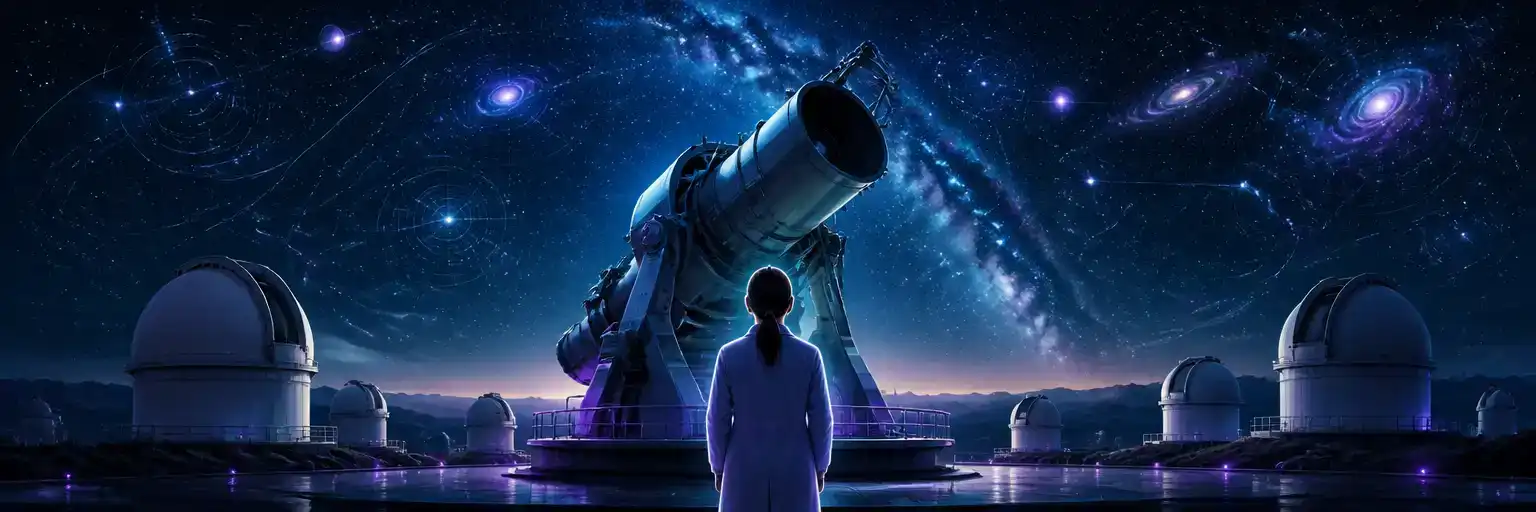
Heavy Methanol's Cosmic Riddle: Why Star Chemistry Needs a Rethink
A research team has detected fully deuterated methanol in space, an 'alcohol' whose surprising abundance around a protostar defies current chemical models and offers new clues to stellar evolution.
Photo: Image: NASA, ESA, CSA, STScI / Wikimedia Commons (Public domain)
Is there life on other planets? Perhaps a better question for now is: what are the ingredients for life, and how do they even form in the harsh embrace of the cosmos? The recent detection of a rare, fully deuterated methanol in space has brought us closer to answering that question, not by providing a definitive answer, but by revealing a profound gap in our current understanding of interstellar chemistry.
A team of astronomers led by Arnaud Belloche of the Max Planck Institute for Radio Astronomy has, for the first time, detected fully deuterated methanol (CD₃OD) in the interstellar medium. This unique molecule, in which all hydrogen atoms are replaced by a heavier isotope known as deuterium, was found orbiting the protostar IRAS4A2, located approximately 1,000 light-years away in the Perseus molecular cloud. The groundbreaking findings, published in Astronomy & Astrophysics, mark not only the first detection of CD₃OD outside a laboratory but also the first observation of any quadruply deuterated interstellar molecule.
This isn't merely a chemical novelty; it is, in our view, a crucial piece of the cosmic puzzle. Methanol (CH₃OH) itself is the simplest organic alcohol and a fundamental building block for more complex organic molecules that are essential precursors to life. Finding its fully deuterated cousin provides an unprecedented window into the incredibly cold conditions that characterize the earliest stages of star formation.
The Unseen Alchemy of Star Birth
To appreciate the significance of this discovery, we must understand the role of deuterium in cosmic chemistry. Deuterated molecules, those containing heavy hydrogen, are exceptional tracers of extremely cold environments, precisely the conditions found in the dense, icy clouds where stars and planets are born. As Silvia Spezzano, a co-author from the Max Planck Institute for Extraterrestrial Physics, explains, deuteration allows scientists to trace the chemical evolution of molecules during the formation of stars and planets, helping us understand how molecular complexity is transferred from interstellar clouds to planetary systems.
Before a star truly ignites and warms its surroundings, complex organic molecules like isopropanol are thought to form on the surfaces of icy dust grains. Methanol plays a pivotal role in this process, slowly reacting with other atoms to build increasingly larger compounds. The presence of fully deuterated methanol serves as a direct chemical record, offering insights into the molecular cloud conditions that prevailed tens of thousands of years before IRAS4A2 even began to shine as a protostar. It's a deep-freeze snapshot of the universe's primordial chemistry.
A Hundredfold Mystery
What truly elevates this detection from an interesting observation to a paradigm-shifting revelation is the quantity of CD₃OD found. The team determined that the fully deuterated form is about a hundred times more abundant than current theoretical models predict. This stark discrepancy points to a fundamental flaw in our understanding of how these molecules form.
No topics yet: start the first one.
More stories
Life Without a Sun? Rogue Moons Rewrite the Rules of Habitability
A groundbreaking study suggests that moons orbiting starless rogue planets could harbor liquid water for billions of years, radically expanding our search for extraterrestrial life.
Karlsruhe's 'Red Dust City' isn't just a stunt: it's a new model for space engagement
A two-week Mars simulation on a city square in Germany, blending art and science, offers a uniquely accessible and thought-provoking approach to future space exploration.

SpaceX's Bandwagon-5 and Starfall: A New Era for Commercial Space Access
The latest SpaceX rideshare mission, featuring the Starfall reentry capsule, exemplifies the expanding sophistication and practical applications of commercial space programs and reusable technology for a diverse array of scientific and commercial payloads.

The Universe Has No Borders: A Star Discovery's Lesson for Science
Dr. Barkha Yakub Bale's journey from Mumbai to Vilnius, culminating in a pivotal discovery about magnetically active stars, showcases the indispensable international collaboration driving astrophysics forward.