Artemis II's GPS glitch is a warning, not a curiosity
A rocket punched holes in the ionosphere and may have skewed GPS by meters. With more launches coming, we should measure that effect, not file it under trivia.
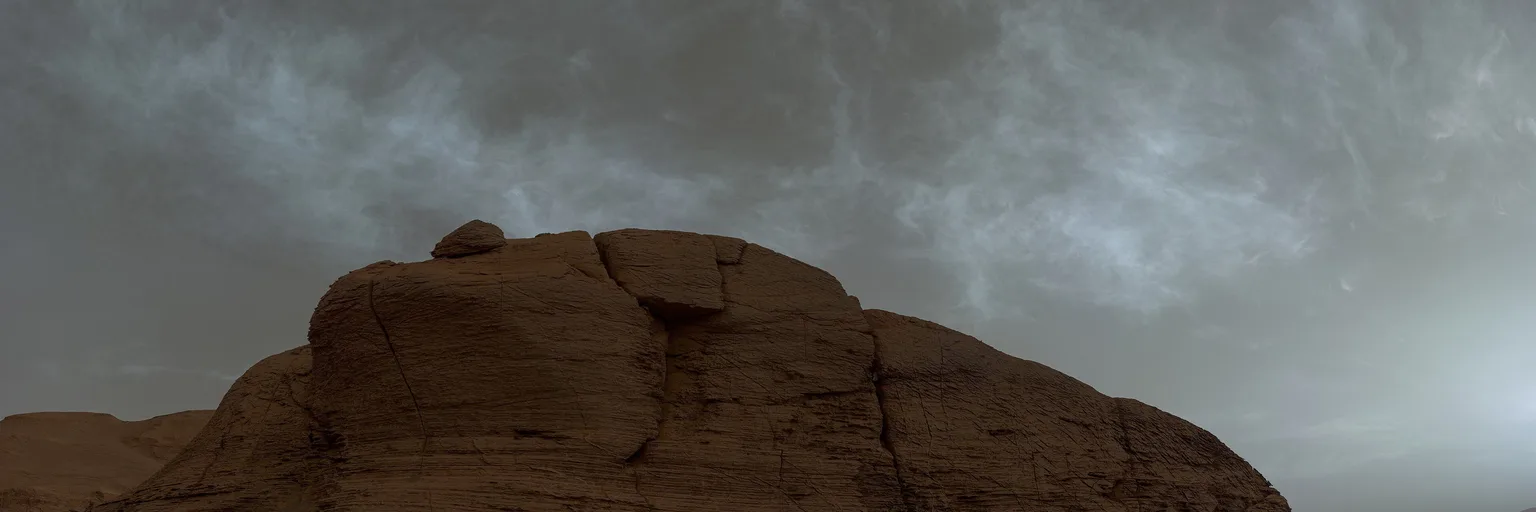
Photo: Andrew Parlette / Wikimedia Commons (CC BY 4.0)
When we talk about threats to GPS from the sky, we usually mean the Sun. Flares, geomagnetic storms, the whole space-weather toolkit. A rocket leaving a launch pad was not on most people's list. Maybe it should be.
What the study says, and what it doesn't
According to Space.com, the April 2026 Artemis II launch caused significant disturbances in the ionosphere that could have triggered temporary, localized errors in GPS positioning. TechSpot describes two holes roughly 5,000 km across, from a study by researchers based in Taiwan. Other outlets report three disturbances tied to the liftoff and later upper-stage engine burns, with potential positioning errors of several meters.
Note the wording: "could have", "potential". The documentation we have is press coverage, and we haven't seen the paper itself. So we can't say how it was reviewed, or how many receivers actually suffered. Treat the "several meters" as a plausible effect, not a documented outage. The Spektrum headline also hints at a twist: the strongest disturbance was apparently not caused by the liftoff itself. We only have a snippet, so we won't speculate further.
The ionosphere doesn't care what disturbs it
GPS signals slow down as they cross the ionosphere, the electrically charged layer of the upper atmosphere. Change the electron content and you change the delay, and the position error follows. That is why a hole there matters for navigation.
Our view is that the physical mechanism is the interesting part, not the spectacle. Space weather is something we forecast, with agencies and alerts built around it. A rocket's exhaust is a human-made disturbance of the same layer, and it is entirely predictable: we know when and where the launch happens. Predictable and unmonitored is an odd combination.
Also worth noting: the researchers reportedly did not need a new instrument to see the effect, according to Tech-Insider's summary of the Space.com report. Existing observations were enough. That is encouraging, because it means routine monitoring is cheap compared with the problem it addresses.
Why a single heavy launch is not the real story
Artemis II is a rare, huge rocket, so one could shrug this off as a one-off. We'd argue the opposite. The study is useful precisely because a big launch makes the signal easy to see. The harder question is the cumulative one: what does a steady cadence of launches do, and how often? Nothing in our documentation answers that, and we won't pretend otherwise. That gap is the point.
Who should care? Surveyors and precision-agriculture users rely on centimeter-level corrections, where meters of error would be serious. Aviation depends on GPS too. Most drivers, by contrast, will never notice a localized, temporary error. This is not a reason to panic, and any headline suggesting the sky is falling is overselling it.
What we should do about it
Three modest steps seem reasonable. First, launch providers and agencies should publish ionospheric-impact assessments for large missions, as they already do for other environmental effects. Second, scientists should treat each launch as a free experiment and compare results systematically. Third, navigation-dependent industries should add launch windows to their risk calendars, the way some already track solar activity.
The verdict: the Artemis II finding is not a scandal, and it is not yet proof of a systemic problem. It is, however, a clean demonstration that we can scar the upper atmosphere on a schedule. Measuring it now, while launches are still relatively few, is far cheaper than explaining later why nobody looked.
No topics yet: start the first one.
More stories
Voyager 1's light-day is a milestone of stamina, not of distance
Reaching one light-day is a nice number, but the real story is a plutonium-powered probe shedding instruments to stay alive, and the question of what comes next.

The Starship double catch matters for cadence, not for the show
Snagging both Starship stages with tower arms would be thrilling to watch, but the real prize is shorter turnaround and lower cost per flight, and that is slower to prove.
NASA's new astronaut call is a test of whether the Moon base is real
NASA is recruiting again, and the pitch is about people who can live and work on the Moon, so the next class will show whether the plans are serious.
Nitrogen on Mars is a necessary ingredient, not evidence of life
Curiosity's detection of usable nitrogen strengthens the case that ancient Mars was habitable, but a pantry stocked with chemistry tells us nothing about whether anyone cooked.