CHAPEA proves Mars will test our routines before our rockets
NASA’s year-long Mars simulation shows that survival will depend not only on hardware, but on food, communication, autonomy and the psychology of isolation.
Photo: NASA Johnson Space Center / Wikimedia Commons (Public domain)
The most important lesson from NASA’s simulated Mars mission may be that nobody had to travel to Mars for it to become difficult. Four volunteers have spent a year inside a confined habitat, managing crops, limited resources, delayed communications and simulated spacewalks. The experiment is not a rehearsal for every danger on the Red Planet—but it is a serious test of the less glamorous systems that could decide whether a real crew remains healthy and useful.
As NASA reports, the CHAPEA Mission 2 crew entered the 1,700-square-foot, 3D-printed habitat on October 19, 2025. Ross Elder, Ellen Ellis, Matthew Montgomery and James Spicer have now passed the one-year mark of their planned 378-day mission and are scheduled to leave on October 31, 2026, followed by two weeks of evaluations and debriefings.
The real experiment is not Mars; it is dependence
CHAPEA stands for Crew Health and Performance Exploration Analog. Its purpose is to study how people function when isolation, constrained supplies and operational demands become the background condition of everyday life. That makes the mission more valuable than a theatrical “Mars simulator.” The point is not to convince anyone that Houston is Mars. The point is to isolate some of the human and logistical problems that a Mars expedition would have to solve.
The habitat’s design reflects that ambition. It provides private crew quarters, workstations, a medical station, food-growing areas and shared living and recreation spaces, according to the habitat’s architectural documentation. This is a useful arrangement because exploration missions are not only sequences of emergencies. They are long stretches of maintenance, exercise, science, meals, interpersonal negotiation and recovery—repeated until routine itself becomes a mission resource.
In our view, that is where CHAPEA earns its attention. Space exploration is often framed as a contest between launch vehicles and destinations. But a crew can be undermined by a bad schedule, an inadequate food system or a decision process that assumes immediate help from Earth. The habitat turns those ordinary details into measurable research questions.
Communication delay changes what “support” means
The crew has operated with a Mars-like communication delay, and NASA says messages to family were exchanged only by email under those conditions. The agency also notes that communications could take up to 45 minutes each way on future missions. That is not simply an inconvenience. It changes the relationship between a crew and mission control.
On Earth, an uncertain situation can often be escalated quickly. With long delays, the crew must interpret incomplete information, decide whether to act and accept that outside experts may not be able to intervene in time. NASA says CHAPEA data could help develop decision-making support systems that foster crew autonomy. That may prove more important than any single simulated task.
The implication is uncomfortable but clear: the best Mars mission will not be the one with the most instructions. It will be the one that gives astronauts enough training, authority and reliable systems to make good decisions without waiting for permission. CHAPEA can help identify what that support should look like, but it cannot eliminate the uncertainty of real planetary operations.
A controlled habitat can reveal behavior—but not reproduce Mars
The mission’s strength is also its boundary. NASA can control and measure conditions inside a ground-based analog far more closely than it could on Mars. Researchers can collect physical, behavioral and performance data while the crew grows food, manages resources and carries out simulated extravehicular activities. Those observations may expose friction in schedules, medical planning or group dynamics before such problems become dangerous in space.
But the simulation does not recreate the full physical environment of Mars. The crew is not actually separated from Earth by interplanetary distance, living under Martian gravity or depending on hardware transported across space. The habitat can approximate confinement and delay; it cannot turn those approximations into proof that a future crew will respond identically on another world.
That distinction matters because analog missions are easily oversold. A year inside Mars Dune Alpha is evidence about human performance under selected constraints, not a prediction of exactly how astronauts will behave on Mars. The useful output will come after the mission, when NASA compares the crew’s health and performance data with its models and decides which risks require design changes, medical support or different training.
The underrated technology is a workable daily life
The first instinct in space policy is to celebrate propulsion, landing systems and habitats as engineering achievements. CHAPEA points toward a quieter priority: designing a daily life that can continue for months without constant rescue from Earth. Food production, exercise, medical care, privacy and recreation are not decorative additions to a Mars base. They are infrastructure for judgment and cooperation.
That is why the post-mission analysis may matter more than the anniversary itself. NASA’s scientists will conduct evaluations and debriefings after the crew exits, seeking insight into how people adapt to the routines and demands of long-duration missions. The most valuable discoveries may be mundane: when performance falls, which tasks compete for time, what kind of privacy helps, or how limited food and exercise systems affect the ability to complete mission objectives.
CHAPEA does not tell us when humans will live on Mars, and it cannot make the planet safe by analogy. It does something more practical. It exposes the assumption that exploration is mainly about reaching a destination. Our verdict is that NASA should treat these human-factors findings as mission-critical engineering, not as a supplementary research program. Before Mars becomes a place where people live, it must become a place where people can sustain a decent, autonomous routine—and CHAPEA is helping define what that means.
No topics yet: start the first one.
More stories
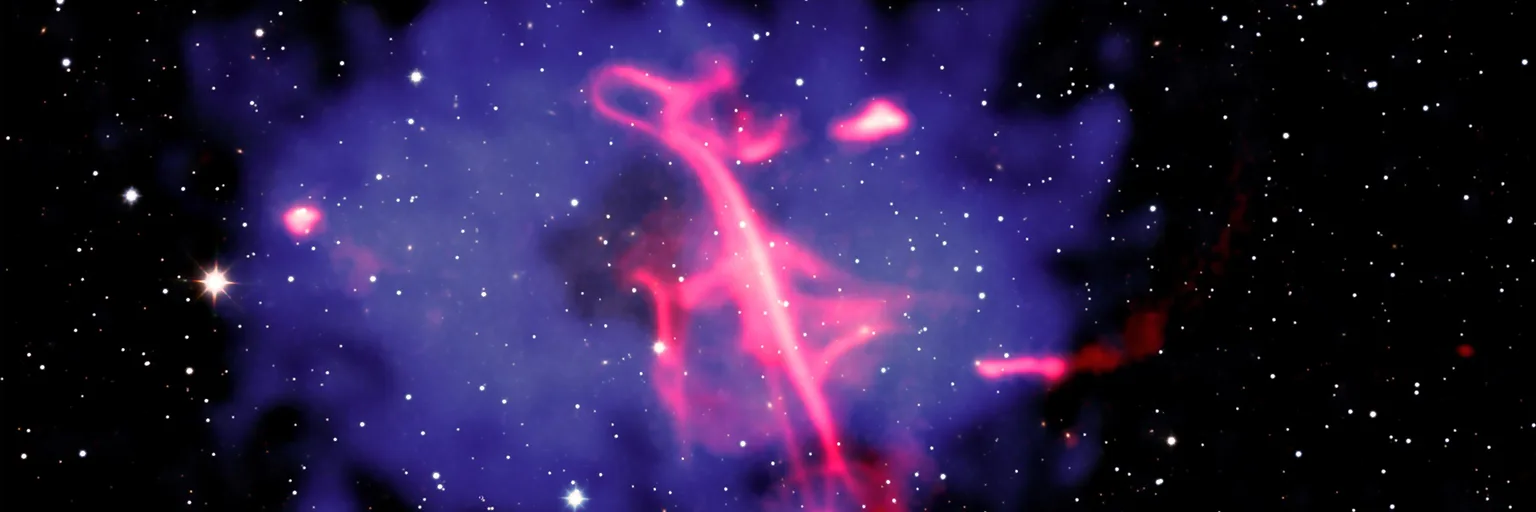
NASA’s cosmic treble clef is a triumph of pareidolia, not music
A vast radio structure resembles a musical symbol, but its real value is showing how familiar patterns can open a door to violent, complex astrophysics.
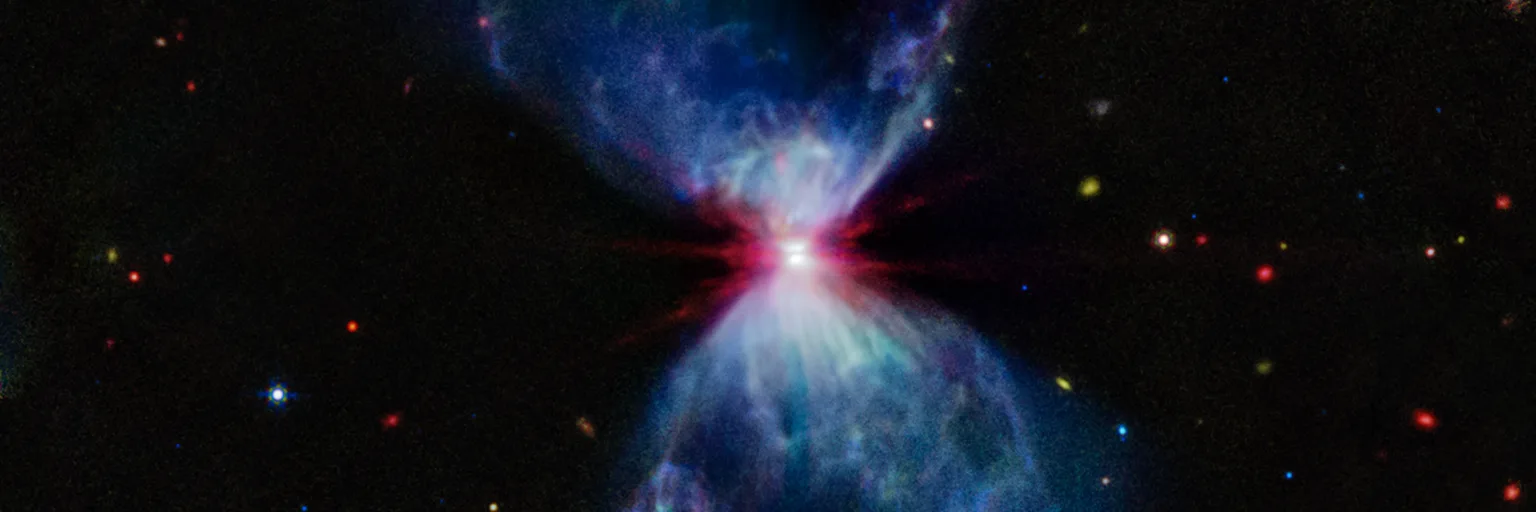
Heavy Methanol's Cosmic Riddle: Why Star Chemistry Needs a Rethink
A research team has detected fully deuterated methanol in space, an 'alcohol' whose surprising abundance around a protostar defies current chemical models and offers new clues to stellar evolution.
Life Without a Sun? Rogue Moons Rewrite the Rules of Habitability
A groundbreaking study suggests that moons orbiting starless rogue planets could harbor liquid water for billions of years, radically expanding our search for extraterrestrial life.

Karlsruhe's 'Red Dust City' isn't just a stunt: it's a new model for space engagement
A two-week Mars simulation on a city square in Germany, blending art and science, offers a uniquely accessible and thought-provoking approach to future space exploration.