A Cosmic Ballet Unveiled: 12 Years of Exoplanet Orbits
A monumental 12-year time-lapse of a star and four orbiting exoplanets provides unprecedented insights into planetary dynamics and validates the power of long-term astrophysical observation.
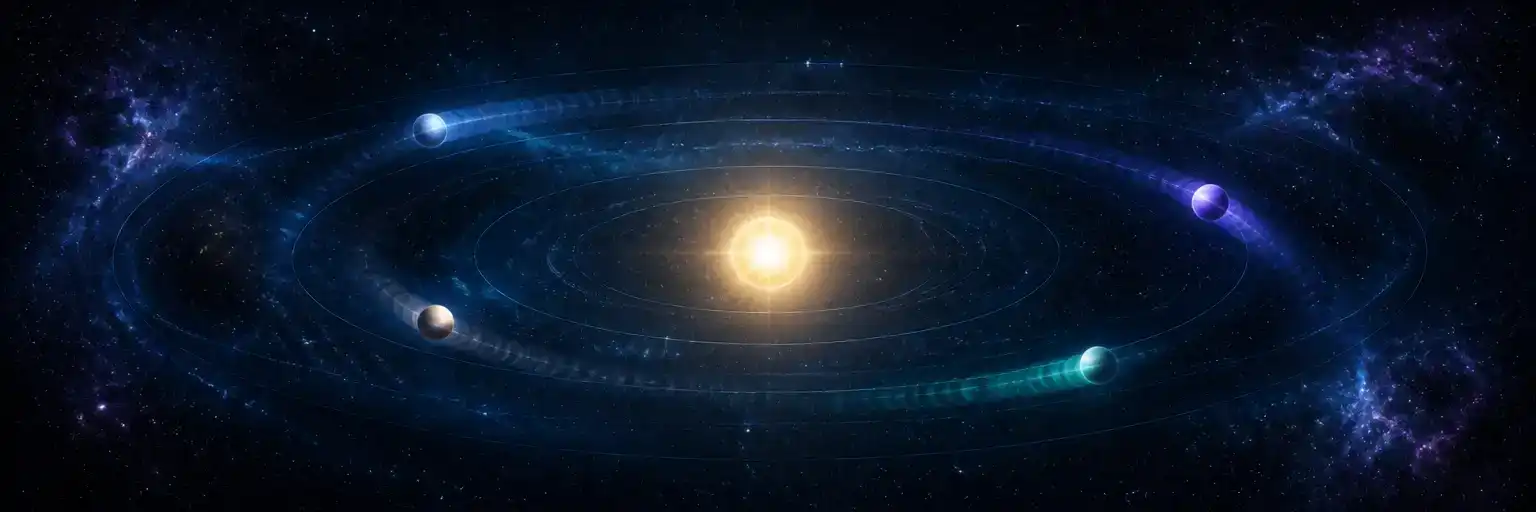
AI-generated image
For decades, our understanding of exoplanets has largely been based on indirect evidence—subtle wobbles in stars or fleeting dips in brightness. But what if we could actually see these distant worlds moving in their cosmic dance? The recent unveiling of a 12-year time-lapse video, capturing a star and its four orbiting exoplanets, marks a paradigm shift in our grasp of planetary systems, offering a visual testament to their dynamic nature.
This extraordinary sequence, originating from a system approximately 63 light-years from Earth, is not merely a collection of pretty pictures. It is a profound dataset, revealing the intricate gravitational ballet of alien worlds. Among these planets is Beta Pictoris b, a gas giant about 10 times the mass of Jupiter, which has itself been in the news recently following the detection of radio emissions, hinting at its powerful magnetic activity.
The Unfolding Drama of Planetary Systems
The true significance of this 12-year observation lies in its duration. Capturing celestial motion over such an extended period allows astronomers to move beyond static snapshots and witness the actual mechanics of an exoplanetary system. Consider that even within our own solar system, Jupiter induces a radial velocity in the Sun with a periodicity of about 12 years, a subtle effect requiring long-term measurement to detect reliably, as Phys.libretexts.org notes/05%3A_The_Search_for_Life_Beyond_Our_Solar_System/5.02%3A_Exoplanets-_Early_History_and_Direct_Imaging_and_Doppler_Detection_Methods). To directly image the orbits of exoplanets over a comparable timescale is, in our view, an achievement of a completely different magnitude.
This kind of long-term direct imaging provides unparalleled data on orbital periods, eccentricities, and inclinations, offering critical clues about how these systems formed and evolved. We can observe gravitational interactions between the planets themselves, perhaps even identifying subtle perturbations that hint at undiscovered, smaller bodies. It allows us to test our models of planetary formation against real-world, dynamic observations, refining our understanding of how worlds are born and settle into their stable, or sometimes chaotic, configurations.
Beyond the Image: Unveiling Magnetic Activity
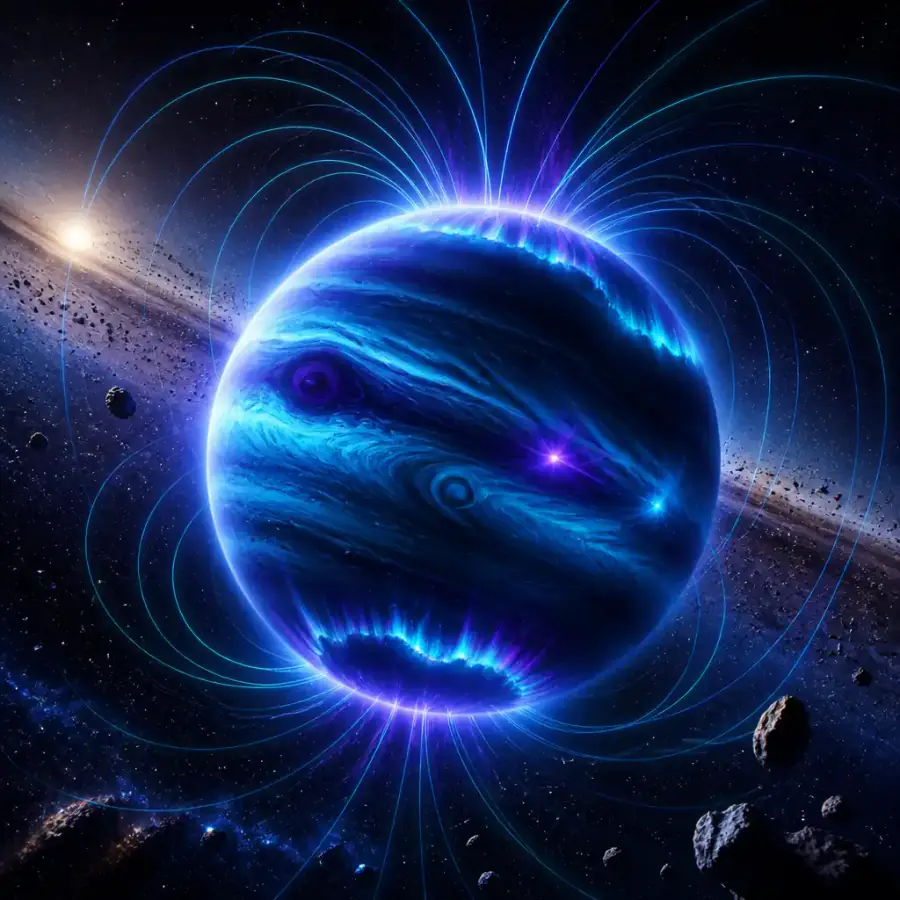
The story of this system became even more compelling with the recent news of radio signal detection from Beta Pictoris b. As CNN reported and Wired confirmed, astronomers have picked up radio emissions originating from this gas giant. Crucially, this isn't a sign of extraterrestrial intelligence, but rather a phenomenon caused by magnetic activity. Beta Pictoris b is known to possess a magnetic field thousands of times stronger than Jupiter's, according to a Reddit discussion on the topic.
This detection, particularly in conjunction with its direct imaging, paints a far more complete picture of an exoplanet. It not only confirms its presence and tracks its movement but also begins to probe its fundamental physical characteristics, such as the strength and nature of its magnetic field. Magnetic fields are vital because they can shield planetary atmospheres from stellar winds, a factor often considered crucial for a planet's potential habitability. While Beta Pictoris b is a gas giant and not a candidate for life as we know it, understanding its magnetosphere provides valuable context for future studies of smaller, potentially habitable worlds.
A New Era for Exoplanetology
The ability to directly image exoplanets, and now to observe their movements over a significant portion of their orbits, is a testament to the maturation of astronomical technology. As Centauri Dreams highlighted years ago, we are truly on the
No topics yet: start the first one.