Why NASA's Moon Base Science isn't Just Research, It's Survival
The latest science investigations for NASA's lunar South Pole base are more than academic pursuits; they are critical blueprints for a safe, sustained human presence and a launchpad for deep-space exploration under the Artemis program.
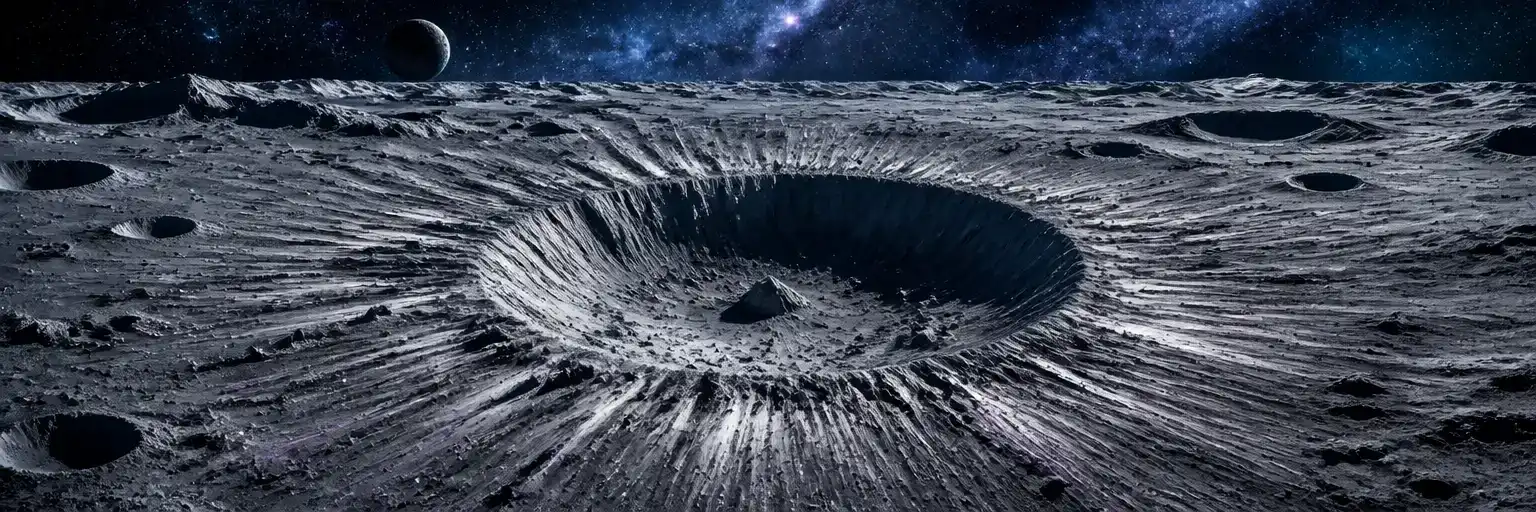
AI-generated image
Is a Moon Base merely a monument to human ingenuity, or is it a pragmatic necessity for our future in space? The recent announcement from NASA regarding new science investigations for its Moon Base program near the lunar South Pole suggests the latter, underscoring a strategic shift from fleeting visits to a sustained, habitable presence.
Just days ago, NASA revealed it is adding new scientific payloads to its ambitious Moon Base initiative, signaling a pivotal move towards deepening our understanding of Earth's closest celestial neighbor. These investigations, as NASA itself detailed, are designed to lay the groundwork for a safe and enduring human presence, directly supporting the broader goals of the Artemis program.
The Blueprint for Lunar Living
The core mission of these new investigations is not abstract science; it is essentially creating a survival guide for future lunar inhabitants. By focusing on understanding lunar resources, mapping natural shelters, and assessing environmental hazards, NASA is addressing the most fundamental questions of living off-world. This includes practical tasks such as tracking micrometeoroids, which pose a constant threat to structures and equipment, and measuring volatiles in the Moon's thin exosphere, as reported by spaceanddefense.io. These aren't just data points for scientists; they are vital pieces of a puzzle that, once solved, will allow us to design safer habitats, identify accessible water ice, and mitigate risks that could otherwise make long-term stays prohibitively dangerous.
Indeed, the implications extend even to biological considerations. Research, such as a study noted in August 2026, suggests that human microbes might be able to survive at the Moon's South Pole, which complicates environmental control but also highlights the need for a thorough understanding of the lunar ecosystem before we introduce our own. These investigations represent the meticulous preparation required to ensure that when humans eventually settle on the Moon, they do so with the best possible chance of thriving.
A Stepping Stone to Deep Space
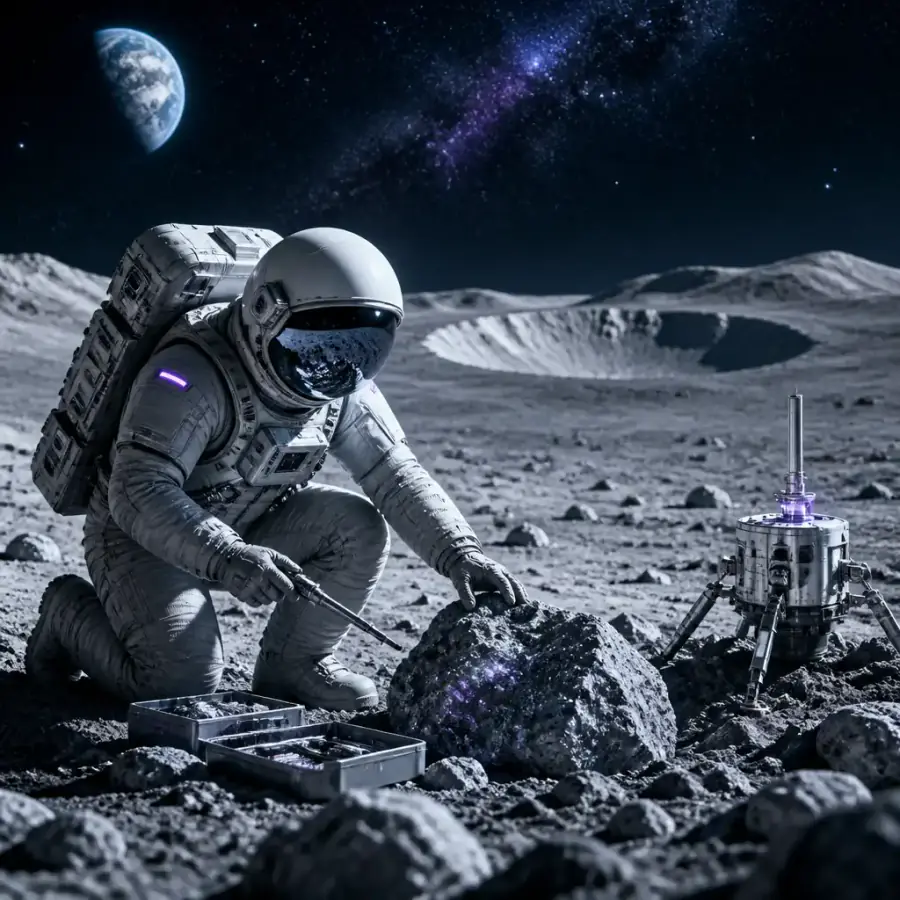
The Moon Base is far more than an isolated outpost; it's a critical proving ground and strategic staging point for missions extending beyond our immediate celestial neighborhood. Under the Artemis program, NASA explicitly frames lunar exploration as a pathway to Mars, with the Moon serving as an initial base for deep-space exploration. A permanent lunar base, envisioned to begin development with Artemis V no earlier than late 2028, is a crucial step towards human interplanetary travel, as Wikipedia outlines.
The scientific endeavors at the Moon Base are therefore directly contributing to our ambitions for Mars. Lessons learned about resource utilization, radiation shielding, and long-duration habitat operations in the lunar environment will be invaluable for future Mars missions. The Moon acts as a convenient, albeit challenging, laboratory. This foresight in planning demonstrates a commitment to a sustainable space exploration architecture, leveraging the Moon's proximity to Earth to build capabilities for increasingly distant destinations.
The Indispensable Role of Human Presence
While robotic missions have paved the way for much of our lunar understanding, the nature of the science planned for the Moon Base underscores the irreplaceable value of human exploration. Field geology, the collection and return of samples, and the deployment of complex experiments are all integral to advancing scientific discovery, as NASA's Artemis Science page explains. Robots are excellent for specific, pre-programmed tasks, but humans possess adaptability, intuition, and the ability to make on-the-spot decisions critical for nuanced geological surveys or unexpected discoveries. Installing a short-period seismometer, for example, is one thing; understanding the geological context of its readings in real-time, perhaps adjusting its placement based on an observed rock formation, is another entirely.
Furthermore, the Artemis program is designed to address high-priority scientific questions that can best be answered by human explorers. The human element introduces a level of flexibility and observational capacity that is difficult for even the most advanced robotic systems to replicate, allowing for richer data collection and more profound scientific breakthroughs.
These new investigations are not just adding to a ledger of lunar facts; they are foundational to constructing a viable future for humanity beyond Earth. By meticulously assessing the lunar environment, NASA is not only preparing for a sustained presence on the Moon but also strategically positioning us for the monumental journey to Mars. In our view, this scientific rigor transforms the Moon Base from a dream into a tangible, and critically important, next step for civilization.
No topics yet: start the first one.
More stories
Beyond Webb: Why NASA's Prima telescope promises unseen cosmic revelations
NASA's new far-infrared space telescope, Prima, is a critical leap in astrophysics, set to unlock mysteries about planetary water acquisition and black hole growth beyond even the James Webb's perception.

NASA and IBM's Lunar AI: A Leap for Accessible Space Science
The open-source Lunar Foundation Model from NASA and IBM is poised to revolutionize lunar research, making decades of complex data available for unprecedented discoveries.

NASA's Pandora will sharpen the exoplanet hunt with a crucial focus
NASA's Pandora mission is preparing to delve into the atmospheric makeup of known exoplanets and their host stars, a nuanced approach that could fundamentally redefine our search for habitable worlds.

McGetchin Crater: The Moon's Dynamic Face Revealed Anew
NASA's Lunar Reconnaissance Orbiter has unveiled McGetchin Crater, a colossal 222-meter impact formed in 2024, challenging perceptions of a static Moon and offering unprecedented insights into cosmic collisions.