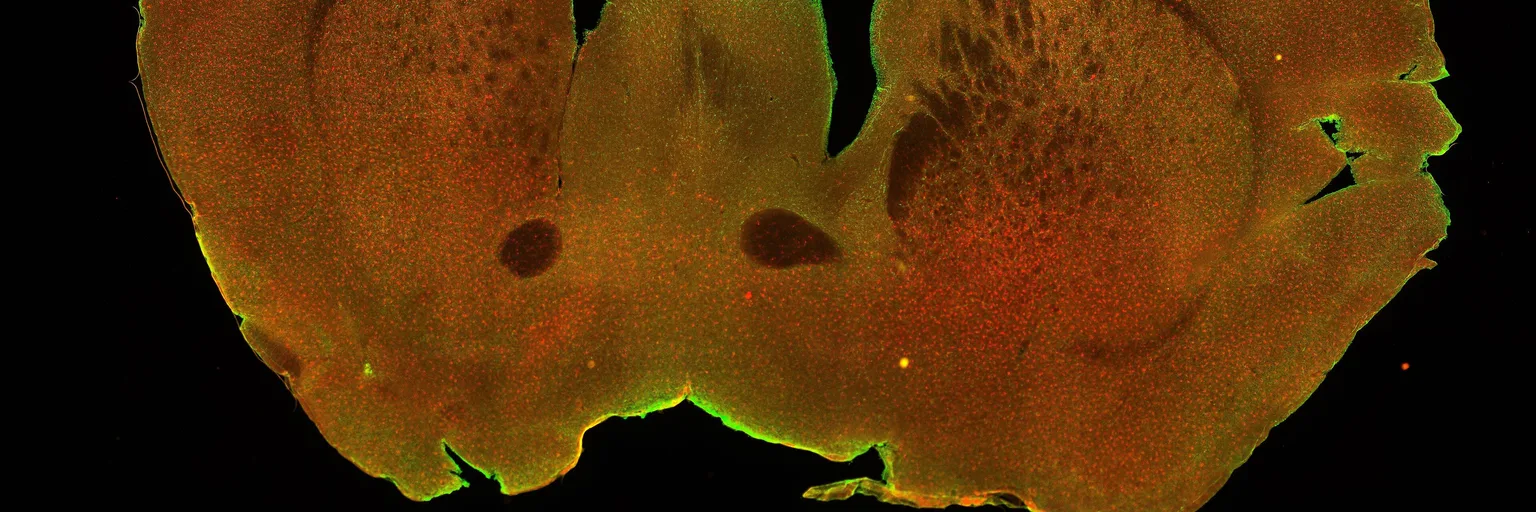
Vitamin A and vision: a mechanism update, not a prescription
A Johns Hopkins study on how sharp vision is built before birth reminds us how much we still don't know about the eye, and why it shouldn't be sold as a pill.
Photo: Autor desconocido / Wikimedia Commons (CC BY 4.0)
Is there any sense we should have figured out by now? Vision is the usual candidate: we have textbooks, diagrams of the retina and a long tradition of vitamin A lore. And yet a new finding says we were missing a piece of how sharp central vision gets built in the first place.
According to the coverage we reviewed, a team at Johns Hopkins University showed that a molecule derived from vitamin A, working together with thyroid hormones, helps determine how central vision forms in the human retina before birth. ScienceDaily's summary is explicit about the boundary: the discovery concerns how vitamin A signaling guides eye development before birth, and it does not establish that vitamin A supplements can improve sharp vision in adults.
The headline is about mechanism, and that is plenty
Most of what the public knows about vitamin A and eyes comes down to one idea: eat your carrots. That is the maintenance story, the one about keeping an eye working once it exists.
This finding belongs to a different chapter: how the eye assembles its sharpest region. In our view, that is the more interesting scientific shift. A derivative of vitamin A is not just fuel for seeing but, apparently, part of a signaling conversation with thyroid hormones that shapes the tissue. That is a conceptual upgrade, the kind that rewrites a diagram rather than a diet.
Why "vitamin A" in a headline invites the wrong conclusion
We would bet that many readers who saw the headline thought of the supplement aisle. That is the predictable misreading, and the coverage itself pushes against it. The work, as described, is about a developmental window in the fetal retina. Nothing in the material we have suggests that adults can top up on anything and sharpen their sight.
There is also a caution about the sources. Most of the pieces we found are secondary write-ups, some of them from aggregator-style sites that repeat each other. We did not have the paper itself in front of us, so we can't say how large the study was, or which parts rest on lab-grown tissue versus other models. One earlier report, from El Confidencial, mentions lab-grown human retinas and a study published in PNAS, but we can't confirm from the snippet that it is the same work. Treat the details as provisional.
The real payoff may be in the lab, not the pharmacy
One of the coverage pieces says the finding could help manufacture retinal tissue for future therapies. That is a prediction, not a result, and we would file it under "plausible, unproven." Still, it points to where the value likely sits: if researchers know which signals build high-acuity vision, they can better coax cells in a dish to do the same.
That is the pattern of good basic science. It rarely arrives as a consumer product. It arrives as a better map, which later makes better experiments and, eventually, perhaps better treatments.
Our verdict
Read this as a mechanism update. It deserves attention because it shows that even the best-studied sense still hides basic biology, and because it gives researchers a sharper question about how vision is built. It does not deserve a trip to the vitamin shelf. If you have concerns about your own eyes or about vitamin A intake, that is a conversation for a clinician, not a reason to act on a headline about fetal development.
No topics yet: start the first one.
More stories
Biology studied cells in snapshots; live 3D film shows what we missed
Filming the inside of a living cell in 3D turns biology from a photo album into cinema, as long as we can prove the camera doesn't change the plot.
Quantum sensors could replace animal tests for drug safety, if they prove themselves
NASA and the NIH want quantum sensors to read organ-on-a-chip models without animals. It's a smart bet, but only if the readings are checked against real physiology.
Revived mouse brain tissue is real progress, but not a mind
German researchers kept mouse brain tissue functional after vitrification. That is a genuine preservation advance, and cryonics hype should not borrow its credibility.
Cold sore virus and the brain: a clue for Alzheimer's debate, not a verdict
A mouse study suggests herpes simplex reprograms the brain's immune cells. It is a useful mechanistic hint for the Alzheimer's debate, but it doesn't show cold sores harm your brain.