2026 ED138 isn't a new dwarf planet yet, and that's the point
A giant icy object found in Rubin data is being sold as a sixth dwarf planet. The better story is how provisional the label is and how much of the sky we've skipped.
How do you lose a world hundreds of kilometers wide for a decade? Apparently by looking right at it. That is the quiet scandal behind this week's headlines about 2026 ED138, a trans-Neptunian object that the press has already half-promoted to "sixth dwarf planet." It hasn't earned the title yet, and the gap between the headline and the evidence is the interesting part.
What we actually have is a candidate, not a verdict
The facts are modest. As Hindustan Times reports, astrophysicist Matthew Holman spotted the object on October 13 while searching Vera C. Rubin Observatory data with software built with colleague Kevin Napier. The International Astronomical Union's Minor Planet Center announced it on October 27. Rubin logged it 30 times across 20 nights between March 4 and July 11, 2026, and archival Dark Energy Camera images take it back to February 2016.
Its estimated size runs from 600 to 1,500 kilometers, a range so wide it is closer to a shrug than a measurement. Astronomers still don't know how much sunlight its surface reflects, and that reflectivity is what lets you convert brightness into size. Infrared observations are needed. Until then, even the roundness that would qualify it as a dwarf planet is an inference from its estimated size, not something anyone has seen.
The size range is the real news about our ignorance
We'd argue the wobbly diameter deserves more attention than the label. Some outlets put the object at the large end, others cite narrower figures. That spread is not sloppiness. It is what a newly found object looks like when it is still a dot with an orbit. Teleamazonas adds that it sits about 46 times the Earth-Sun distance from the Sun and takes roughly 281 years to complete an orbit, and the research paper cited by Hindustan Times puts its orbital tilt at about 24.4 degrees from the plane of the Solar System.
Those are the numbers worth keeping, because they describe a slow, distant, well-tracked body that is still physically unknown. We know where it goes. We don't know what it is.
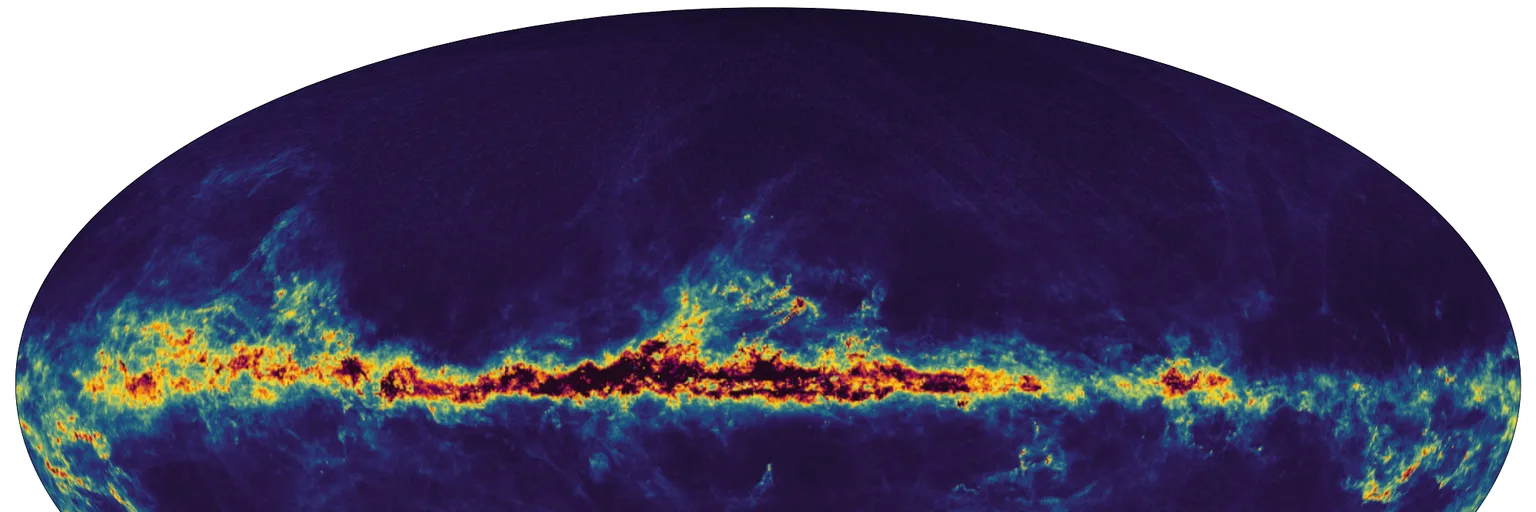
The decade-long miss is just as telling. The explanation offered is that it sits against the dense star field of the Milky Way, which makes it hard to pick out. That's plausible, and in our view it also means the outer Solar System's inventory has holes shaped like our own observing habits. The sky isn't uniformly searched, and "rare" objects may simply be the ones that survived a patchy census.
Rubin is the story, and the label is a distraction
If you want a prediction, here is ours: this will probably not be the last such candidate. Holman himself said that Rubin "will image the whole southern sky again and again for ten years," so other objects hiding in places earlier surveys skipped are now within reach. We'd read that as a forecast, not a promise, but it is a reasonable one given the survey's design.
That reframes the whole episode. A big object found by a new survey, in data collected in just a few months of 2026, in a region where a dense star field hampered earlier telescopes, looks to us like a proof of method. It suggests the machine works and the maps are incomplete. Whether ED138 becomes a dwarf planet is, frankly, a bookkeeping outcome. The official list holds five names (Pluto, Ceres, Eris, Haumea and Makemake), and adding a sixth would change textbooks more than it would change science.
There is also a cautionary note about how this travels. "Mysterious object," "hidden world" and "possible new planet" are headline engines, and the word "planet" invites readers to imagine something it isn't. A dwarf planet label is partly about size and a roughly spherical shape, not a sign that the Solar System has a new neighbor to visit. The sources we reviewed don't tell us whether the research paper has been peer reviewed, and the follow-up work that would settle the size and shape questions hasn't happened.
Our verdict
Treat 2026 ED138 as an excellent candidate and an even better warning. Don't memorize it as the sixth dwarf planet; wait for the infrared measurements that pin down its size and reflectivity, and for the shape question to be answered. And when the next "mysterious object beyond Neptune" appears, which with Rubin running seems likely, ask the useful question first: not "is it a planet?" but "how well do we know it, and why didn't we see it sooner?" The answer to the second part is the most honest thing this discovery has told us.
No topics yet: start the first one.
More stories
When SpaceX retires Falcon 9, the real risk is dependence
A private company changing its product line should not be able to scramble the Space Force, and the Falcon 9 retirement shows why governments need leverage and real alternatives.

Lunar caves are a smarter bet for a Moon base than another flag
NASA wants to probe the Moon's caves before building its first outpost. It's the right order of operations, but one detail in the plan worries us.
Lucy shows why slow, flyby-driven science is worth the wait
Five years and 2.2 billion miles to reach Jupiter's Trojans: Lucy's patient, flyby-only approach is a smart way to study primitive bodies that may explain how the planets formed.
The calm between the stars was a myth, and a new 3D map shows why
A new 3D map finds roughly 41% of nearby interstellar gas in an unstable state. The "empty" space between stars is where new stars get their raw material.