Phobos 2's strange shadow says more about us than about Mars
A lost Soviet probe, a few final frames and a long silence: the perfect recipe for myth. Re-analysis, not UFO lore, is the right answer to Phobos 2.
Photo: NASA / Viking 1 Orbiter / Wikimedia Commons (Public domain)
What do you get when a spacecraft dies mid-photo shoot, a few final frames survive, and nobody can say exactly why it failed? You get a shadow with a mythology attached. The final pictures from Phobos 2 have been feeding that kind of story for decades, and the pattern is more instructive than the shadow itself.
The facts are simple. Phobos 2 launched from Baikonur on July 12, 1988, reached Mars orbit in late January 1989, and returned more than three dozen images of Phobos. On March 27, 1989, it turned to take navigational pictures of the moon, which pointed its antennas away from Earth. Afterward, controllers couldn't reestablish contact. As Space.com recounts, investigators saw an onboard computer failure as the most probable cause, though the exact cause remains unknown. Some of the last frames show an elongated shadow, and that's where the alien stories began.
A mystery in the data is not a mystery in the physics
Notice what the myth needs: a gap. The probe was lost, the cause is officially unresolved, and the final images are few. Fill that silence with a dramatic narrative and it feels like an answer. Space.com notes that Marina Popovich, a celebrated Soviet pilot, claimed at a 1991 press conference that a cigar-shaped object near Phobos was an alien mothership. Her résumé likely lent the claim credibility. In our view, that's exactly the problem: authority in one field gets borrowed to vouch for a claim in another, and the image gets judged by the speaker rather than by the optics.
The UFO sites that repeat the story don't agree with each other. One describes an object 15-20 kilometers long, another 20-25. Some say it's a shadow on the surface, others that the object hovers near the moon. When "facts" shift by the retelling, you're looking at folklore, not a measurement. These pages are undated, and we wouldn't treat them as evidence of anything beyond how the legend spreads.
The boring explanation is also the better one
The documentation we have points to ordinary causes for the loss. Space.com says an impact with material orbiting Phobos was considered, but later modeling by Soviet engineers and NASA's Jet Propulsion Laboratory seemed to rule it out. A likelier story: one of the three flight processors was already offline on arrival, a second was troubled, and the third couldn't hold the spacecraft steady. Add the reported lack of a failsafe to power down non-critical systems while the solar arrays pointed away from the sun, and a slow death is plausible. That's a cascade of engineering problems, and it's less cinematic than a mothership.
The shadow itself is a different question. The Space.com text we have is cut off just as it begins explaining what the images show, saying it requires understanding the probe's orbit relative to Phobos. We can't reconstruct the full explanation from that, and we won't pretend to. Our reading, which is an opinion, is that the sensible hypotheses are geometry, lighting and instrument artifacts, the usual suspects in any old, low-resolution image. Phobos 2's images had a resolution of up to 40 meters, per Wikipedia. At that scale, a smear or a shadow cast across rough terrain is easy to over-read.
Old missions deserve a second look, not a second life as legend
The healthy response to an unexplained image is not to shrug or to speculate, but to go back to the raw data, the calibration records and the spacecraft's pointing history. Archives of Soviet-era missions are exactly where careful re-analysis could add value. A mission that failed deserves to be understood as thoroughly as one that succeeded, because failures teach engineers the most.
Our verdict: treat the Phobos 2 shadow as an open archival question with a probably mundane answer, and treat the alien claims as a case study in how sparse data and a missing ending breed myth. If you meet the story online, ask three things. Who measured it? Do the numbers agree between tellings? And has anyone gone back to the original data? For the cigar-shaped mothership, the answers so far are nobody, no, and not in anything we've seen.
No topics yet: start the first one.
More stories
Planet Nine's shrinking search area is progress, not a discovery
A new simulation study narrows the hunt for a hidden world beyond Neptune. We should applaud the method, but nobody has seen the planet yet.
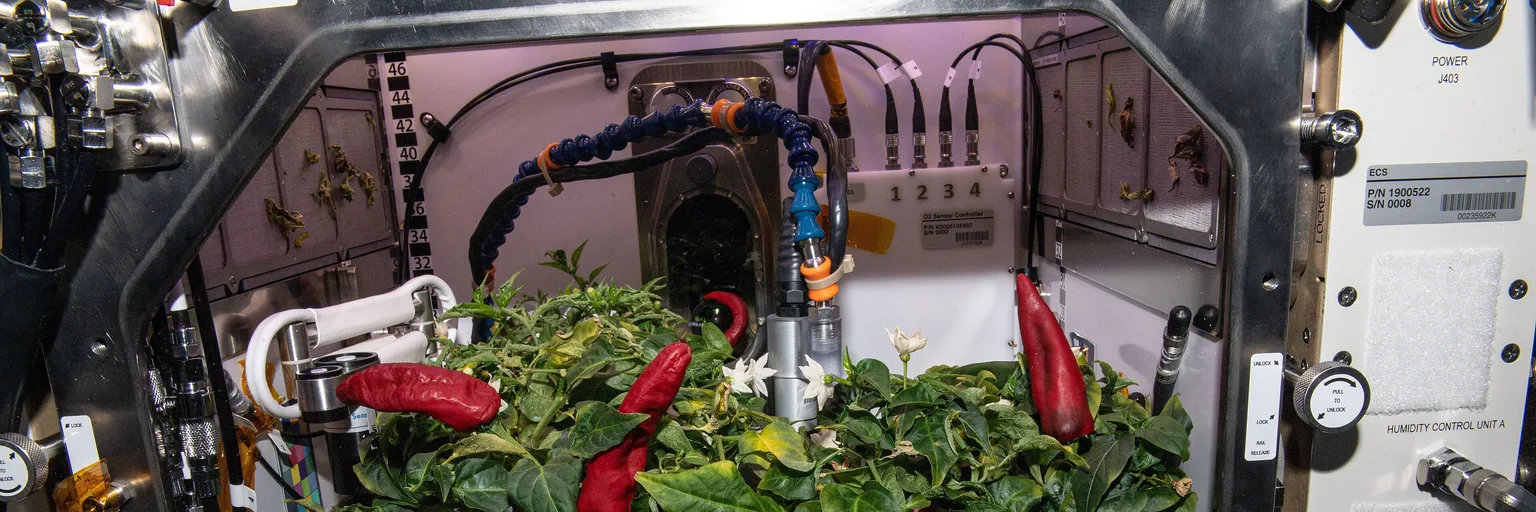
Space farming's real test isn't lettuce: it's boring, repeatable harvests
NASA calls Ohalo III the first operational crop system in space. Judge it on yield, reliability and crew time, not on the novelty of a leaf grown in orbit.
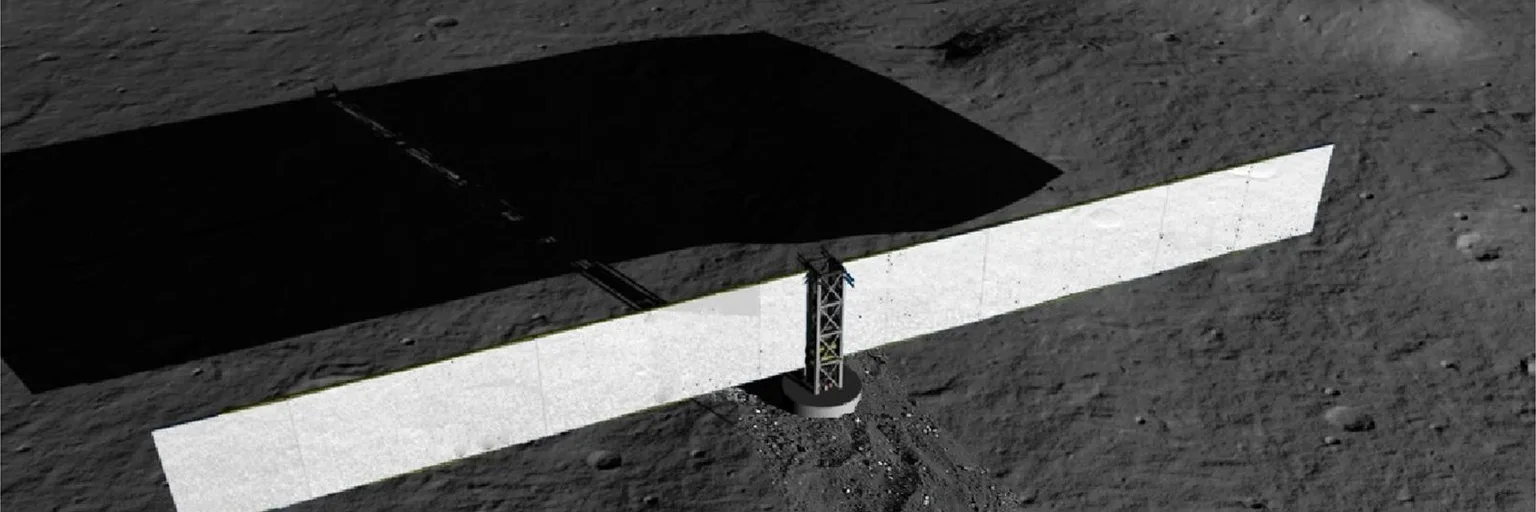
NASA's 20-kilowatt Moon reactor is a downgrade that may be the smart bet
Cutting the lunar reactor from 100 kW to 20 kW looks like a retreat, but a small reactor that actually flies beats a big one on paper.
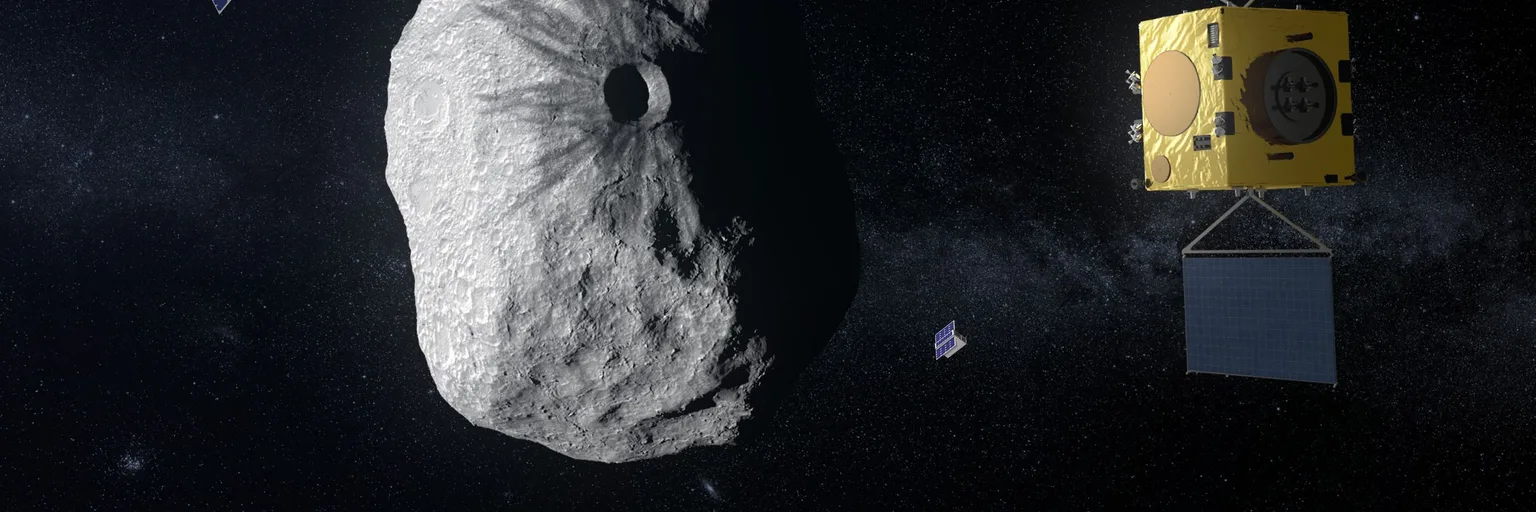
Dimorphos' crater is a data point, not a safety guarantee
Hera's first images of the DART crater are striking, but their value lies in what they say about how an asteroid takes a hit, not in any promise that Earth is covered.