Lucy shows why slow, flyby-driven science is worth the wait
Five years and 2.2 billion miles to reach Jupiter's Trojans: Lucy's patient, flyby-only approach is a smart way to study primitive bodies that may explain how the planets formed.
Photo: Unknown author Unknown author / Wikimedia Commons (Public domain)
What do you do when you want to read the oldest pages of the solar system's diary, and the only copy is parked out along Jupiter's orbit, far beyond anywhere a spacecraft has had a reason to go? You launch a spacecraft, and then you wait. For five years, in Lucy's case.
According to NASA, Lucy has now traveled more than 2.2 billion miles since its October 16, 2021 launch, and it is the first spacecraft to enter the region of the Jupiter Trojan asteroids. It is approaching Jupiter's Lagrange point 4, one of two large "islands of stability" where thousands of asteroids share the planet's orbit.
The first close encounter, with Eurybates, is scheduled for August 11, 2027. Then come Polymele, Leucus and Orus, and after a final Earth gravity assist in 2030, the binary pair Patroclus and Menoetius in March 2033.
Arriving is not the discovery, and that's the point
Let's be clear about what happened this week: nothing has been measured up close yet. To Lucy, NASA says, the Trojans will look like pinpricks of light against the stars until the spacecraft bears down on its targets. This is a milestone of position, not of data.
We think that is precisely why it deserves attention. We live in a news cycle that rewards the image, the crater, the surprise. But the Trojans have been out of reach for a mundane reason: as NASA notes, several spacecraft have visited Jupiter, yet none had any reason to travel to where these asteroids live. Only a mission built for them gets there. Entering the region is, in our view, proof that the investment in a dedicated, patient trajectory works.
Flybys are a feature, not a compromise
All of Lucy's target encounters are flybys, not orbits or landings, as Wikipedia's mission summary puts it. NASA says the spacecraft will have only a few hours to study Eurybates up close. It is tempting to call that a limitation.
In our view it is the opposite. Eight asteroids, two Trojan swarms, one spacecraft: a flyby architecture buys breadth. A single orbiter would tell us everything about one rock and nothing about whether it is typical. The Trojans are, according to the mission, a population of primitive bodies, and populations are understood by comparison. The cost is that every encounter is a one-shot exam, which is why the team is spending its final months polishing encounter plans.
There is history behind the format. On October 29, 1991, Galileo made the first asteroid flyby ever, passing Gaspra on its way to Jupiter, as Space.com recounts. A fast pass was enough to reveal a cratered, irregular body, and a Galileo imaging team member at the time said the asteroid was likely the survivor of a series of catastrophic collisions. Flybys have always punched above their weight.
The payoff is a theory test, and it may sting
Scientists expect that studying Trojans up close will help refine theories of how the planets formed 4.5 billion years ago and ended up in their current configuration. That is the real prize: these asteroids are primitive bodies, and we think what they are made of could constrain how the planets formed and rearranged themselves.
Here is where we will stick our neck out, as a prediction rather than a fact: the most interesting outcome is not confirmation. Origin models for the solar system are flexible enough to absorb a lot. Close-up data on several bodies, in both swarms, is the kind of evidence that can make some stories harder to tell.
Meanwhile, the field is not standing still. A Queen's University Belfast-led team reported, via Universe Today, that Rubin Observatory data has doubled the known long-lived objects in Neptune's trailing Trojan population. Rapid surveys find the populations; slow spacecraft explain them. We need both.
Our verdict
Lucy is a reminder that some science cannot be sped up, only prepared for. NASA says the spacecraft is operating as expected in a dim, cold place more than five times farther from the Sun than Earth, and the hard part, the encounters, starts in less than a year. Don't expect fireworks today. Mark August 2027 instead, and judge the mission then. Until then, patience is not a delay in the science: it is the method.
No topics yet: start the first one.
More stories
The calm between the stars was a myth, and a new 3D map shows why
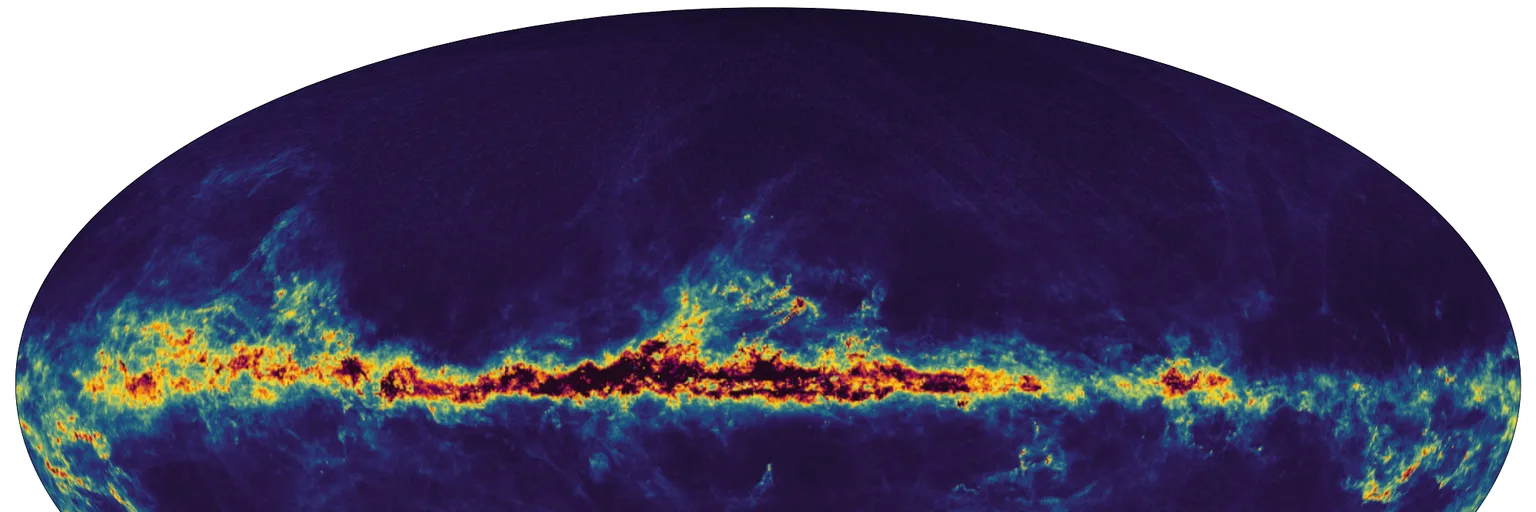
A new 3D map finds roughly 41% of nearby interstellar gas in an unstable state. The "empty" space between stars is where new stars get their raw material.
The 2027 eclipse deserves a lab plan, not a selfie stick
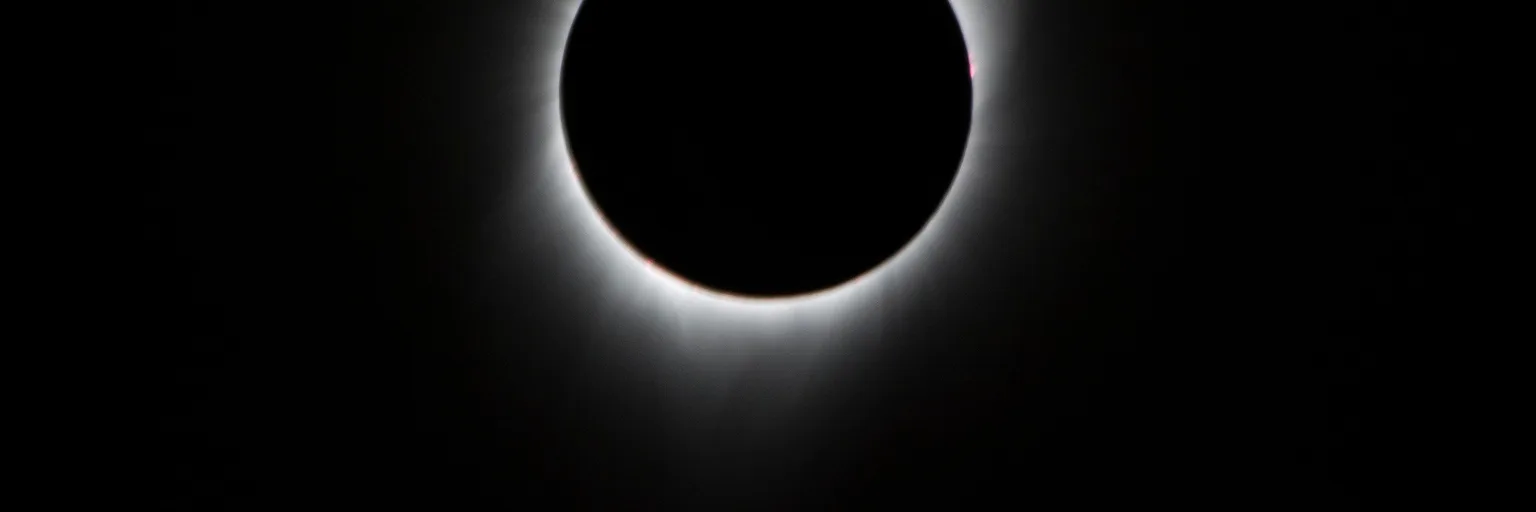
Six-plus minutes of totality over Egypt on August 2, 2027 is a rare block of observing time. Treating it as a photo op would waste it.
Saving Hubble is the easy part; deciding what for is not
NASA's request for ideas to boost, service or retire Hubble is cheap and sensible, but it exposes a harder question: how much to pay to keep an old telescope alive.
Hubble deserves a rescue attempt, but only if NASA is honest about the risk
NASA is asking industry whether Hubble can be boosted, serviced or brought down in a controlled reentry, and the answer will show if we maintain great observatories or just use them up.