The calm between the stars was a myth, and a new 3D map shows why
A new 3D map finds roughly 41% of nearby interstellar gas in an unstable state. The "empty" space between stars is where new stars get their raw material.
Photo: © ESA/Gaia/DPAC; / Wikimedia Commons (CC BY-SA 3.0 igo)
What if the emptiest-looking part of the galaxy were its busiest workshop? For decades, the space between stars worked as scenery: a quiet backdrop where the real action, stars being born and dying, took place in front. A new three-dimensional map suggests we had the casting backwards.
What the map found
Astronomers built what is described as the first 3D map of the thermal phases of the interstellar medium around the Sun. According to phys.org, the team finds that near the galactic plane roughly 41% of the gas mass is unstable, far more than classical theory would allow. That classical picture holds that atomic gas quickly settles into either a cold or a warm state.
Gaia's 3D map of nearby stars has opened new ways to study the material between them, as Quanta Magazine reports in its coverage. The research is described in an arXiv paper, so it is a preprint-style posting in our documentation: nothing we have seen says it has passed peer review.
"Unstable" doesn't mean "about to blow up"
Let's be careful with the word. In this context, unstable refers to the thermal state of the gas: the balance between heating by far-ultraviolet photons and cooling through line emission, which, per the paper's abstract, decides whether gas fragments into cold clouds or stays warm and diffuse. Gas in the middle is caught between two destinies. It is not a doomsday headline; it is a transitional state.
And that is precisely what makes it interesting. A textbook with only two boxes, cold and warm, implies a gas that has already made up its mind. A large share in a "middle state" implies a medium that is constantly in motion, being pushed and pulled before it settles. In our view, that is a much better description of a place where stars are assembled than the old still-life.
The most honest part of the story is the doubt
The detail we like best is a line from the Quanta story, as excerpted on Khanlist: "How do you go to your science adviser and tell him that you get so much unstable media?" The same piece says Jonathan Shelest, a student at the Technion, found the interstellar medium to be more unstable than expected, and that he saw no evidence of artifacts or random statistical noise in the 3D grid. The map didn't appear to be broken.
That is how good science feels: you first suspect your own pipeline. Still, a first map is a first map. Its reach is the neighborhood of the Sun, not the whole Milky Way, and the exact percentage probably depends on how the gas is modeled. We would treat 41% as a strong first estimate, not a constant of nature, until other groups reproduce it with different methods.
Why this matters beyond the number
The reason to care is simple. The interstellar medium is, in the words of the paper's abstract, the gas from which new stars and planetary systems form. If a big share of that gas is not parked in tidy phases, then models of star formation that start from tidy phases are starting from a simplification. Quanta notes that for decades astronomers treated the medium as a static backdrop, and that a wave of 3D mapping is now bringing its dynamic nature into focus.
Who loses? The comfortable two-phase picture, at least as a complete description. Who wins? Anyone who wants to connect galaxy-scale simulations with the actual places stars are born. Probably the most underrated consequence is methodological: Gaia was built to chart stars, and it is now helping us read the gas between them. That is a good return on a star catalog.
Our recommendation to readers is modest. When you see headlines about "empty space," read them with a pinch of skepticism, and when you see a striking percentage, ask what it measures and where. Here the answer is gas near the Sun, thermally unstable, in a first-of-its-kind map. That is already plenty. The space between the stars was never calm filler; we simply lacked the map to notice.
No topics yet: start the first one.
More stories
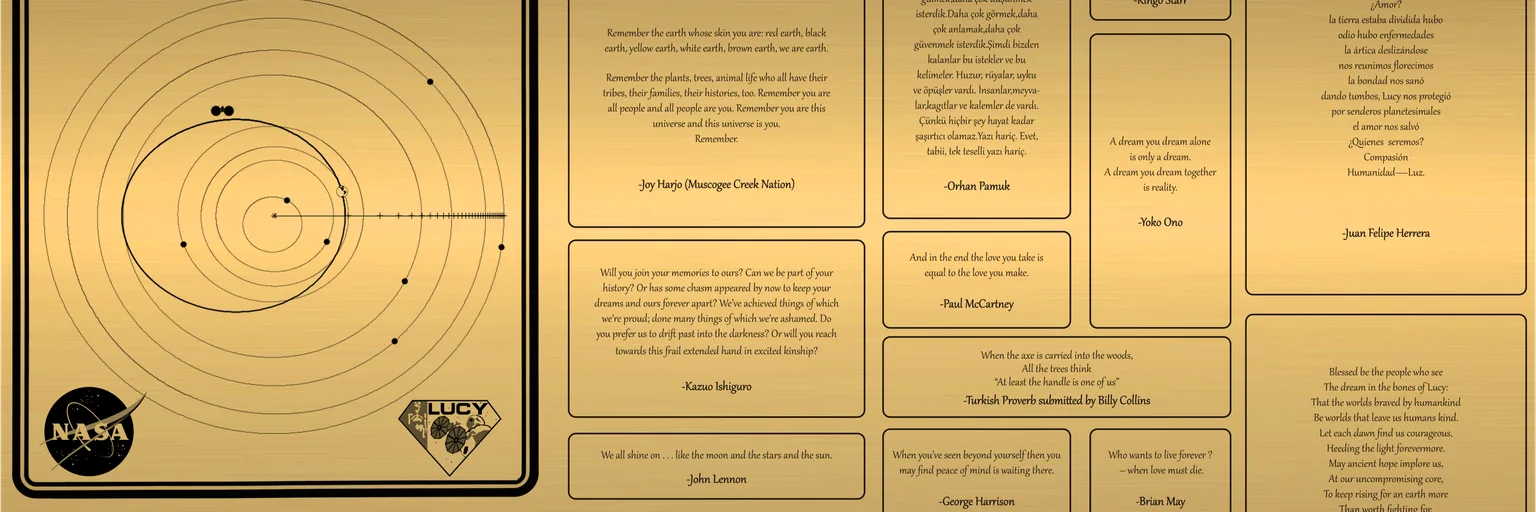
Lucy shows why slow, flyby-driven science is worth the wait
Five years and 2.2 billion miles to reach Jupiter's Trojans: Lucy's patient, flyby-only approach is a smart way to study primitive bodies that may explain how the planets formed.
The 2027 eclipse deserves a lab plan, not a selfie stick
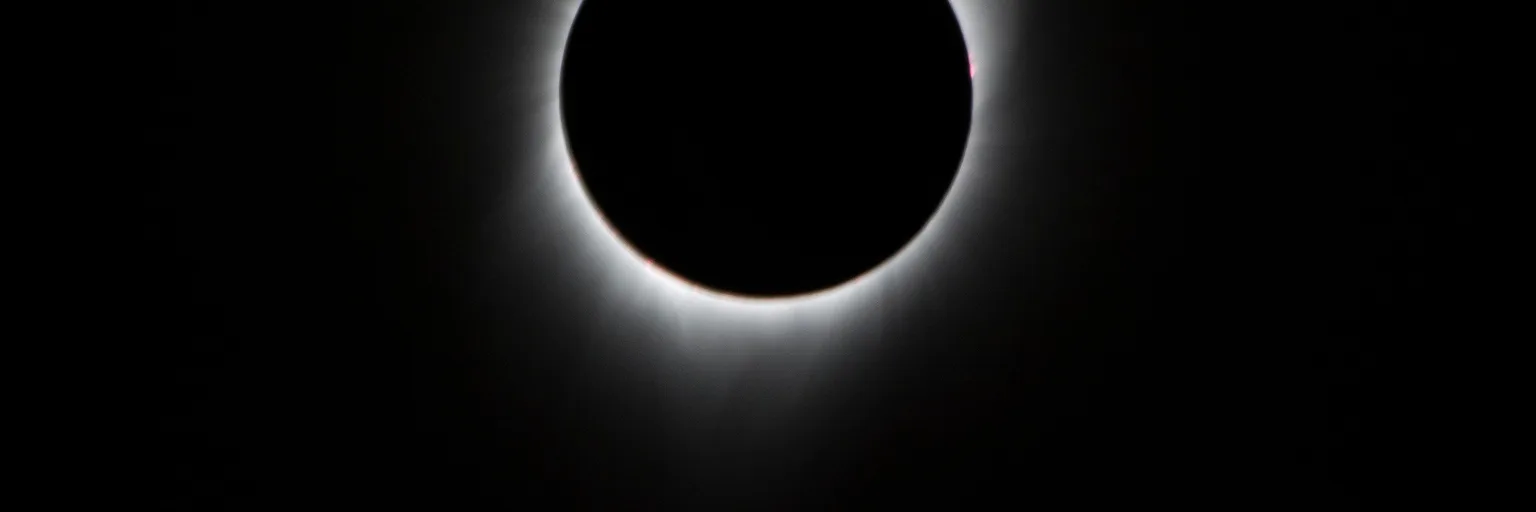
Six-plus minutes of totality over Egypt on August 2, 2027 is a rare block of observing time. Treating it as a photo op would waste it.
Saving Hubble is the easy part; deciding what for is not
NASA's request for ideas to boost, service or retire Hubble is cheap and sensible, but it exposes a harder question: how much to pay to keep an old telescope alive.
Hubble deserves a rescue attempt, but only if NASA is honest about the risk
NASA is asking industry whether Hubble can be boosted, serviced or brought down in a controlled reentry, and the answer will show if we maintain great observatories or just use them up.