Gorillas challenge aging norms: Is human menopause older than we thought?
A new study revealing post-reproductive longevity in mountain gorillas upends assumptions about aging in the animal kingdom, offering critical insights into the evolutionary roots of human menopause.
Photo: Charles J. Sharp / Wikimedia Commons (CC BY-SA 4.0)
For most of the animal kingdom, life is a race against time, where reproduction continues as long as the body allows. To cease reproduction long before death, as humans do, has long been considered an evolutionary anomaly—a puzzling trait shared only by a select few species. Yet, new research on wild mountain gorillas in Uganda is forcing us to reconsider this paradigm, suggesting that living well beyond the childbearing years might have much deeper, shared roots in our hominid ancestry than previously imagined.
A groundbreaking study, spearheaded by researchers from the Max Planck Institute for Evolutionary Anthropology and the University of Turku, has revealed that a significant portion of female mountain gorillas continue to thrive for over a decade after their last offspring. Drawing on more than three decades of behavioral and life-history data from four wild groups in Bwindi Impenetrable National Park, Uganda, the findings published in Proceedings of the National Academy of Sciences challenge conventional wisdom about reproductive longevity [https://phys.org/news/2025-10-female-mountain-gorillas.html]. This substantial post-reproductive lifespan, accounting for at least a quarter of their adult lives, positions mountain gorillas alongside humans, a few whale species, and a specific chimpanzee population in this exclusive club.
The Evolutionary Enigma of Post-Reproductive Life
The prevailing evolutionary theory suggests that an organism's primary biological imperative is to pass on its genes. From this perspective, ceasing reproduction while still healthy enough to live seems counterintuitive. Why would natural selection favor a life stage where an individual no longer contributes directly to the next generation? For decades, this question has fueled intense debate, particularly regarding human menopause. The current observations in mountain gorillas deepen this puzzle but also offer a compelling new avenue for investigation. Most animals reproduce until they die, maximizing their genetic legacy, making the gorilla's extended post-reproductive phase a profound divergence from the norm.
Bridging the Hominid Gap in Aging Evolution
The presence of this trait in mountain gorillas, our close primate relatives, is not just a fascinating zoological footnote; it represents a critical addition to our understanding of hominid life history evolution. As lead author Nikos Smit noted, the evolutionary pressures that might have favored this trait in gorillas remain unclear [https://www.mpg.de/25548551/female-mountain-gorillas-stop-reproducing-long-before-the-end-of-their-lives]. However, this discovery suggests that the roots of human menopause may extend further back into the great ape family tree than previously assumed, possibly to a common ancestor of African hominids. It widens the comparative map of aging, positioning human longevity beyond reproduction not as a unique anomaly, but perhaps as a more widespread, albeit rare, evolutionary strategy among long-lived social mammals.
No topics yet: start the first one.
More stories
Italy's CARtoALL Project: A Bold Leap in Next-Gen Cancer Therapy
The Italian Medicines Agency's significant investment in the CARtoALL project isn't just funding research; it's solidifying Italy's position as a leader in advanced, life-saving CAR T-cell therapies for aggressive blood cancers.

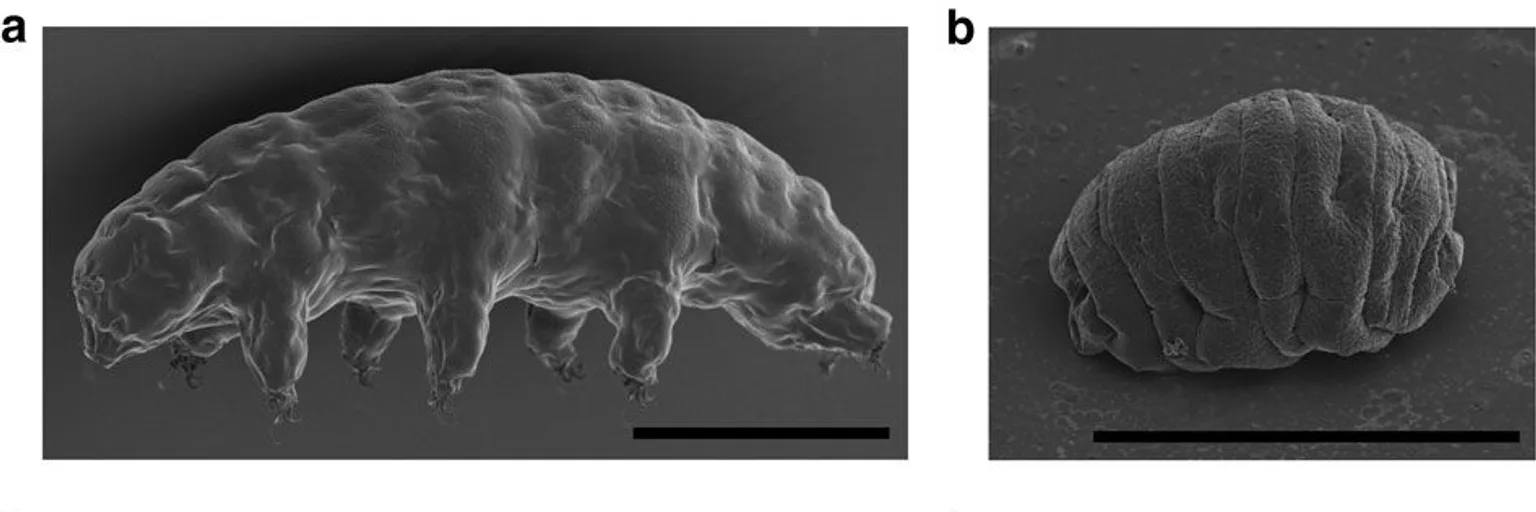
Tardigrade proteins: How microscopic shields could transform human health
The remarkable resilience of tardigrades is no longer just a biological curiosity; its proteins could soon protect human cells, signaling a revolutionary shift in medicine.
The Eye's Hidden Drains: A Century-Old Scientific Revolution
A groundbreaking discovery of a previously unknown lymphatic drainage system in the mouse eye challenges a century of scientific belief and offers promising new avenues for treating human vision loss.
Oldest Homo erectus fossil rewrites early human history in Southern Africa
A newly described 2-million-year-old adult Homo erectus fossil from South Africa challenges existing theories on our ancestors' timeline and geographical origins.