Ending the leap second is smart engineering, and it still cuts a very old tie
Official time will stop waiting for the Earth from May 2027, eight years ahead of schedule. The engineering case is strong, but we should be honest about what is being given up.
Who decides what time it is: the planet under our feet, or a cesium atom in a lab? For most of history the answer was the Sun. As of May 20, 2027, the answer will officially be the atom.
The 28th General Conference on Weights and Measures, meeting in Versailles, has voted to end leap seconds. Expansión reports that the end date moved forward eight years from the original 2035 target, and eldiario.es says Russia cast the only vote against. Since 1972, 27 seconds have been added to Coordinated Universal Time (UTC), the last on December 31, 2016. Under the new rule, the permitted gap between UTC and Earth-rotation time grows from 0.9 seconds to 3,600 seconds, a full hour.
The effect on daily life will be zero. Per Expansión, clocks will not jump and days will not change length. The effect on everything else is the point of the reform.
The engineers are right, and the Y2K comparison is not hype
A leap second is a rare, irregular event that software has to handle without much practice. Nobody knows years ahead when one will be needed, and some systems stamp the extra second at the end of the day while others spread it across hours. That patchwork has already caused damage: the June 2012 mishandling affected more than 400 Qantas flights, according to Infobae.
The acceleration is what changed the schedule. Earth's rotation has recently been speeding up, and the technical report behind the proposal puts the chance of a first-ever negative leap second within ten years at about 30%, per Expansión. Every leap second so far has added time. Software written for that case may never have been tested for subtracting one, and experts quoted there compare the preparation effort to the Y2K bug. We think that comparison is fair. A fix you can apply once beats a rarely exercised emergency procedure every time.
There is also an irony worth noting. According to eldiario.es, melting ice in Greenland and Antarctica has been slowing Earth's spin, partly offsetting the recent acceleration. Our own activity is now a variable in the clock problem, and that is one more reason not to hardwire a fix that depends on predicting it.
The "oldest definition of time" is already gone, though
Here we would nuance the dramatic version of this story. The tie between the second and the Earth's rotation was cut in 1967, when the second was redefined as 9,192,631,770 periods of cesium-133 radiation. The Earth has not been the standard for the length of a second for nearly sixty years. What survived was a looser bond: civil time was kept within 0.9 seconds of the Sun's position.
That looser bond is what ends now, and that is a real change, just a smaller one than the headlines suggest. For the first time, the world's reference clock will be allowed to wander from the sky by a margin big enough to see. We think it is a cultural loss more than a technical one. Noon will stop being a promise about the Sun and become a convention, which, to be fair, it already was for anyone living at the eastern edge of a time zone.
The hour is a debt, not a solution
The weakest part of the package is what the "leap hour" implies. Scientific American describes the new system under that name, and it defers the question rather than answering it. An hour of drift is expected to take several centuries to build up, so our descendants will inherit a decision we avoided. They may deal with it better than we would, with better tools and presumably a clearer sense of what time is for. Or they may face a one-hour jump with far more software than we have, in every device on Earth.
Astronomers and navigators also lose the convenience of a built-in correction. Expansión says the difference will still be knowable through satellite navigation and other specialized services. That is reassuring, but it turns a free property of the time signal into a lookup. Someone has to keep publishing that data reliably.
Verdict
Approve the change, but don't wave it off as trivia. Retiring the leap second is the right call for the networks, banks and satellites that all need one shared, unbroken count. It trades a small amount of astronomical tidiness for a lot of resilience, and it does so honestly, with the gap now acknowledged rather than hidden.
What we would ask for is two things. First, a clear, public plan for the eventual hour-scale correction well before it is needed, so it is not left as a surprise for later generations. Second, a bit more candor in how we describe this. Time is not "ceasing to follow the Earth" overnight. Humanity simply admitted that the clock on the wall serves coordination, and that the sky can now be consulted on request.
No topics yet: start the first one.
More stories
Metallic water lasts seconds, and it's still a big result
A golden, conductive film of water that vanishes in seconds is no technology, but it shows how matter behaves at extremes without needing a planet's core.
Cohen-Tannoudji's atoms: why curiosity keeps our clocks ticking
The death of Claude Cohen-Tannoudji is a reminder that cooling atoms with light began as basic research, and that no one can plan that kind of payoff in advance.
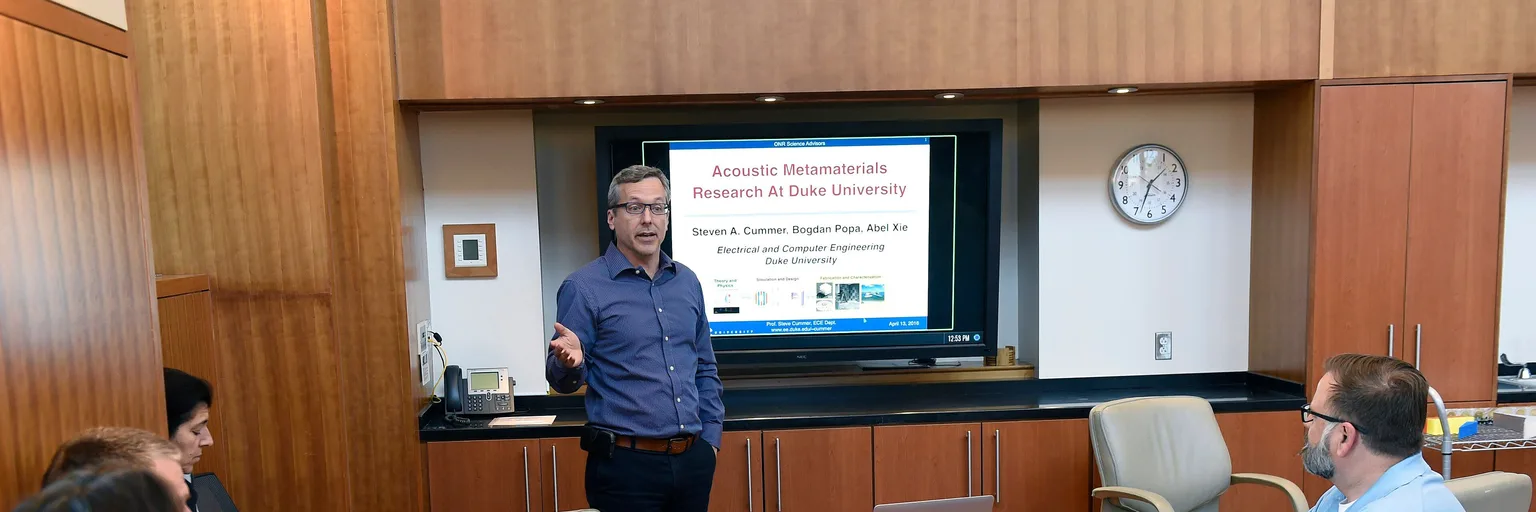
Topology at a critical point is exciting physics, not a revolution yet
A pair of Nature studies may connect critical phenomena with topology, but the real test is whether this bridge survives replication beyond carefully engineered acoustic systems.
Superconductivity Is Still a Mystery—and Rival States Are the Clue
New experiments do not solve superconductivity, but they expose hidden competition that could make the search for its microscopic mechanism far more precise.