Psyche's slow blue burn is the real story, not a metal jackpot
NASA's Psyche is thrusting almost nonstop toward a metal-rich asteroid. The quiet triumph is solar-electric propulsion, and the prize is understanding how planetary cores form.
Photo: NASA/JPL-Caltech/ASU/MSSS / Wikimedia Commons (Public domain)
What kind of engine pushes a spacecraft to more than 100,000 mph using a force you could mimic by holding a AA battery? A boring-sounding one, and that is precisely the point. NASA's Psyche is the best argument in years that the glamorous part of a space mission is rarely the part that makes it possible.
What happened: the pedal is down
According to NASA's Jet Propulsion Laboratory, Psyche began thrusting nearly continuously on Sept. 28, after its Mars gravity assist, pausing about once a week to talk to Earth. Navigation lead Don Han says the thrusters will run nearly 90% of the time until arrival, which is expected by summer 2029. At its maximum cruise speed the craft will move at more than 100,000 mph (160,900 kph) relative to an observer on Earth.
The engines are Hall thrusters that expel xenon ions, producing up to 250 millinewtons and a blue glow. About one third of the roughly 2,400 pounds (1,090 kilograms) of xenon loaded at launch has been used.
Electric propulsion is the unglamorous workhorse, and it earned that title the hard way
Chemical rockets are the drama: a big push, a short burn, a lot of fuel. Psyche shows the opposite philosophy. Tiny thrust, applied for years, adds up. We think this is the right model for much of deep-space science, where what you want is not speed records but the ability to reach a distant, specific place with a reasonable amount of propellant.
It has not been smooth, and that is what makes the case more convincing, not less. After a pressure drop in the xenon feed line in April 2025, from 36 psi to about 26 psi, which triggered an automatic shutdown, Universe Today reported that the mission's design allowed the pause without affecting the trajectory, and that the spacecraft had a second, identical delivery system. Per Wikipedia's account, the team switched to the backup in May and full thrusting resumed on June 16, 2025. A hiccup, a pause the trajectory could absorb, a redundant path: that is what mature engineering looks like.
There is also a nice side effect. Steve Snyder, the lead propulsion operations engineer, notes that the swirling ions create a tiny torque that can only be measured in space, and that this is the first time anyone has measured it on a Hall thruster across power levels and long durations. The spacecraft, in his words, is "an excellent laboratory." A mission about a faraway rock is quietly producing data that could be useful for the next generation of spacecraft.
The asteroid is not a treasure chest; it is a window
Then there is the hook everyone clicks on: a metal asteroid, and the temptation to treat it as a jackpot. Nothing in the documentation supports a treasure framing, and we would not lean on it. What NASA's own mission overview stresses is something else: we cannot bore into Earth's metal core, so Psyche could offer a one-of-a-kind look at the violent collisions and accumulation of matter that built rocky planets.
And the asteroid may disappoint the simple story, which would be fine. NASA says the data still contain contradictions, and that analysis points to a mix of rock and metal, with metal at 30% to 60% of its volume. The agency also admits it could be the leftover of a different kind of iron-rich body altogether. Until the spacecraft is there, nobody knows what it looks like. In our view, a "mostly not a pure core" answer would still teach us something real about how planetary interiors assemble, which is the whole scientific question.
Its instruments are already warmed up. During the May 15 Mars flyby, the magnetometer recorded the first magnetic field signature of a celestial body it has measured, the bow shock, and the imager practiced spotting Phobos and Deimos as rehearsal for hunting moonlets at Psyche. Principal investigator Lindy Elkins-Tanton said the team did not anticipate big discoveries at a planet so well studied, and that was never the goal: this was a calibration run.
Our verdict
Watch Psyche for the engine now and the science later. For the next three years the story is a spacecraft gently, patiently pushing itself across the solar system, and that is a story about technology maturing. Then, from August 2029, an orbital campaign begins that tests whether an exposed core really exists. Be skeptical of anyone selling the asteroid as a bank vault. The honest prize is knowledge about how worlds like ours got their hearts, and a thruster whose force is worth a single battery is how we get there.
No topics yet: start the first one.
More stories
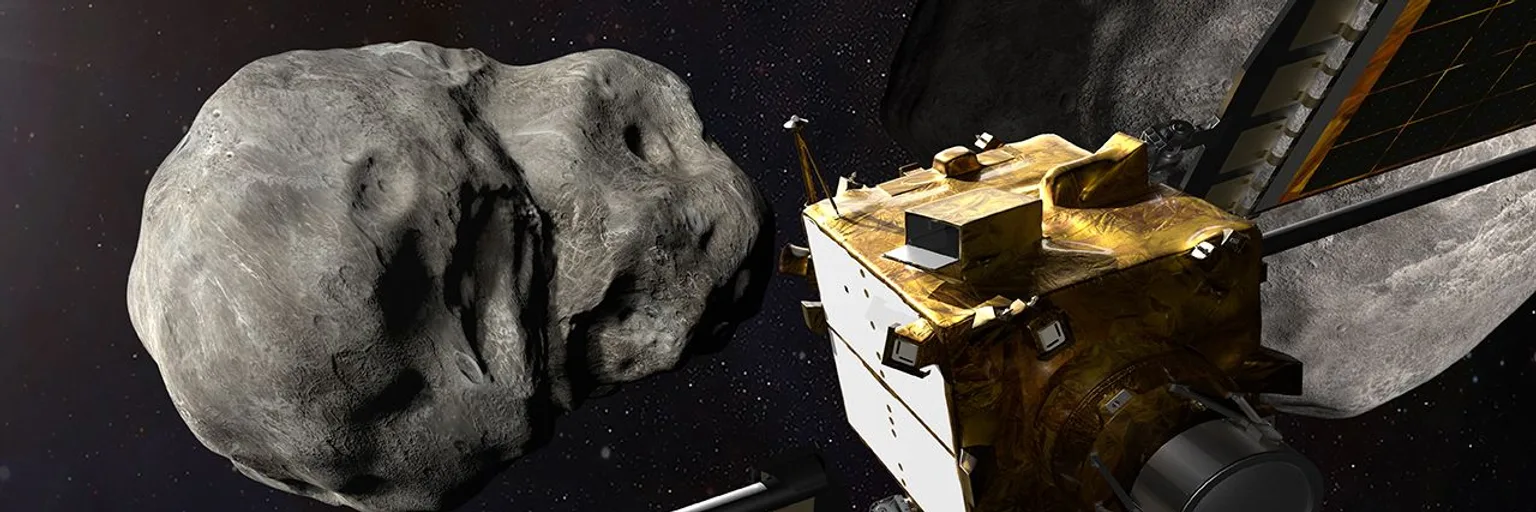
DART was the stunt; Hera is the science that makes it a defense
Crashing a spacecraft into an asteroid grabbed headlines in 2022. Hera, arriving at Didymos in early November, is what could turn that one-off shot into a method we can trust.
LHS 1140 b is a promising ocean world, not Earth's twin
Headlines promise an "Earth-like" planet 49 light-years away. The data show something stranger and more interesting: a strong water-world candidate whose atmosphere is still unconfirmed.
OSIRIS-REx's real legacy is the sample, not the flight
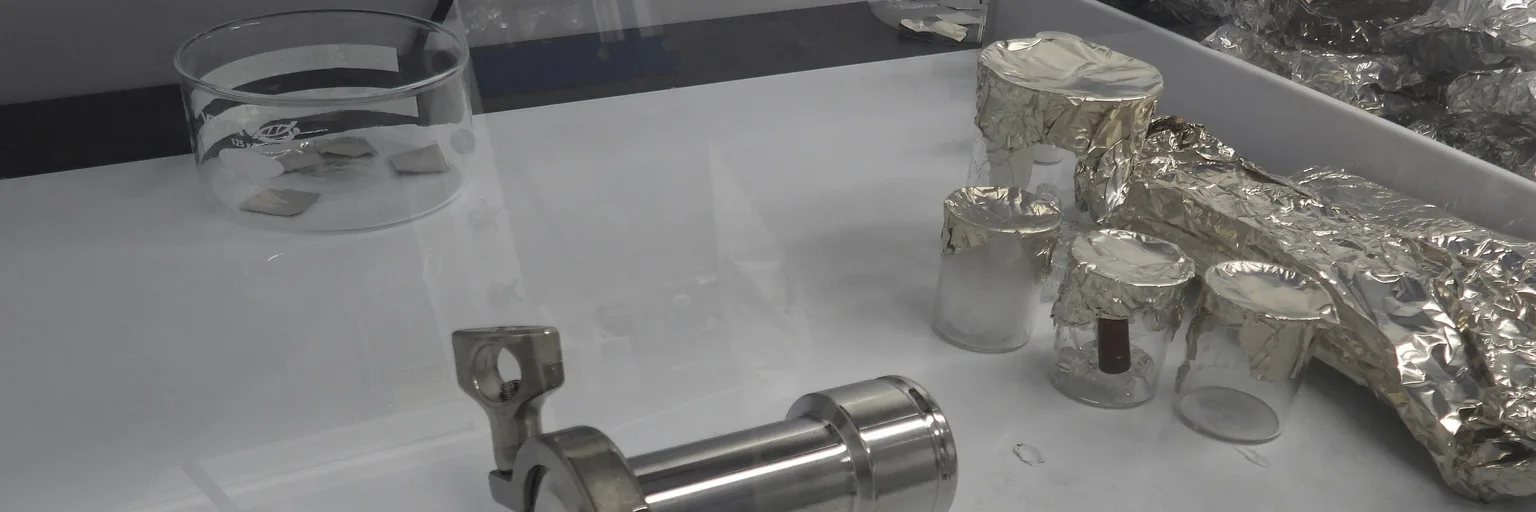
The strongest argument for sample return is already in the labs: Bennu's grains keep answering questions no telescope or probe could, and the funding should follow.
Orbit is no longer neutral: a Russian shadow on ICEYE-X36
A Russian satellite reportedly closed to 26 meters from a commercial radar satellite used by Ukraine. With no rules of the road in orbit, any Earth-observing spacecraft can be held hostage.